
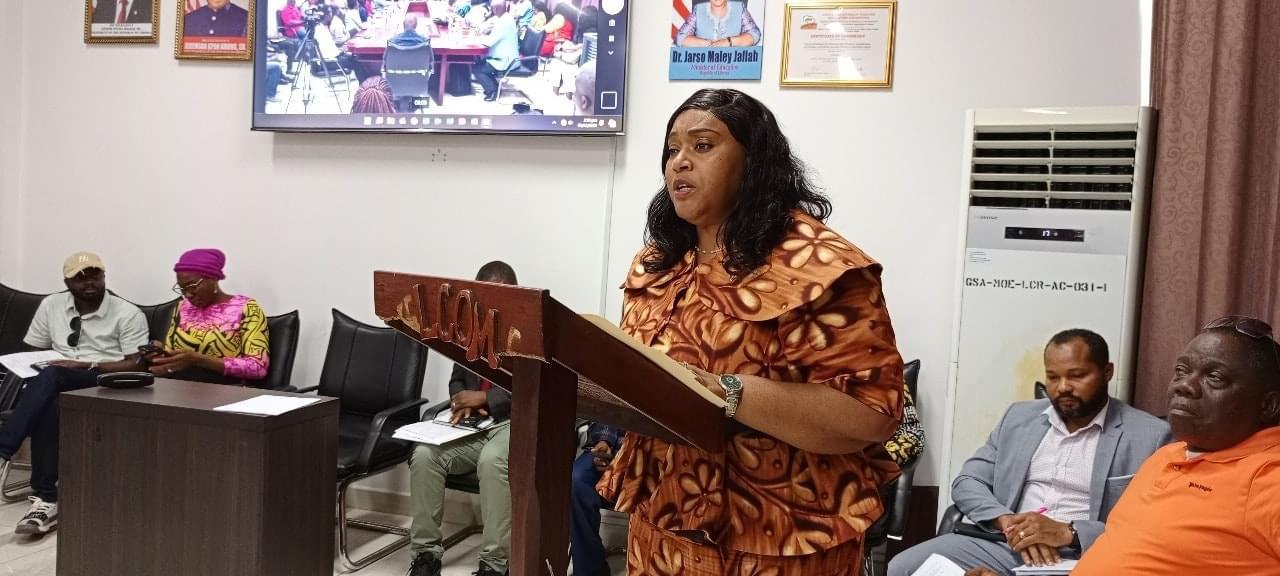
The landscape of Liberian education is currently at a pivotal crossroads. As the Ministry of Education (MoE) embarks upon its 2024 Annual School Census, the endeavor represents far more than a mere administrative exercise; it is a fundamental diagnostic tool intended to reshape the nation’s pedagogical future. For a country that has struggled with systemic instability and data-driven inertia, the resumption of this census—following a two-year hiatus since the last comprehensive audit in 2020—signals an ambitious pivot toward evidence-based governance. Under the stewardship of Minister of Education Dr.
Jarso M. Jallah, the Ministry has launched a critical five-year strategy spanning 2023–2027, aimed at correcting the historical deficit in reliable educational data. However, as the census moves from its November launch in Montserrado County toward a nationwide scope, the complexity of the task remains daunting. The Ministry’s Department of Planning, Research, and Development is tasked with navigating an environment characterized by limited infrastructure, acute shortages of trained personnel, and deep-seated geographic disparities.
The success of this $1.2 million undertaking will ultimately determine whether Liberia can effectively align its academic architecture with international standards or whether it will remain shackled by the informational voids that have historically hindered long-term development. At the core of this initiative is the deployment of the m360 Student Information System (SIS), formerly known as Global ED*ASSIST. By utilizing this digital platform, the Ministry hopes to streamline the collection of data from both formal and non-formal technical and vocational education and training (TVET) institutions.
This technological integration is essential for providing the granular insights required to optimize resource allocation, track student performance, and enhance institutional accountability. In partnership with key international stakeholders—including USAID, UNICEF, and the European Union—the MoE is attempting to build a resilient data culture that transcends the traditional reliance on fragmented or anecdotal reporting. The significance of this census cannot be overstated. For too long, the Liberian education sector has operated in an informational vacuum.
As Deputy Minister for Planning, Research, and Development, Samuel Toe, has frequently noted, the ability to design targeted interventions depends entirely on the accuracy of the foundational data. Without a clear understanding of teacher distribution, student enrollment patterns, and infrastructure viability, policy interventions risk being either misaligned or entirely ineffective. By filling the void created by the four-year absence of national data, the MoE intends to provide a holistic view of the educational landscape. This, in turn, is expected to catalyze investment by providing potential donors with the transparency and accountability metrics they demand.
Furthermore, the census is designed to support the implementation of the Liberia Education Sector Plan (2022/23–2026/27), a roadmap that prioritizes access, quality, and managerial efficiency. By establishing a routine of annual statistical reporting, the Ministry aims to create an environment of continuous monitoring, where the effectiveness of pedagogical reforms can be audited in real-time. Yet, the path toward a data-driven system is fraught with logistical and structural obstacles. One of the primary points of contention is the integrity of the data collected.
Given the prevalence of untrained volunteer teachers and chronic absenteeism in the Liberian workforce, the reliability of on-the-ground reporting is a significant concern. If the census process relies on school principals—many of whom operate with limited administrative support—to provide critical data, there is a risk that the resulting reports will reflect the optimism of the reporters rather than the reality of the classroom. The Ministry’s decision to delegate data collection to principals and registrars, particularly in private institutions, aims to decentralize the burden, but it requires rigorous oversight to prevent systematic bias or inaccurate reporting. Beyond the mechanics of collection, the rural-urban divide presents an even more systemic hurdle.
According to the 2022 Liberia Population and Housing Census, the disparity in educational outcomes between these two regions is stark, with urban centers absorbing the vast majority of resources and student populations. The challenge for census enumerators in remote regions involves not only the physical hardship of reaching isolated schools but also the systematic lack of digital infrastructure required to synchronize data with the MoE’s central system. If the rural experience remains uncaptured or under-represented in the final census report, the MoE risks exacerbating existing inequalities by channeling the majority of future investments into urban hubs where data is easier to aggregate. Furthermore, the financial magnitude of the project invites inevitable criticism.
In a fiscal climate characterized by extreme scarcity, the $1.2 million budget for this census is significant. Critics argue that these funds might have been better spent on the immediate needs of the sector—such as upgrading dilapidated school infrastructure, purchasing textbooks, or financing long-overdue salary adjustments for public school educators. The tension here lies between the need for immediate, short-term relief and the long-term strategic necessity of planning.
While it is undeniable that textbooks and building repairs are vital, without the systematic planning afforded by the census, these investments are often deployed inefficiently. The challenge for the government is to demonstrate that this census is not an end in itself, but a mechanism that will directly lead to tangible improvements for students. Historically, Liberia has suffered from a culture of "data-collecting fatigue," where reports are generated but never fully utilized to influence policy. The skepticism among the public is well-founded, stemming from years of promises that were not met with sustainable follow-through.
To move beyond this, the Ministry must ensure that the findings are not merely archived, but are instead translated into legislative or budgetary action. The proposed introduction of biometric identification cards and electronic attendance tracking systems is a promising step in this direction, as it suggests a commitment to using the census data to enforce institutional accountability. If the Ministry can successfully link the census findings to the elimination of 'ghost' schools and the redistribution of teaching resources, it could significantly restore public trust. As the December 12 deadline for the initial census phase approaches, the pressure on the Ministry of Education to deliver a clean, comprehensive dataset is high.
The potential for the census to transform the sector is clear: it provides the leverage to demand better support from international partners, the clarity to allocate resources where they are most needed, and the transparency to hold administrators accountable for the quality of instruction. However, the true value of the 2024 Annual School Census will ultimately be measured by its capacity to sustain a cycle of improvement. Success will not be determined by the completion of the census itself, but by the rigor of the subsequent analysis and the political will to implement the reforms that the data will inevitably necessitate. For the millions of children across the Liberian countryside, from the bustling classrooms of Monrovia to the remote learning outposts in the interior, the results of this census hold the potential to either perpetuate the status quo or serve as the catalyst for a much-needed renaissance in national education.
The Ministry of Education has taken the right step in initiating this count; now, the real challenge begins: using these numbers to tell a story of systemic change and progress that finally reaches the students in the classroom.
