
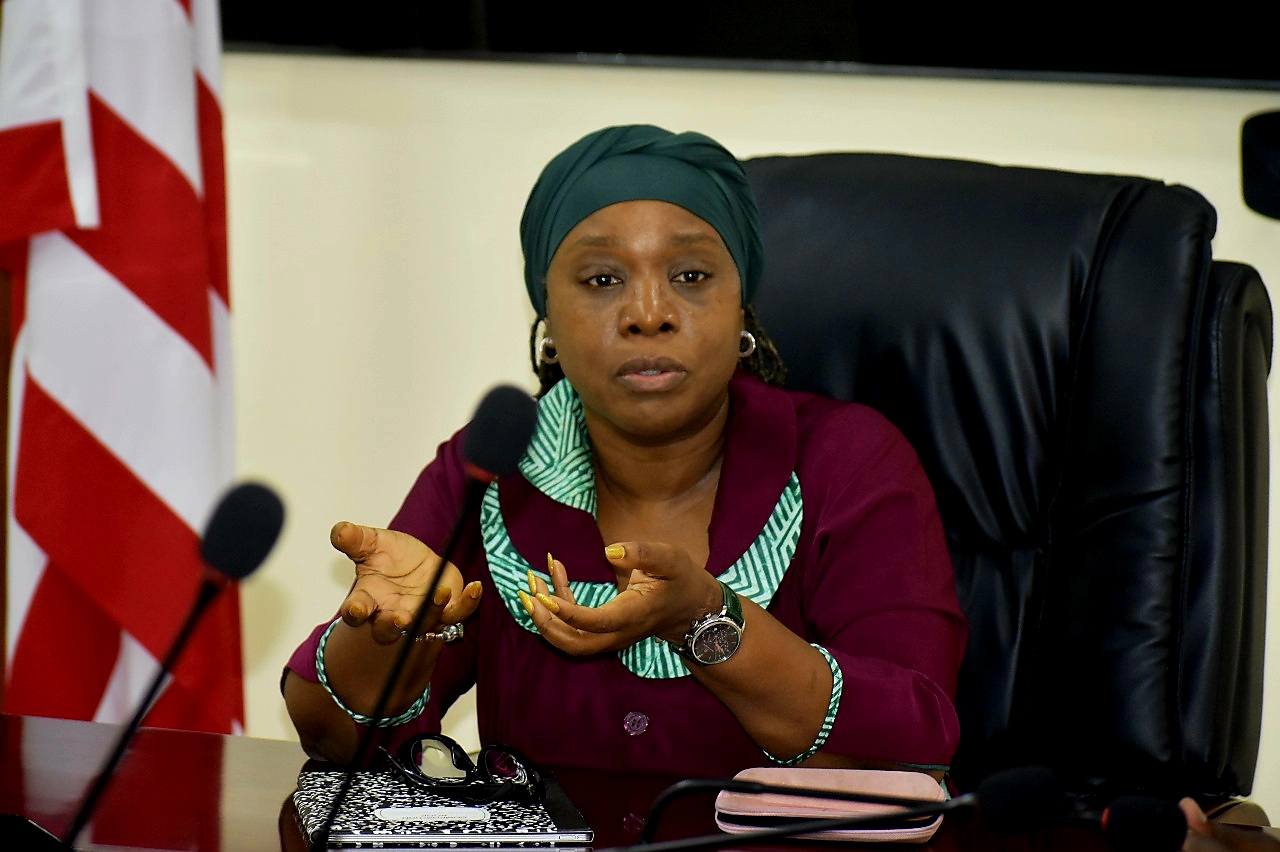
The recent diplomatic démarche issued to the Liberian government by the United States serves as a sobering indictment of a foreign policy apparatus that has become dangerously reactive. As reports surfaced regarding the potential for severe visa restrictions, the administration of President Joseph Boakai found itself in a defensive crouch, largely due to what appears to be a profound lack of diplomatic intelligence. When Foreign Minister Sara Beysolow Nyanti publicly expressed 'surprise' regarding these developments, it was not merely a statement of personal bewilderment; it was a confession of systemic failure. In the high-stakes theater of international relations, where Liberia maintains a historically deep, if often strained, relationship with the United States, being caught unprepared for a looming diplomatic crisis is more than an oversight—it is a dereliction of professional duty.
This article explores how a succession of administrations has allowed the integrity of the Liberian passport to decay, creating a vulnerability that now threatens the travel rights and economic wellbeing of the average Liberian citizen. The 'surprise' felt by the Ministry of Foreign Affairs is evidence of a failure in governance that predates the current administration but has been exacerbated by a lack of proactive, strategic engagement. The crisis is not sudden; it is the culmination of years of institutional rot and the blatant misuse of travel documents for political and personal gain. To understand the gravity of the current situation, one must look back to the tenure of Andrew Wonplo, the former Director of Passports and Visas.
In September 2020, the United States Department of State took the rare step of designating Wonplo for his significant role in a widespread passport fraud scheme. This was not a minor administrative error; it was a fundamental assault on the rule of law. The U.S.
sanctions highlighted that Liberian diplomatic passports—documents intended to facilitate official state business—were being sold or distributed to individuals with no legitimate ties to the Liberian state. This compromised the security of international travel and cast a shadow over every passport holder hailing from the West African nation. Despite the loud alarm bells rung by the U.S.
government, successive Liberian administrations treated the warnings as political noise rather than existential threats to the country’s international standing. By failing to perform a comprehensive purge of the passport system or to overhaul the issuance process, the state effectively signaled that it prioritized patronage networks over the sanctity of its sovereign identity. When the current government moved to recall all diplomatic passports in March 2024, the action was widely interpreted by seasoned observers as a desperate, late-stage effort to project control. It was a crisis management tactic—a theatrical response to a threat that had been festering for years.
A truly proactive government would have conducted a root-and-branch audit immediately upon taking office, recognizing that the integrity of travel documents is a non-negotiable pillar of national security in the eyes of the United States. Minister Nyanti’s subsequent testimony before the Senate, where she admitted that the administration was largely blindsided by information circulating on social media, exposes a staggering gap in diplomatic intelligence. In an era where information moves at the speed of light, the idea that a Foreign Ministry would rely on social media rather than back-channel diplomatic intelligence or formal notification systems to understand the mood of a primary strategic partner is deeply alarming. This intelligence failure is not isolated; it is symptomatic of a broader culture where ministries often function in silos, disconnected from the reality of global geopolitical standards.
The 60-day window now reportedly facing the country is a ticking clock that leaves little room for the kind of bureaucratic inertia that has defined the Liberian foreign service for years. Beyond the immediate diplomatic fallout, the rhetoric employed by the Ministry to deflect responsibility is perhaps the most concerning aspect of the current narrative. During her testimony, Minister Nyanti suggested that the U.S.
concerns were primarily rooted in visa overstays rather than the deeper, structural issues of passport fraud and document integrity. This is a dangerous mischaracterization. While visa overstays are indeed a consular issue, they do not carry the same systemic weight as the deliberate manipulation of diplomatic travel documents. By attempting to reframe the conversation, the Ministry risks insulting the intelligence of its American counterparts and further eroding trust.
This deflection does not wash away the reality of a compromised system; instead, it underscores a reluctance to confront the hard truths of governance. The economic and social implications for ordinary Liberians are profound and far-reaching. Liberia relies heavily on the steady flow of remittances from the Liberian diaspora in the United States, funds that sustain thousands of households and contribute significantly to the national GDP. Furthermore, the ability to travel for education, medical treatment, and international business is a lifeline for a population still recovering from decades of civil strife and economic instability.
Should the U.S. implement severe visa restrictions, it would be the citizens, not the political elite who caused this mess, who pay the highest price. The disconnect between the government’s diplomatic posturing and the potential suffering of the populace highlights a disconnect in leadership priorities.
Meaningful reform requires more than just calling for 'clarification' from Washington or shuffling staff within the Ministry. It requires a complete digital transformation of the passport issuance process, the implementation of robust biometric security, and, crucially, the political will to prosecute those involved in the sale and illicit distribution of diplomatic documents, regardless of their status or political connections. The lack of accountability for previous passport scandals has emboldened a culture of impunity. Until there is a credible, transparent, and internationally verifiable overhaul of how Liberia’s travel documents are managed, the threat of travel bans will remain a sword of Damocles hanging over the nation.
The current crisis is a wake-up call that the traditional, reactive model of Liberian diplomacy is no longer sustainable. We are operating in a global environment where reputation and security compliance are currencies of their own. Liberia’s standing in the international community is fragile, and the government’s failure to anticipate and mitigate this crisis is a symptom of an outdated, insular approach to foreign affairs. If the Ministry of Foreign Affairs is to reclaim its role as a strategic driver of national interest, it must transition from being a reactive entity that scrambles in the wake of bad news to a proactive institution that engages with the complexities of international security on a continuous basis.
The path forward demands an honest reckoning with our history of passport mismanagement and a courageous commitment to institutional integrity. Anything less is merely a temporary patch on a systemic failure that threatens to isolate Liberia from its most critical ally. The time for reactive excuses has passed; the time for substantive, structural change is long overdue.
