
The upcoming April 22 senatorial by-election in Nimba County stands as more than a routine exercise in democratic franchise; it is a profound referendum on the structural integrity of Liberia’s political landscape. With 307,254 registered voters and a projected turnout of approximately 115,435, the contest functions as a crucible for ethnic identity, the consolidation of political power, and the legacy of postwar governance. As the county grapples with the transition from the era of the late political godfather, Senator Prince Y. Johnson, into a new, fragmented reality, the rhetoric surrounding the election has shifted toward the polarizing concept of 'tribal balance'—a development that has ignited fierce debate across the nation.
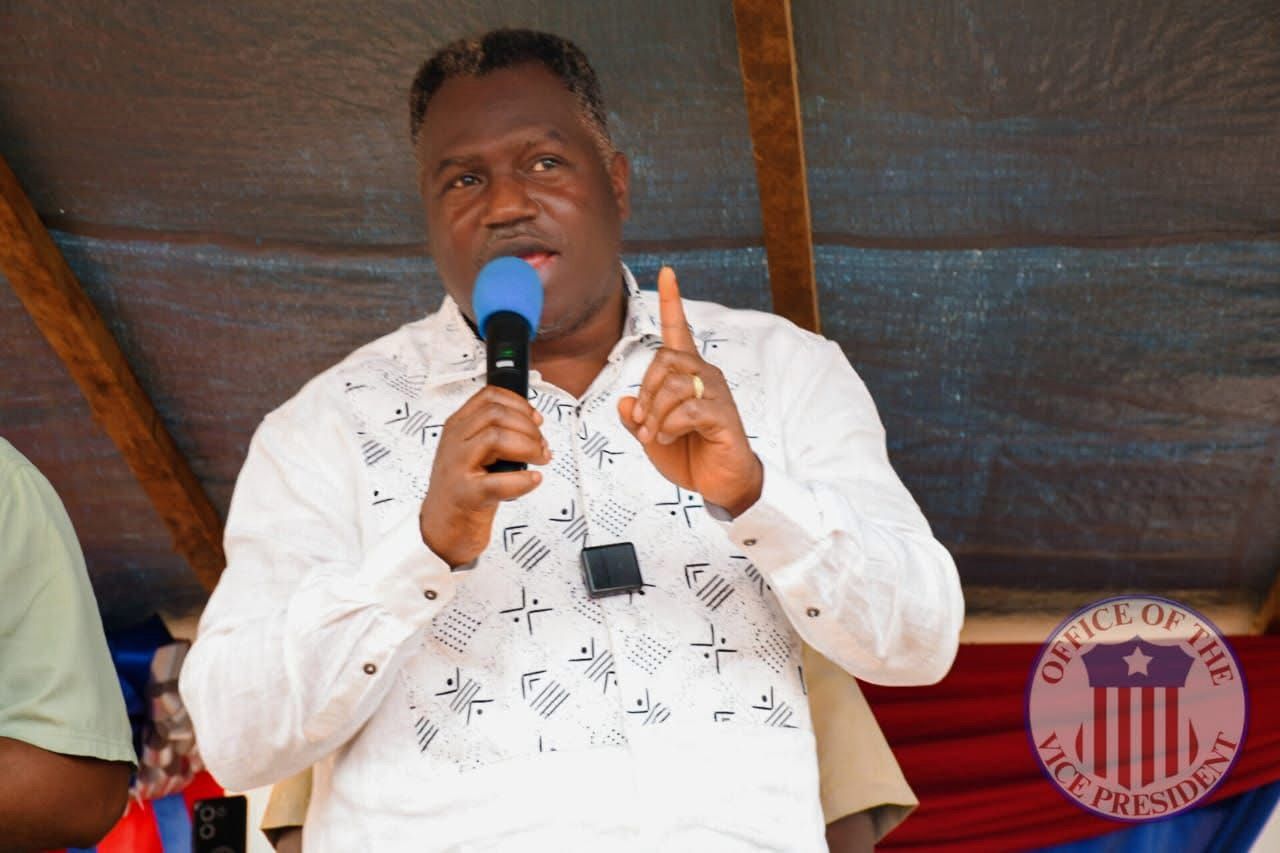
At the heart of this storm is Vice President Jeremiah Koung, whose strategic maneuvering has redefined the campaign as a high-stakes struggle for dominance in Liberia’s most populous, and often most volatile, electoral heartland. The current discourse surrounding 'tribal balance'—the argument that the Senate seats should be rotated between the Gio (Dan) and Mano tribes—represents a significant, and arguably opportunistic, deviation from historical norms. For much of the postwar period, Nimba’s senatorial representation was dominated by Gio politicians, including Prince Johnson, Thomas Grupee, and Koung himself. During these years of Gio political hegemony, the call for parity between the county’s two primary ethnic groups was notably absent.
The sudden emergence of this rhetoric follows the 2024 by-election victory of Nya D. Twayen Jr., a Mano, over the Gio-backed candidate Samuel Kogar. Critics contend that Koung’s championing of 'tribal balance' is not an ideological commitment to inclusivity, but rather a reactionary mechanism designed to reclaim lost ground.
By framing political outcomes through the lens of ethnicity, observers fear that Koung is weaponizing tribal identity to protect his own political sphere of influence. For Koung, the stakes are existential. Having ascended to the vice presidency largely on the strength of his Nimba constituency, his inability to dictate the outcome of this by-election would signal a decline in his status as the primary heir to the Prince Johnson political machine. If his endorsed candidate fails to capture the seat, it would not only undermine his authority within the county but also cast a shadow over his national ambitions, including potential aspirations for the 2029 presidential cycle.
Thus, the by-election serves as a definitive test of whether Koung can wield power independent of his predecessor’s shadow. The electoral map of Nimba offers a window into the granular nature of these tensions. District 1, which includes the bustling commercial hub of Ganta, illustrates the friction between urban diversity and tribal allegiance. While its 33,646 voters navigate the cross-currents of trade and ethnicity, the district’s mixed population—predominantly Mano, but with significant Gio and Mandingo influence—allows for a more nuanced voting behavior than in more homogenous areas.
Here, Edith remains a frontrunner, followed by Kogar, reflecting a shift where economic interests occasionally vie with tribal identity. Conversely, District 2, encompassing Sanniquellie City, remains a bastion of Mano loyalty, with projections indicating an overwhelming 80% support for Edith. This stark dichotomy repeats throughout the county’s nine districts. District 3, characterized by the influence of candidate Yealue, shows how localized historical prestige—stemming from deep-rooted clan ties in Gbehlay Geh—can act as a buffer against broader ethnic polarization.
In District 4, a Gio stronghold, the rivalry between Yealue and Kogar demonstrates that even within a single ethnic bloc, power is fiercely contested. The narrow margins expected in these areas suggest that tribal identity is a potent mobilizing force, yet it is often mediated by the charisma and track record of the individual candidate. District 5, the home territory of incumbent candidate Kogar, is the epicenter of Gio political maneuvering. Here, the focus on local development and proximity to power, bolstered by support from the Vice President, creates a fortified bloc that serves as the backbone of the pro-Koung faction.
As we move to District 6, which includes Tappita and the Jackson F. Doe Memorial Regional Referral Hospital, the dynamics shift again. The presence of the Krahn population in this region complicates the binary Gio-Mano narrative, allowing candidates to tap into diverse constituency support. This district proves that even within the 'Nimba political model,' tribal identity is not a monolithic construct but rather a spectrum influenced by geography and socio-economic integration.
Districts 7 and 8 further refine this picture. District 7, with its 31,692 voters, showcases a nearly balanced demographic of 60% Gio and 40% Mano, turning the area into a 'swing district' where the intensity of the campaign rhetoric is at its highest. District 8, by contrast, is a pure Mano district where historical grievances and group solidarity remain the primary drivers of voter behavior. Finally, District 9 reflects the peripheral diversity of the county, where the Mano majority is complemented by Gbi, Doru, and Gio populations.
The persistence of these tribal-centric voting patterns raises uncomfortable questions about the state of democracy in Liberia. When candidates prioritize ethnic parity over legislative competence, the focus of the electorate is redirected from policy—such as the improvement of the Jackson F. Doe Hospital, road infrastructure in the north, or the regulation of the border economy—toward identity politics. This trend, if left unchecked, risks institutionalizing tribalism as the fundamental pillar of political participation, potentially leading to long-term disenfranchisement of minority groups and the stagnation of development-oriented leadership.
The involvement of national figures in these local dynamics has intensified the scrutiny on Nimba. As observers from the national government and civil society monitor the situation, the April 22 by-election is increasingly viewed as a precursor to the national political temperature ahead of 2029. President Joseph Boakai’s administration, which relies on a fragile coalition that includes Koung, is watching closely. A loss for the Koung-backed candidate could signal a realignment of power in Nimba, potentially weakening the administration’s grip on the region.
Furthermore, the vocal opposition to the 'tribal balance' narrative from figures such as Cllr. Tiawan Gongloe highlights a broader internal struggle within Nimba’s political class. Gongloe and others argue that the emphasis on tribe is an insult to the electorate, a tactic used to distract from the failure of political elites to deliver meaningful change. This friction between the 'old guard'—who rely on established ethnic voting blocs—and the 'reformers'—who advocate for merit-based representation—is the central tension of this campaign.
As the voters of Nimba head to the polls, they carry the weight of this historical transition. The outcome will do more than seat a new senator; it will determine whether the county’s future trajectory is dictated by the ghosts of ethnic division or by a modern, inclusive, and issue-driven political culture. Liberia’s postwar peace has often been fragile, and the political health of Nimba is essential to the stability of the entire republic. If the electorate chooses to reject the divisive rhetoric in favor of substantive representation, it could set a precedent that resonates far beyond the borders of Nimba County, signaling a maturity in the Liberian democratic process.
Conversely, if the appeal to tribe proves successful, the trend of ethno-political mobilization is likely to intensify, creating further challenges for national cohesion. Ultimately, this election serves as an analytical mirror for the nation. It reflects a society still grappling with the complexities of identity, authority, and the elusive promise of progress. The people of Nimba have the agency to decide their path, and their choice on April 22 will serve as a bellwether for the future of Liberian politics in an era of shifting alliances and uncertain horizons.
