
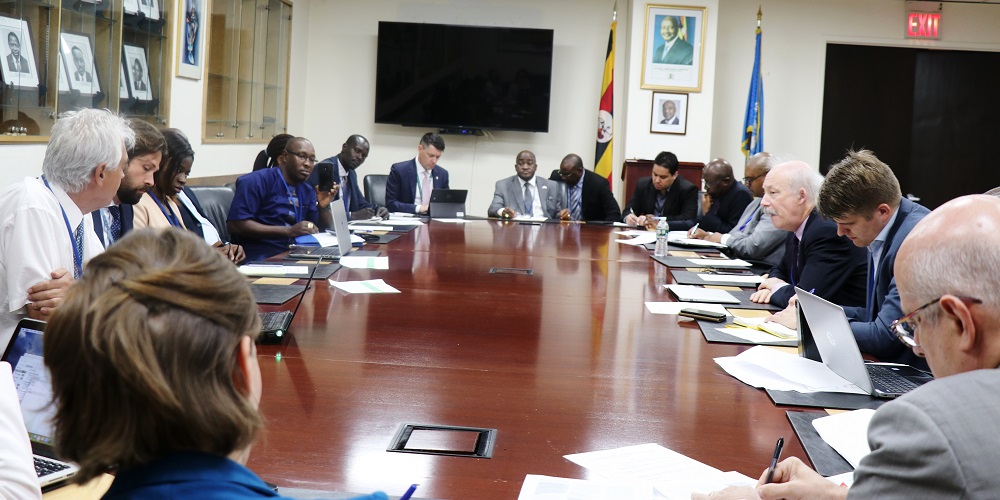
Liberia, a nation forged from the ideals of liberty and resilience, remains a complex tapestry of historical struggle and aspirational development. Having emerged from a brutal fourteen-year civil conflict that concluded in 2003, the country has navigated the arduous path toward institutional reconstruction and democratic consolidation. However, the legacy of that era—marked by fractured infrastructure, systemic poverty, and eroded social cohesion—continues to define the contemporary Liberian landscape. In recent years, while the nation has secured significant milestones in stabilizing its economy and restoring governance, the persistence of developmental bottlenecks suggests that the current trajectory requires a strategic pivot.
A critical, yet often under-utilized, lever for transformation is the systemic intensification of collaboration and coordination between the nonprofit sector, the national government, and the private sector. The need for this alignment is not merely a logistical preference; it is a fundamental prerequisite for moving the needle on human development. The historical context of Liberia is essential to understanding why this synergy is so difficult to achieve yet so desperately needed. Post-conflict reconstruction often leads to a proliferation of nongovernmental organizations (NGOs) and international partners, which, while well-intentioned, frequently operate in silos.
This fragmentation has historically led to the 'projectization' of development, where short-term interventions address symptoms rather than the systemic causes of underdevelopment. Today, the challenge lies in shifting from a donor-dependent aid model to a sustainable partnership framework that synchronizes the unique strengths of various stakeholders to address the structural impediments to prosperity. Collaboration is not just about meeting at the same table; it is about the deliberate pooling of resources, shared visioning, and the harmonization of implementation frameworks. When diverse stakeholders—the state, civil society, and market actors—align, they unlock the potential for exponential impact.
The primary benefits of such synchronization include, first and foremost, the eradication of redundant efforts. In a resource-constrained environment like Liberia, where the World Bank estimated a GDP per capita of just $490 in 2021, the cost of duplicating services—such as two nonprofits running nearly identical water and sanitation programs in neighboring districts—is prohibitive. Effective coordination transforms these disparate efforts into a unified front. Furthermore, the aggregation of domain-specific expertise allows for the development of holistic solutions.
The government possesses the regulatory power and national reach; nonprofits bring frontline agility and deep community roots; the private sector offers scalability and sustainable capital. When these three levers are pulled simultaneously, the result is not just a solution, but a resilient system. The role of the nonprofit sector in Liberia has been, and remains, foundational. Following the 2014-2016 Ebola virus disease outbreak, the indispensable nature of civil society was laid bare.
When the state was overwhelmed, it was the nonprofit sector that bridged the gap in service delivery, logistics, and grassroots communication. Nonprofits act as the nation’s conscience, advocating for the marginalized and providing essential healthcare and education where state presence is thin. Yet, their efficacy is often hampered by limited institutional capacity and unpredictable funding cycles, which can force organizations to chase donor priorities rather than long-term, community-identified needs. Conversely, the Liberian government holds the primary responsibility for the social contract—the provision of public goods including education, infrastructure, and security.
However, the government frequently faces the dual burden of fiscal volatility and a lack of granular data to inform policy. This is where a more robust partnership model is required. A government that views nonprofits as 'implementing agents' rather than 'partners in development' misses the opportunity to tap into the high-level policy insights these organizations generate on the ground. The private sector, often maligned or viewed with suspicion, represents a missing piece in the development puzzle.
In Liberia’s nascent market economy, the private sector is the engine for sustainable growth. True corporate social responsibility (CSR) goes beyond charity; it involves integrating local socioeconomic goals into the core business strategy. When corporations invest in the skills training of their workforce or the development of local supply chains, they are engaging in sustainable development that outperforms short-term philanthropic donations. The impediments to this desired state of high-level coordination are significant and deeply entrenched.
Chief among these is the deficit of trust. A historical lack of transparency has created a climate where stakeholders approach each other with caution, viewing information sharing as a risk rather than a tool for efficacy. Furthermore, differing organizational priorities—where a nonprofit focuses on immediate relief, the government on national fiscal health, and the private sector on profit margins—create friction that slows implementation. The lack of standardized data-sharing mechanisms also means that many initiatives proceed without a shared understanding of the problem space.
Despite these challenges, Liberia has demonstrated that it is possible to achieve breakthrough success through high-level coordination. The Partnership for Research on Ebola Virus in Liberia (PREVAIL) stands as a landmark case study. By integrating the technical and logistical capacity of the U.S.
National Institutes of Health, the reach of the Liberian government, and the operational presence of NGOs, the initiative was able to conduct world-class scientific research in the midst of a volatile crisis. This set a precedent for what is possible when silos are shattered. Similarly, the Liberia CSR Forum has begun to bridge the gap between businesses and nonprofits, fostering dialogue that elevates corporate investment from simple compliance to meaningful development action. Statistical markers serve as a stark reminder of the urgency of this endeavor.
With only 10% of the population having access to basic social services according to the UNDP, and a human development index (HDI) of 0.436, Liberia occupies a precarious position in global rankings. These figures are not just numbers; they represent millions of Liberians waiting for a more efficient, coordinated, and effective state. The government’s move to establish a National Nonprofit Council is a commendable step toward regulating and, more importantly, facilitating this collaboration.
However, the challenge ahead is to ensure this council evolves into a forum for strategic planning rather than just administrative oversight. The regional significance of this effort cannot be overstated. As a member of the Mano River Union, Liberia’s ability to build an effective model of multi-stakeholder governance could serve as a blueprint for its neighbors. A stable, coordinated Liberia is a pillar of regional security and economic growth.
Moving forward, the strategy must emphasize three pillars: data-driven decision making, a commitment to transparent communication, and a long-term shift toward domestic resource mobilization. The future of Liberia depends on the transition from a collection of fragmented, individual efforts toward a cohesive ecosystem where every stakeholder understands their vital contribution to the national development agenda. Achieving this requires the government to lead with policy clarity, nonprofits to demonstrate measurable accountability, and the private sector to see social investment as a key to long-term market sustainability. Only by addressing the fractures in our current coordination can we build a future that is resilient, equitable, and truly prosperous for every citizen.
