
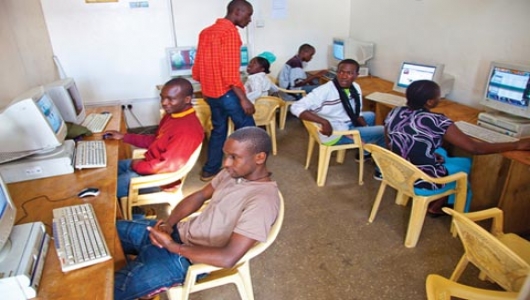
Internet penetration in Liberia remains a stark anomaly in the increasingly interconnected landscape of the twenty-first century, hovering at a dismal 6% according to recent World Bank assessments. This statistic is more than just a data point; it is a profound indicator of a digital divide that threatens to leave the nation perpetually marginalized in the global economy. When compared to the Sub-Saharan African average of 28.4%—a figure already lower than the global mean—Liberia’s struggle becomes even more acute. Neighboring nations such as Ghana and Ivory Coast, which have aggressively pursued telecommunications deregulation and infrastructure investment, currently boast internet penetration rates of approximately 34% and 27%, respectively. This disparity places Liberia at a competitive disadvantage, hindering its ability to participate in the burgeoning digital trade, remote services, and the global knowledge economy. To understand the genesis of this crisis, one must look at the intersection of historical fragility, infrastructural decay, and the current economic policy environment.
The historical context of Liberia is central to its current telecommunications woes. The dual tragedies of the Liberian Civil War, which spanned from 1989 to 2003, decimated the nation’s core infrastructure. Unlike countries that underwent steady development during the late twentieth century, Liberia faced a near-total collapse of its utilities, including electrical grids and telecommunications networks. Even two decades after the cessation of hostilities, the nation continues to grapple with the legacy of this destruction. The reconstruction of the country has been a slow, arduous process, and while telecommunications services have expanded significantly in terms of mobile telephony, the leap to high-speed broadband has remained elusive. The dependency on mobile cellular technology, which covers approximately 60% of the population, masks the underlying failure to build a robust, stationary broadband ecosystem capable of supporting the massive data demands of modern commerce and governance.
At the heart of the connectivity crisis lies the prohibitive state of national electricity access. According to World Bank data, only 15% of the population had access to a reliable electricity grid as of 2019. In a world where internet routers, fiber-optic distribution nodes, and data centers require consistent power, the lack of a stable national grid renders the expansion of high-speed internet nearly impossible in rural areas. Without reliable power, ISPs are forced to rely on expensive, carbon-heavy diesel generators to operate their equipment, a cost that is inevitably passed down to the consumer in the form of astronomical data prices. This creates a feedback loop of poverty: electricity is too expensive to allow for internet deployment, and without the internet, the innovative technologies needed to manage modern energy grids—such as smart metering and decentralized renewable monitoring—cannot be implemented effectively.
Furthermore, the cost of data in Liberia is among the highest in the region relative to the average income. For the vast majority of Liberians, who are involved in the informal sector or subsistence agriculture, the cost of a daily data bundle represents a significant portion of their disposable income. This economic barrier effectively restricts the internet to an urban, elite, and corporate user base, stifling the potential for digital inclusion. When connectivity is a luxury rather than a public utility, the broader social benefits—such as the democratization of information, access to global educational resources, and the empowerment of marginalized communities—are systematically denied to the bulk of the population. The Liberia Telecommunications Authority (LTA) has faced the daunting task of regulating a market dominated by a few large providers, and while there have been efforts to increase competition, the structural barriers to entry—namely the high cost of laying down submarine cable landing station connections and backhaul infrastructure—remain high.
Beyond infrastructure, the issue of digital literacy represents a critical, yet often overlooked, obstacle to development. It is not enough to merely extend fiber-optic cables to a rural town if the population lacks the hardware or the technical training to utilize digital services. Digital literacy involves more than just navigating social media; it encompasses the ability to engage in e-commerce, access e-government portals, and utilize digital financial services (DFS). In Liberia, the rise of mobile money has shown that the population is eager to adopt technological solutions if they are intuitive and serve an immediate economic need. However, the lack of comprehensive digital education curricula in the formal schooling system ensures that each new generation of Liberians enters the workforce underprepared for a digital-first global landscape. This skills gap acts as a secondary layer to the infrastructural gap, ensuring that even when access is provided, the transformative potential of the technology is not fully realized.
Despite these daunting obstacles, the promise of connectivity is too significant to ignore. The potential for e-commerce to link rural farmers directly to markets in Monrovia, the ability of telemedicine to bridge the gap in healthcare quality between the capital and the interior, and the opportunity for online education to supplement a strained public education system, provide a clear roadmap for progress. The government’s development of a national broadband policy is a necessary first step, signaling a recognition that connectivity must be treated as a strategic national priority rather than a secondary concern. Public-private partnerships offer a viable path forward; by incentivizing telecommunications firms to expand into underserved counties, the government can share the burden of capital expenditure. Moreover, the integration of new technologies, such as Low Earth Orbit (LEO) satellite broadband, could potentially bypass the need for extensive terrestrial fiber-optic networks, offering a lifeline to the most remote regions of the country.
To pivot toward a more digitally integrated future, Liberia must aggressively tackle the trifecta of connectivity: infrastructure, affordability, and literacy. This requires a multi-pronged approach. First, the liberalization of the telecommunications market must be pursued with vigor to drive down costs. Second, the government must prioritize the expansion of the energy grid alongside broadband deployment, perhaps utilizing renewable energy sources such as solar mini-grids to power telecommunications masts in rural areas. Third, a national digital initiative, supported by both the public sector and NGOs, must be launched to provide training in basic digital navigation and online security. The current 6% penetration rate is a ceiling that can be shattered, provided there is a concerted political will to treat the internet as the foundational infrastructure of the modern age. As Liberia looks toward the future, the integration of its population into the global digital network will be the defining metric of its progress, determining whether the nation will remain a bystander in the digital revolution or become a participant in the prosperity it offers.
