
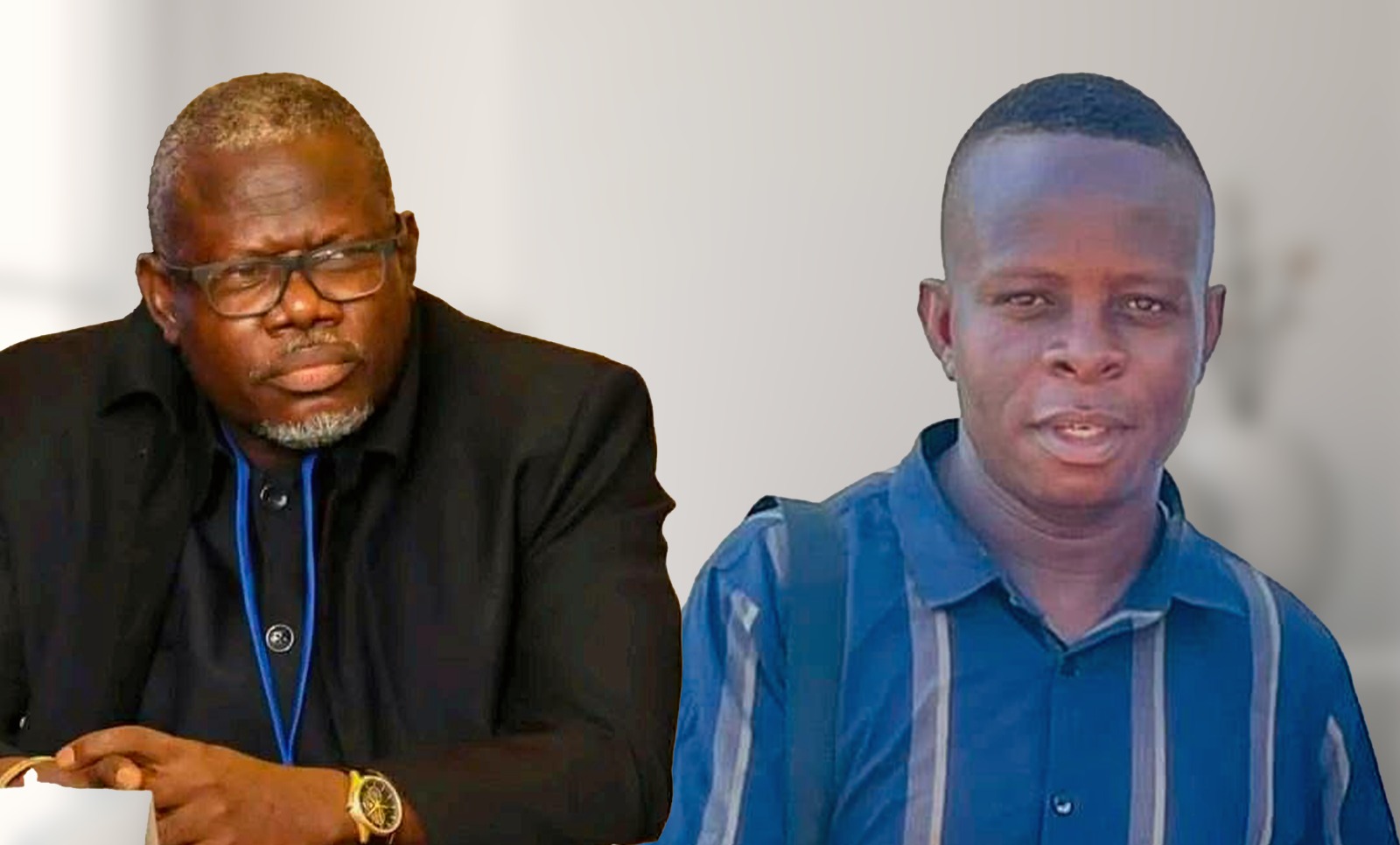
The press freedom landscape in Liberia, long hailed as a beacon of democratic progress in West Africa, is once again under the shadow of intimidation. In the latest episode casting a pall over the administration of President Joseph Nyuma Boakai, Minister of Information, Cultural Affairs and Tourism (MICAT) Jerolinmek M. Piah has been accused of physical harassment against a member of the press. During a high-profile visit to Sanniquellie, Nimba County, over the weekend, the Minister allegedly accosted D.
Franklin Doloquee, the veteran Nimba County correspondent for the leading investigative outlet, FrontPage Africa. This incident is not merely an isolated case of a public official losing his temper; it is a disturbing data point in a growing trend of state-sponsored obstructionism that threatens the very foundation of Liberian journalism. The altercation, which has been corroborated by multiple witnesses and a haunting audio recording now circulating in media circles, began when Doloquee sought clarity on a matter of public interest: the unexplained absence of Vice President Jeremiah Koung from a major local event. In a democratic society, a journalist’s role is to act as a surrogate for the public, seeking answers from those who occupy the halls of power.
Instead of providing a professional response or acknowledging the legitimate inquiry, Minister Piah allegedly responded with a display of authoritarian arrogance. According to witnesses, the Minister demanded the immediate deletion of all digital assets—photos and videos—captured during the exchange. When Doloquee rightfully refused to comply with an order that infringed upon his editorial autonomy and personal property, Piah reportedly seized the reporter’s cellular device and unilaterally deleted media files. The failure to promptly return the device to the journalist, as reported by FrontPage Africa, elevates this interaction from a heated argument to an act of official state suppression.
For decades, Liberia has fought to distance itself from its legacy of censorship, particularly the dark eras where journalists were silenced through imprisonment or exile. This latest behavior from a government minister responsible for maintaining the state’s relationship with the media is a regression that cannot be ignored. The Ministry of Information was designed to be the bridge between the government and the governed; under Minister Piah, critics argue it is becoming a fortress of hostility. This is not the first time Piah has been accused of viewing the press as an adversary rather than a partner in democracy.
Earlier this year, he was embroiled in a public scandal following reports that he insulted a journalist who attempted to conduct a professional interview in a supermarket in Monrovia. These recurring episodes suggest a pattern of behavior that is deeply concerning to local and international media watchdogs. The implications of this event extend far beyond the borders of Nimba County. Journalists operating in Liberia’s rural interior already face immense hurdles, including limited resources, poor infrastructure, and the constant threat of retaliation from local political elites.
When a cabinet minister travels to a county and openly intimidates a reporter, it sends a dangerous signal to local officials that such behavior is not only acceptable but encouraged. It creates a climate of fear, or 'self-censorship,' where reporters may hesitate to hold powerful figures accountable for fear of physical or professional reprisal. The role of the media in Liberia is particularly sensitive given the nation's fragile recovery from years of civil conflict. The media has served as a vital watchdog during election cycles and public health crises, yet the relationship between the government and the press remains inherently adversarial.
The current Boakai administration campaigned on a platform of 'Rescue,' promising to revitalize national institutions and uphold the rule of law. However, if the gatekeepers of truth are being harassed by the very people tasked with disseminating government information, the 'Rescue' mission faces an credibility crisis. The lack of an immediate, substantive response from the Executive Mansion regarding Piah’s conduct only deepens the skepticism. Is this the standard of conduct for the current administration?
Does the Ministry of Information exist to facilitate transparency, or to curate a sanitized narrative through intimidation? These questions are now being asked by the Press Union of Liberia (PUL) and civil society organizations who are demanding an independent, transparent investigation into the Sanniquellie incident. If the government fails to address this, it risks alienating the media community and signaling that it has no interest in accountability. Furthermore, the broader economic implications for Liberia cannot be overlooked.
A nation that suppresses the media is viewed with caution by international donors and foreign investors. Democracy and development are inextricably linked; transparency is the bedrock of foreign direct investment. When journalists are harassed, it creates an atmosphere of instability that discourages the scrutiny necessary to ensure that public funds are being used for the benefit of the populace rather than the enrichment of the political elite. The history of the Liberian press is one of resilience.
From the days of underground newsletters during the Tubman and Doe eras to the vibrant, albeit struggling, digital landscape of today, the media has consistently stood on the front lines against corruption. Minister Piah, who has served in various public capacities and previously held the portfolio of the ruling party’s mouthpiece, should be intimately aware of the sacrifices made by journalists to maintain the democratic space. His current trajectory of hostility is a betrayal of the democratic principles he once championed. The demand for his accountability is not a matter of petty partisan politics; it is a fundamental defense of the constitutional rights of the press.
If the Minister of Information believes that he has the authority to seize a journalist's phone or dictate what may be published, he is fundamentally misunderstanding the nature of his office. The ministry does not belong to him; it belongs to the people of Liberia, and the press is the mechanism through which the people monitor that ministry. As this story continues to unfold, the silence from the Minister is deafening. Requests for comment have gone unanswered, leaving the public to rely on the harrowing accounts of witnesses and the digital evidence left behind.
The incident in Nimba County must serve as a catalyst for a national conversation on the safety of journalists. There is a desperate need for clear, enforceable policies that protect media workers from intimidation. Without these safeguards, the democratic gains made since the end of the civil war are at significant risk of erosion. For the sake of Liberia’s future, the government must prove that it is committed to transparency by holding its own officials accountable for their actions.
Anything less is an abandonment of the democratic mandate that brought this administration to power. The eyes of the public and the international community are on the government to see whether they will uphold the rights of those who report the news, or whether they will continue to permit a culture of impunity that threatens to return Liberia to its darkest days of repression. The choice is clear, but the will to act remains to be seen. Journalists in Liberia are not enemies of the state; they are the architects of its accountability.
To harass them is to harass the very process of governance itself.
