
The 2025 National County Sports Meet football final, hosted at the iconic Samuel Kanyon Doe (SKD) Sports Complex in Monrovia, is set to be a definitive moment in Liberian sporting history. This clash features the resurgent powerhouse of Grand Gedeh County against the consistent, tactical dominance of Lofa County. While the match is ostensibly a football tournament, for millions of Liberians, it represents a deep-seated cultural pulse that bridges the divide between the remote, resource-rich hinterlands and the bustling political center of the capital. The upcoming final serves as a crucible, testing not only the athletic mettle of two regional giants but also the enduring capacity of sports to act as a mechanism for national cohesion in a post-conflict democracy.
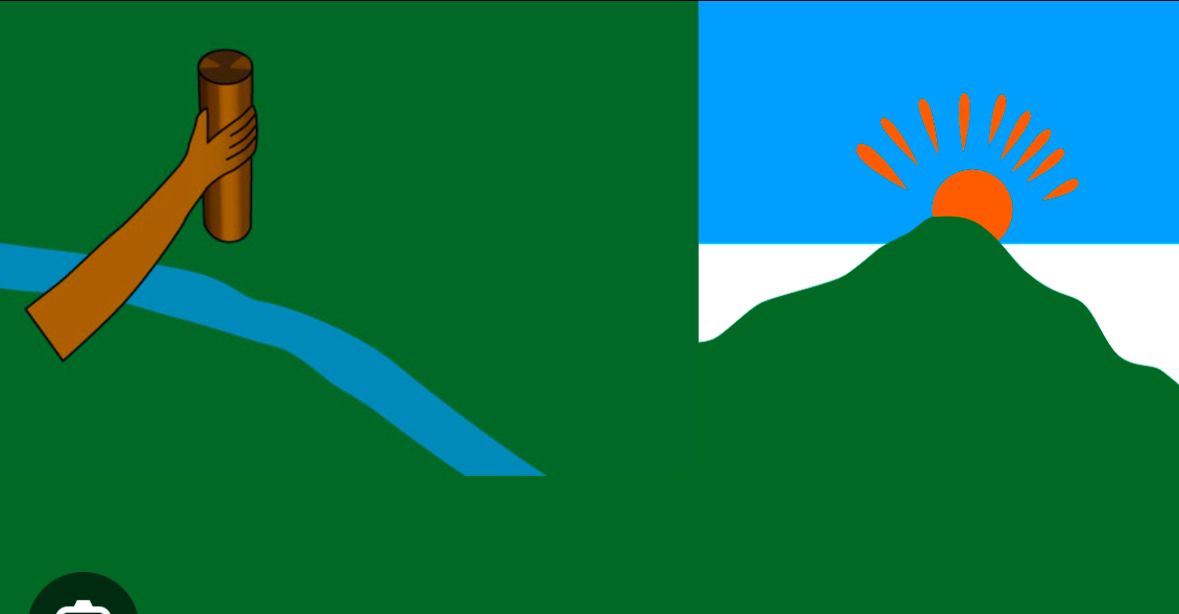
Grand Gedeh, known affectionately as the home of the 'Putu Mountain Boys,' has reached its first football final in over a decade. Their journey to the championship was defined by a dramatic 3-2 victory over a formidable Maryland County side in the semi-finals. Central to this success has been the clinical finishing of striker Nuch Zohn, whose first-half brace set the tone, followed by a composed finish from Daniel Moah to seal the win. This victory is a milestone that has galvanized the southeastern region, marking the first time the county has stepped onto the grandest stage of Liberian football since 2010.
The weight of history hangs heavy; Grand Gedeh last tasted national championship glory in 1986, nearly four decades ago. For the residents of Zwedru and surrounding districts, this match is a chance to rectify a 39-year title drought and assert their status as a dominant force in Liberian football. In sharp contrast, Lofa County arrives at the SKD Complex as the established benchmark of modern County Meet success. Having secured the title in the 2020/2021 season, the 'Wologisi' men are appearing in their third consecutive final—a testament to their structural depth, institutional stability, and the cultivation of a robust footballing culture.
Their path to this final was anything but easy; they were pushed to the absolute brink by Margibi County, eventually advancing via a nerve-wracking 5-4 penalty shootout. This performance followed a ruthless 4-0 annihilation of Bong County in the previous knockout stage, a game that showcased the tactical intelligence and attacking fluidity that Lofa’s management has instilled in their squad. Anchored by the veteran presence of 2021 MVP James Tarpeh and the defensive reliability of Nathan Karmboro, Lofa possesses a championship pedigree that is difficult to replicate. The tactical divergence between the two sides provides a compelling narrative for analysts and fans alike.
Grand Gedeh operates with a high-octane, aggressive press, utilizing their pace and physical endurance to force turnovers in the final third. With an impressive tally of 8 goals in just 4 knockout games, their offense is clearly the primary engine of their success. Lofa, conversely, has leaned into a more pragmatic, set-piece-reliant strategy. James Tarpeh’s ability to find the back of the net in every knockout game underscores his importance as both a leader and a match-winner.
The tactical battle—Grand Gedeh’s relentless offensive waves against Lofa’s disciplined, low-block defensive structure—will likely determine the cadence of the game. For spectators, this is the ultimate collision of styles: the youthful, hungry intensity of a team seeking to reclaim its honor versus the measured, battle-tested efficiency of a side that knows exactly what it takes to hoist the trophy. The historical context of this rivalry adds an additional layer of intrigue. The last time these two counties faced each other in a championship final was in 1986, a game that ended in a coin toss to decide the victor—a peculiar anomaly that reflects the evolution and, at times, the administrative improvisation of the tournament over the decades.
While Lofa enters the match aiming to cement their legacy with another trophy, Grand Gedeh remains desperate to wash away the stinging memories of their heartbreak in the 2007 and 2010 finals. The tournament is not merely about trophies; it serves as a massive economic engine for the capital. Sponsorship agreements, most notably a significant injection of over $23,000 from APM Terminals Liberia, have provided the necessary infrastructure to manage large-scale fan movement and professionalize match-day operations. These corporate partnerships are vital, as they alleviate the burden on the national government while simultaneously stimulating the informal economy.
Vendors, transportation providers, and local hospitality businesses in Monrovia anticipate a massive windfall, with over 35,000 spectators expected to cram into the SKD Complex. This influx of fans from across the country creates a microcosm of Liberian society, where economic interests and regional loyalties converge in a shared space of competition. Furthermore, the County Meet is the primary scouting ground for the next generation of footballing talent. Players like Grand Gedeh’s Nuch Zohn and the 18-year-old Lofa midfielder Jeygbeh Konneh have become household names over the course of the tournament, attracting significant attention from international scouts.
The exposure provided by the National County Sports Meet has, in recent years, acted as a launchpad for young Liberians to secure trials with clubs in Europe and across the African continent, reinforcing the tournament's role as a legitimate pathway for professional development. Despite the euphoria of the competition, the tournament has not been immune to the political realities of the day. President Joseph Boakai’s administration has branded the event under the banner of 'Inclusive Development through Sports,' intentionally positioning the tournament as a vehicle for national reconciliation and stability. This framing is a strategic attempt to lower the political temperature in a country currently grappling with various legislative and constitutional challenges.
However, the efficacy of this approach is heavily debated among political analysts. Critics argue that while the spectacle of the County Meet serves as a convenient distraction, it does little to address the substantive, underlying systemic issues—such as infrastructure decay, rural-urban economic disparity, and government accountability—that continue to plague the Liberian state. The tournament remains a double-edged sword: a source of genuine national pride and a potential political tool used to mitigate domestic unrest. Security remains a paramount concern for organizers.
Following the volatile atmosphere and unfortunate clashes that marred the 2024 final, the authorities have implemented strict, multi-layered security measures. The fan base rivalry is intense; with over 10,000 Grand Gedeh supporters reported to be making the long trek from Zwedru to support their team, and the 'Wologisi Fan Army' effectively colonizing the northern sections of the stands, the atmosphere is set to be electric. Security forces will be on high alert to ensure that the passion of the supporters remains channeled through song, drum, and dance, rather than the violence that threatened to overshadow last year’s proceedings. Looking at the odds, pundits slightly favor Lofa County (55%-45%), citing their deeper bench and the experience of having navigated high-pressure finals environments.
Yet, in the 'Beautiful Game,' momentum is a powerful force. Grand Gedeh’s sheer determination to break their long-standing trophy drought could provide the psychological edge necessary to overcome a more polished opponent. The key to the match lies in the individual duel between the tournament’s top scorer, Nuch Zohn, and the disciplined Lofa center-back pairing of Karmboro and Curtis. If Grand Gedeh can break down this defensive wall early, the dynamic of the match will shift dramatically in their favor.
Regardless of the final score—which many analysts predict will be a narrow 2-1 victory for Lofa after extra time—the match serves as a symbol of resilience. It highlights the endurance of the Liberian spirit, which seeks moments of collective celebration despite the daunting hurdles of development and governance. As the kickoff draws near, the SKD Complex prepares to host a spectacle that goes beyond sport. It is a manifestation of the nation’s ongoing narrative—one of ambition, rivalry, and the search for unity on the field of play.



