
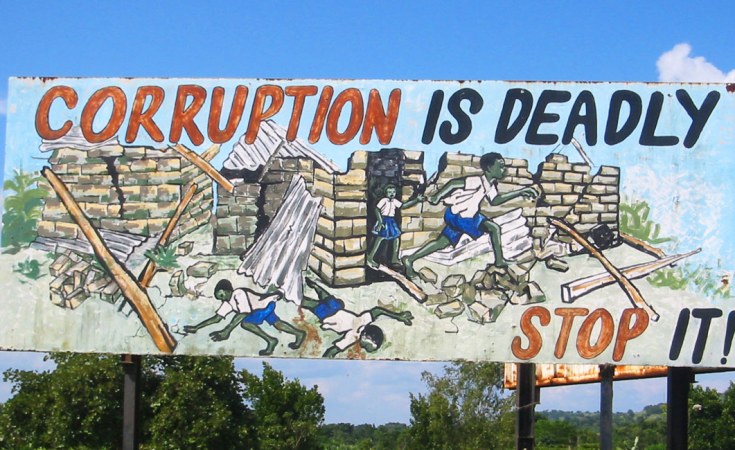
Corruption has been a persistent and corrosive challenge to the fabric of governance in Liberia, operating as a systemic barrier that has stifled the nation’s potential since the end of its brutal civil war. Efforts to promote good governance, rule of law, and institutional accountability have been central to the country's post-conflict reconstruction agenda, yet the narrative remains one of stagnant progress. In 2021, Liberia ranked 137th out of 180 countries in Transparency International's Corruption Perceptions Index, a diagnostic indicator that highlights a pervasive sense of malaise regarding public integrity. This ranking is not merely a statistical outlier; it is a reflection of the deep-seated structural deficiencies that continue to impede Liberia's socio-economic trajectory.
The historical context of Liberian governance is essential to understanding this current crisis. Founded in 1847, the nation has often grappled with a centralized political system that historically concentrated power within a small elite class. This legacy of patronage and exclusionary politics provided a breeding ground for the nepotism and bribery that define the contemporary administrative landscape. Following the catastrophic civil conflicts of the late 20th century, which decimated infrastructure and social cohesion, the international community poured billions into reconstruction.
However, the subsequent years have shown that institutional reform is far more complex than rebuilding physical roads or bridges; it requires a fundamental shift in political culture. Corruption in Liberia is fueled by a volatile mix of weak governance institutions, a profound lack of transparency in the bureaucratic machinery, and limited access to justice for the average citizen. The public sector, intended to serve as the engine of development, is often described as being plagued by embezzlement, systemic bribery, and entrenched nepotism. These practices frequently proceed with relative impunity due to a judicial system that struggles with independence and a lack of robust enforcement mechanisms.
When corruption becomes a standard operating procedure, it erodes the public’s trust in government institutions, fostering a climate of profound disillusionment. For the Liberian populace, this manifests as a disconnect between the state’s promises of development and the harsh reality of stagnant wages, poor healthcare, and deteriorating education systems. The establishment of the Liberia Anti-Corruption Commission (LACC) was a landmark step intended to signal a new era of accountability. Similarly, the implementation of the Public Financial Management (PFM) Reform Program represented a concerted attempt to digitize and track government expenditure.
Despite these technical solutions, the reality on the ground has remained stubbornly resistant to change. Progress is frequently undermined by political interference, as anti-corruption bodies often lack the requisite financial autonomy or the legislative teeth to prosecute high-level offenders. The challenge, therefore, is not merely the creation of oversight bodies, but the sustained political will to empower these institutions to act without fear or favor. The economic implications of this governance deficit are profound.
Corruption in Liberia acts as a hidden tax, diverting critical resources away from essential public services—such as clean water, reliable electricity, and maternal health—into private pockets. This diversion undermines the fundamental social contract, which stipulates that the state should manage resources for the collective benefit of all citizens. Furthermore, corruption creates an uneven playing field that deters both domestic and foreign direct investment. Investors are rightfully wary of environments where legal contracts are non-binding and where graft is a prerequisite for doing business.
Consequently, the nation’s reliance on the extraction of natural resources, such as rubber, iron ore, and timber, continues to be a double-edged sword. While these sectors provide much-needed revenue, they are historically susceptible to rent-seeking behavior, where government officials exploit their positions to siphon off profits that should be reinvested into the nation's human capital. The impact of this cycle of corruption extends to the broader West African regional stability. Liberia serves as a crucial state in the Mano River Union.
When governance fails in one country, the effects ripple outward, impacting regional economic integration, migration patterns, and security cooperation. A stable, transparent, and democratic Liberia is not just a domestic objective; it is a regional necessity for the growth of the ECOWAS zone. To move beyond the current impasse, a multi-faceted approach is required. Institutional reform must go beyond surface-level changes.
It requires the strengthening of the judiciary to ensure that the rule of law applies to the political elite with the same force it applies to the marginalized. Transparency must be operationalized through open-data initiatives that allow citizens to monitor government budgets in real-time, effectively moving oversight from the closed doors of ministry offices to the public eye. Moreover, the role of a vibrant civil society cannot be overstated. By empowering investigative journalists, student unions, and community leaders, the government can foster a culture of accountability where silence is no longer an option.
Economic diversification is equally vital. By shifting the focus away from a dependence on raw natural resource extraction and toward the development of the agricultural sector, manufacturing, and the digital economy, the government can create sustainable jobs for the youth population. A large portion of Liberia’s demographic consists of young people; if they find no pathways to legitimate employment because the market is strangled by corruption and cronyism, the country faces the risk of renewed political unrest. Creating opportunities that reward merit over connection is the only way to retain the brightest minds within the country.
Furthermore, decentralization efforts that give local governments more autonomy and accountability can reduce the bottlenecks of the centralized system in Monrovia, bringing government services closer to the people and making oversight more manageable. In conclusion, the struggle against corruption in Liberia is a battle for the nation's future. It is a fundamental conflict between the status quo of rent-seeking and the vision of a developmental state. True change will necessitate an unwavering commitment to the principles of transparency and the rigorous enforcement of accountability measures.
Without addressing these root causes, the potential for sustained economic prosperity will remain elusive. It is imperative that the government, in partnership with civil society and international stakeholders, prioritizes the reform of the very institutions that govern the nation. Only by stripping away the layers of opacity and shielding oversight bodies from political meddling can Liberia truly emerge from the shadow of its past and establish a governance model that serves its citizens, protects its wealth, and secures its place in the modern global economy. The time for gradual, incremental change has passed; the urgency of the situation demands a comprehensive and bold overhaul of the governance architecture to ensure that the promise of a peaceful and prosperous Liberia is finally realized.
