
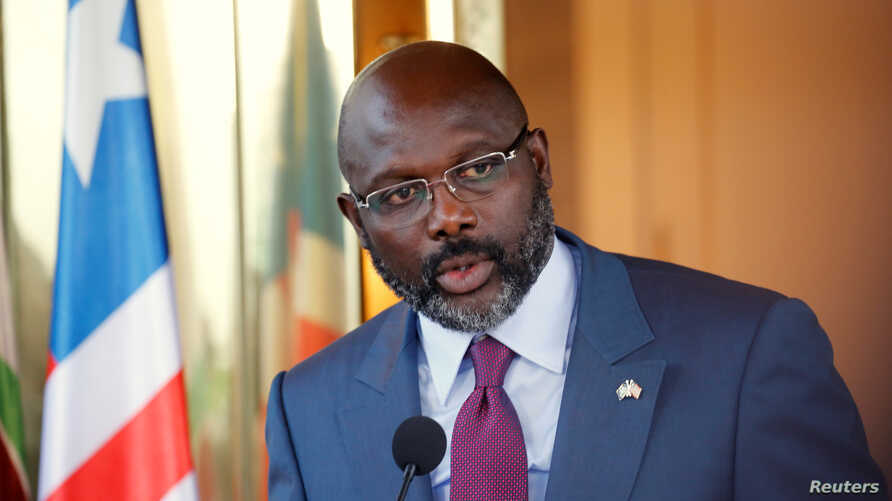
George Weah's ascent to the Liberian presidency in 2018 was hailed globally as a landmark moment in African democracy. For a nation still reeling from the scars of a brutal civil war and historically dominated by a cycle of Americo-Liberian political elites, Weah—a former global football icon—represented a breath of fresh air. His supporters viewed his victory as a triumph of the common man, a departure from the entrenched, often exclusionary political order that had characterized Liberian governance for nearly two centuries. Yet, as his tenure progressed, the initial euphoria surrounding his 'pro-poor' agenda began to dissipate, replaced by intensifying accusations of nepotism, cronyism, and the emergence of a pervasive culture of godfatherism.
This analytical report examines how Weah’s political career and the subsequent management of his administration have contributed to a significant erosion of democratic norms, accountability, and institutional integrity in Liberia. The political history of Liberia is deeply rooted in systems of patronage, where power is rarely institutionalized but rather mediated through personal loyalties and ethnic or communal networks. When George Weah entered the political arena in 2014 by securing a seat in the Liberian Senate, he mobilized a base that felt economically and socially marginalized. By the time he ascended to the presidency in 2018, defeating former Vice President Joseph Boakai, the public expectation was that he would dismantle these exclusionary networks.
Instead, critics argue that Weah merely replaced the old guard with his own set of political dependents, effectively fostering a model of 'godfatherism' that prioritizes loyalty over meritocratic governance. Godfatherism, in the context of Liberian politics, refers to a system where a central political authority leverages personal influence to control the appointment of key state positions, ensuring that those in power remain beholden to the leader rather than the citizenry. This phenomenon is not entirely new to the region, yet under Weah, its manifestation has been particularly acute. By appointing family members and close personal associates—many of whom lacked the technical expertise required for their portfolios—to sensitive government positions, the presidency signaled that access to state resources was contingent upon personal proximity to the executive.
This practice has not only compromised the efficiency of the Liberian civil service but has also triggered a profound crisis of legitimacy. The elevation of figures like his wife to head the Office of the First Lady—an entity that gained outsized influence and budgetary prominence—became a focal point for critics who argued that the boundary between private family interests and state duties had become dangerously porous. The economic and social implications of this consolidation of power cannot be overstated. When government roles are distributed as spoils of political patronage, the primary objective of administration shifts from public service delivery to the preservation of the inner circle.
This leads to a degradation of institutional oversight mechanisms. For instance, the judiciary and the national auditing bodies have frequently faced accusations of being compromised or intentionally weakened to prevent the scrutiny of executive actions. The 2021 report from the United States Department of State highlighted that corruption and nepotism remained pervasive in Liberia, citing numerous instances where the president’s inner circle acted with near-impunity. These findings reflect a broader trend where international partners, who once championed Liberia's democratic trajectory, began to express deep reservations about the lack of progress in combatting systemic graft.
Furthermore, the role of the Congress for Democratic Change (CDC) has been central to this narrative. Established in 2004, the party was intended to be a vehicle for the masses, promising to elevate the disenfranchised. However, as the party matured into a ruling entity, the structural governance of the CDC appears to have mirrored the very weaknesses it once criticized in the previous regimes. The party's reliance on intimidation tactics, often carried out by youth wings or political operatives emboldened by their proximity to the presidency, has created a chilling effect on political opposition and civil society.
This atmosphere stifles the robust debate necessary for a healthy democracy, as dissenting voices are often labeled as enemies of the state or anti-progressive. The regional significance of these developments is also profound. Liberia sits in a West African neighborhood where the democratic backsliding seen in surrounding countries—ranging from constitutional term limit manipulations to military interventions—has placed immense pressure on leaders to maintain credible, transparent governance. Weah’s administration, by failing to curb the perception of godfatherism, has arguably missed a critical opportunity to set a standard for democratic resilience in the region.
When a leader builds a political platform on the promise of change but falls into the trap of patronage, the resulting cynicism among the electorate can be catastrophic for democratic participation. Youth in Liberia, who were once the bedrock of Weah’s support, have increasingly expressed disillusionment as the promises of economic transformation have been hampered by allegations of misappropriated state funds and a lack of transparency in the extractive sectors, particularly in mining and timber. The persistent centralization of power creates a brittle political structure. By prioritizing the loyalty of political cronies over the competence of the professional bureaucracy, the state struggles to respond to crises effectively—whether they be economic inflation, public health emergencies, or infrastructure deficits.
History has shown that regimes built on personalistic patronage networks are often ill-equipped to survive internal shocks, as they lack the institutional buffers provided by an independent civil service. Looking forward, the legacy of George Weah’s presidency will be defined by how Liberia manages this transition toward a more transparent, merit-based governance system. The prevalence of godfatherism is not an inevitable feature of Liberian life; it is a choice made by political actors who prefer short-term control over long-term institutional stability. For democracy to take deeper root, Liberia must move beyond the personality-driven politics that have defined its recent era and strengthen the constitutional checks and balances that prevent any single individual or group from monopolizing the state.
In conclusion, the accusations of nepotism and godfatherism surrounding the Weah administration serve as a stark reminder of the fragile state of Liberia’s democracy. The shift from a pro-poor movement to a regime accused of concentrating power in the hands of a select few has profoundly damaged the public's trust in the CDC. Addressing these issues requires more than rhetoric; it necessitates a fundamental restructuring of how government appointments are made, a strengthening of the judiciary’s independence, and a genuine commitment to the ideals of public service that transcend personal, ethnic, or political loyalties. Liberia stands at a crossroads, and the trajectory of its future will depend on whether it continues to allow the influence of godfathers to dictate its political fate or whether it chooses the path of democratic accountability and inclusive governance.



