
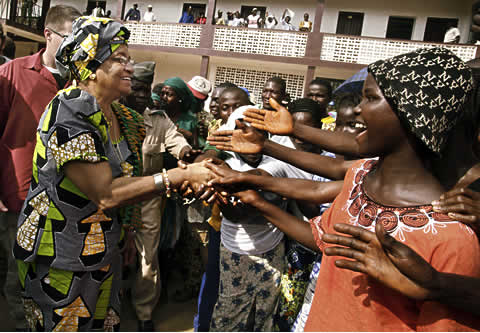
Liberia, a nation with a rich and complex history, stands at a critical juncture in its pursuit of gender equality. While the country has made notable strides in recent years, significant systemic and cultural challenges persist, hindering the full potential of its female population. According to the United Nations Development Programme (UNDP), Liberia ranked 144th out of 189 countries on the 2020 Gender Development Index, a sobering metric that measures disparities in health, education, and living standards. For a nation that shattered glass ceilings by electing Ellen Johnson Sirleaf as Africa’s first female head of state in 2005, these statistics reveal a profound disconnect between top-tier political milestones and the lived realities of ordinary women.
The path toward equality remains obstructed by entrenched patriarchal norms, the lingering shadows of a protracted civil conflict, and economic structures that have historically marginalized women. Addressing these deep-seated inequalities is not merely a matter of social justice; it is an economic and developmental imperative for a country striving to secure a prosperous and peaceful future. Women and girls in Liberia face a convergence of discriminatory hurdles, ranging from widespread gender-based violence (GBV) and the persistence of early, forced marriages, to structural barriers that limit their access to quality education and viable economic opportunities. UNICEF reports that approximately 35% of women in Liberia aged 20-24 years were married or in a union before the age of 18, a practice that frequently interrupts educational attainment and perpetuates the cycle of poverty.
Furthermore, only about 22% of women aged 15-24 years have successfully completed secondary education, severely restricting their ability to compete in a rapidly evolving labor market. The economic landscape is equally challenging; women comprise only 24% of the formal labor force. This significant underrepresentation in the formal sector is often attributed to limited access to capital, discriminatory hiring practices, and the disproportionate burden of unpaid care work that falls on women’s shoulders. Historically, the socio-economic status of Liberian women has been inextricably linked to the country’s turbulent political trajectory.
During the fourteen years of civil war, women were frequently victims of extreme violence and displacement, yet they emerged as powerful agents of peace, famously instrumental in the Women’s Mass Action for Peace, which helped force warring factions to the negotiating table. Despite this pivotal role in the nation’s reconstruction, the post-conflict era has not uniformly translated into tangible gains for women in terms of legislative protection or economic inclusion. While the government has adopted critical frameworks like the 2015 National Gender Policy and the 2008 Domestic Violence Act, the implementation gap remains cavernous. The 2017 election of Ellen Johnson Sirleaf served as a global beacon of progress, providing a temporary sense of optimism regarding female representation in governance.
However, the subsequent years have demonstrated that individual leadership, while inspiring, does not automatically dismantle systemic inequality. World Bank data underscores this reality, showing that 47% of women have completed primary education compared to 60% of men, and the disparity in labor force participation remains stark, with 20% of women aged 15 and older active in the formal market versus 68% of men. The crisis of violence against women in Liberia is perhaps the most urgent challenge. According to the United Nations Population Fund (UNFPA), 43% of women have experienced physical violence, while 13% have experienced sexual violence.
A 2013 survey noted an even more alarming lifetime prevalence of 64% for physical or sexual violence, illustrating that for a majority of Liberian women, home and community spaces are not the sanctuaries they should be. This pervasive violence is both a symptom of and a catalyst for gender inequality, effectively silencing women and restricting their mobility and public life participation. The economic implications are equally grave; with a poverty rate of 59% for women compared to 53% for men, it is evident that the current trajectory is failing the female segment of the demographic dividend. Beyond the raw numbers, there is a cultural dimension to this struggle.
In many rural communities, traditional customs often prioritize male interests, limiting a girl's right to inherit property, participate in community decision-making, or access reproductive healthcare. Reproductive health remains a critical vulnerability; limited access to clinics, coupled with the stigma surrounding sexual health, further reduces the ability of women to manage their own lives effectively. The Ministry of Gender, Children, and Social Protection has made efforts to streamline policy, but it remains chronically underfunded and overwhelmed by the magnitude of its mandate. True progress requires a multipronged strategy that goes beyond simple policy adoption.
First, the government must prioritize the rigorous enforcement of existing laws. It is not enough to have a domestic violence act; the judiciary must be trained to prosecute these cases effectively, ensuring that victims have access to justice rather than being pushed toward informal and often re-traumatizing settlements. Second, investment in education must be targeted and rural-centric. Scholarships for girls and the provision of school infrastructure in underserved regions are essential to closing the gender gap in primary and secondary completion.
Third, economic empowerment programs must be demystified and made accessible. This means providing more than just micro-loans; it requires technical training, business mentorship, and removing the legal barriers that prevent women from accessing land ownership and credit. Changing social norms is the final, and perhaps the most difficult, pillar of reform. This requires a sustained national dialogue involving community leaders, traditional elders, and religious institutions.
These groups are often the gatekeepers of cultural traditions that perpetuate gender-based disparities. By engaging them in the discourse around the health and economic benefits of gender equality, Liberia can begin to shift the internal narrative. Furthermore, the role of international partners, such as the UNDP and local civil society, is vital in maintaining the momentum of reform. The Gender Development Index score of 0.
545 for women, contrasted with 0.606 for men, is not just a statistic—it is an urgent call for systematic recalibration. As Liberia looks toward the future, it must recognize that true national resilience is impossible while nearly half the population is systematically held back from their full potential. Investing in the health, education, and security of women is the single most effective investment the Liberian state can make.
The journey is far from over, but through collective action—from the legislative chambers of Monrovia to the village councils in the hinterlands—the vision of a truly gender-equal Liberia remains an attainable goal. We invite our readers to reflect on these insights and contribute to the ongoing national conversation. Do you have additional facts, data, or personal perspectives on the state of gender equality in your community? We encourage you to share your experiences with us.
