
In the burgeoning era of global digitalization, Liberia stands at a precarious and pivotal crossroads. With a population nearing five million and a government committed to modernization, the nation is aggressively seeking to integrate digital infrastructure into its core socioeconomic pillars. However, this transition is increasingly overshadowed by the escalating specter of cyber instability. Recent intelligence reveals that Liberia’s digital ecosystem is not merely underdeveloped but actively vulnerable, as evidenced by the debilitating cyberattack on the nation’s top-level domain (.LR) in June 2024. This breach, which paralyzed essential government portals and service agencies for over 48 hours, was more than a technical hiccup; it was a profound failure of national resilience and a stark indicator of systemic weakness. As Insights Liberia observes this transformation, it is evident that President Joseph Nyuma Boakai’s recent pivot toward prioritizing cybersecurity is not just a policy preference—it is an existential imperative for national sovereignty.
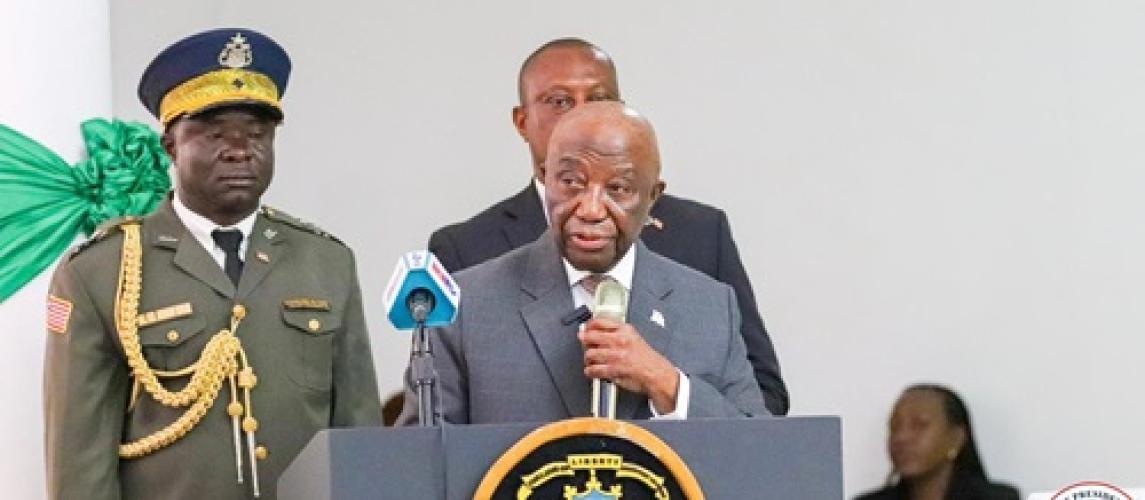
The urgency of this stance was front and center at the recent three-day Cybersecurity Conference, hosted by the Liberia Telecommunications Authority (LTA). During the summit, President Boakai articulated a vision that moved beyond the binary view of cybercrime as merely a series of individual hacks. Instead, he framed the digital frontier as a theater of modern warfare. By drawing parallels between the disruptive potential of cyber breaches and the kinetic devastation of traditional military conflicts, the President signaled a major shift in the executive branch’s understanding of national security. The statistical landscape provided by the administration is chilling: a global surge in cyber breaches of over 70% in the last two decades, compounded by businesses losing over $2 billion in 2023 alone to email-based fraud. These metrics provide the empirical backdrop for a necessary and overdue national alarm.
At the core of the President’s analysis is the recognition that cybercrime acts as a force multiplier for instability. It is rarely an isolated criminal act; it is frequently intertwined with sophisticated transnational networks involved in money laundering, human trafficking, and illicit narcotics trade. Consequently, the administration views the lack of a comprehensive legal framework—specifically the pending Cybersecurity Bill—as a critical legislative failure that the current Legislature must rectify with absolute dispatch. The President’s rhetoric suggests that security cannot be an afterthought in the design of digital governance; it must be the architectural foundation. When digital systems are left porous, the integrity of political institutions is compromised, public trust evaporates, and the foundational pillars of democratic governance are eroded by bad actors exploiting technical and policy blind spots.
The Liberia Telecommunications Authority, under this new directive, is effectively undergoing a transformation of its institutional mandate. Historically functioning as a standard sectoral regulator, the LTA is now being tasked with spearheading the country’s cyber defense architecture. This is a tall order. The Authority’s mission now extends into the complex realms of policy drafting, cross-border intelligence sharing, and the enforcement of digital safety protocols that previously existed only in theory. The President’s mandate for the LTA is unambiguous: create a robust, enforceable, and agile regulatory framework that can withstand the rapid evolution of malicious cyber-capabilities. This requires not only local oversight but deep integration with international cyber-defense standards and global best practices. By bringing local stakeholders together with international experts at the recent conference, the LTA is attempting to bridge the gap between Liberia’s current defensive posture and the global standard of digital resilience.
Crucially, the LTA’s strategy relies heavily on the model of Public-Private Partnerships (PPPs). In a nation with resource constraints, the government cannot be the sole provider of cybersecurity, nor can it hold all the requisite technical expertise internally. The LTA is correctly identifying the private sector—the nation’s banks, telecommunications service providers, and energy firms—as the frontline of this defense. By pooling resources and facilitating real-time information sharing regarding emerging threats, the LTA aims to build a 'collective defense' model. This approach is intended to ensure that an attack on one sector does not inevitably lead to a systemic collapse, a recurring risk in Liberia’s currently siloed digital environment.
However, we must address the persistent structural impediments that threaten these ambitions. Liberia faces a profound 'human capital deficit' in the cybersecurity sector. While the Digital Transformation Program is a noble and necessary initiative—aiming to equip 10,000 young Liberians with foundational skills—the transition from foundational training to high-level threat hunting and incident response is long and complex. Furthermore, there is the issue of budgetary constraints. Cybersecurity is expensive; it requires constant upgrades, high-end talent retention, and sophisticated diagnostic tools. If the government’s rhetoric is not matched by a sustained and significant budgetary allocation, the vision of a resilient Liberia will remain aspirational. The digital gap is widening globally, and Liberia is currently playing catch-up in an environment where the speed of technological change often outpaces the slow grind of bureaucratic processes.
Moreover, the legislative hurdles remain significant. The Cybersecurity Bill, while heralded by the President as a panacea for the current lack of regulation, must be crafted with precision. It must balance the need for national security with the fundamental rights of privacy and freedom of expression. A poorly constructed bill could inadvertently provide a veneer of legality to state overreach, which would ultimately harm the very digital ecosystem the government seeks to foster. The legislature is tasked with a delicate act: passing a bill that is draconian enough to deter international cyber criminals but transparent enough to maintain the confidence of foreign investors and the local tech-savvy youth population. The integration of international law into our local statutes will be essential to ensure that Liberia can effectively prosecute cross-border cybercrimes, an area where the current legal regime is entirely deficient.
Beyond the hardware and the laws, there is the essential element of culture. A nation’s cybersecurity is only as strong as its weakest link, which, more often than not, is the individual user. The LTA’s efforts to promote public awareness are critical, yet this requires a sustained national campaign, not just occasional conferences. We must move toward a culture of digital hygiene, where government officials, corporate executives, and everyday citizens treat their digital footprints with the same care they accord their physical property. This means mandatory training for public servants, rigorous security standards for government contractors, and a national strategy that integrates digital literacy into the core of the educational system.
Looking forward, the success of President Boakai’s vision will be measured not by the rhetoric delivered at conferences, but by the tangible reduction in successful attacks and the restoration of public confidence in digital services. The road ahead is fraught with technical, legal, and financial challenges. Liberia’s digital future is not a destination but a constant process of adaptation. By moving toward a proactive, rather than reactive, cybersecurity posture, the nation has the potential to transform from a victim of cybercrime into a beacon of digital stability in West Africa. However, this transformation requires more than just policy; it requires a whole-of-nation commitment to securing the digital frontier. The stakes could not be higher, as the digitalization of the Liberian economy is not merely a goal for development—it is the battleground upon which the country’s future sovereignty will be determined. The time for tactical maneuvering is over; the time for comprehensive, decisive, and integrated action is now.
