
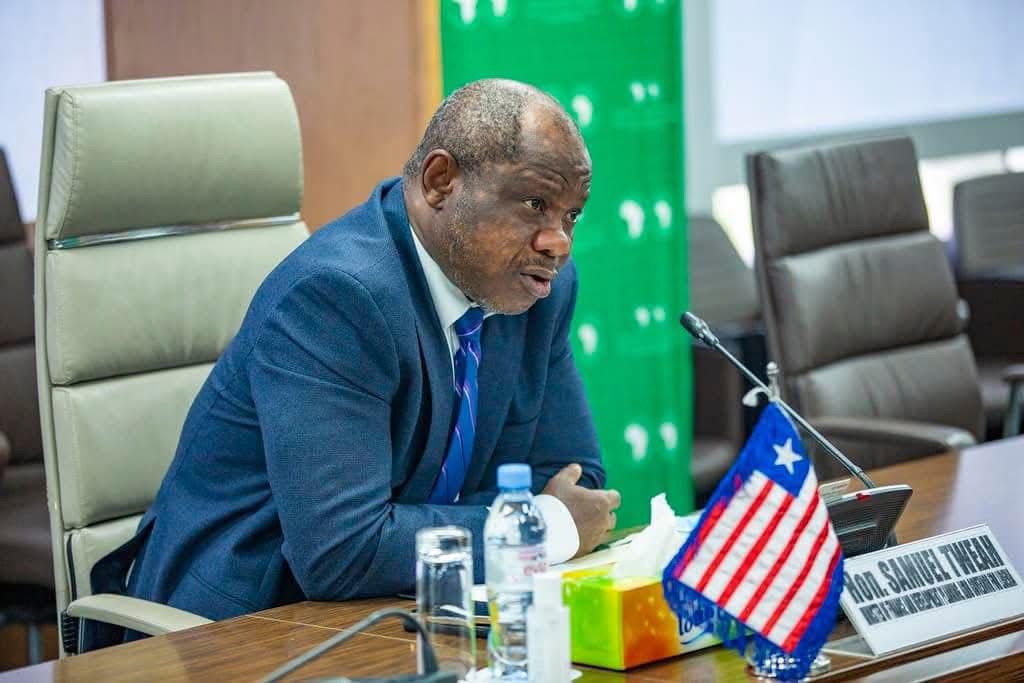
The political landscape of Liberia has reached a fever pitch as former Finance and Development Planning Minister, Samuel Tweah, has launched a blistering counter-offensive against the administration of President Joseph Boakai. Facing indictment on charges of economic sabotage, theft of property, and criminal conspiracy, Tweah has framed the legal proceedings against him not as a quest for justice, but as a calculated 'witch hunt' designed to dismantle the legacy of the Coalition for Democratic Change (CDC) and silence its most vocal architects. This confrontation marks a significant escalation in the post-election transition, where the rhetoric of accountability has collided with accusations of political retribution, potentially stalling the nation's governance agenda and further deepening the polarization of the Liberian electorate. At the heart of this controversy are allegations concerning the illegal disbursement of funds and the misappropriation of millions of dollars during the Weah administration, a period defined by massive infrastructural expansion and recurring allegations of financial mismanagement.
For Tweah, a central figure in the Weah administration, these charges are merely the latest chapter in a long-standing pattern of 'falsely devilish accusations' that have plagued his career. He cites the infamous $25 million mop-up operation, designed to stabilize the Liberian dollar in 2018, and the pervasive, albeit never fully substantiated, rumors surrounding the missing 16 billion Liberian dollars as examples of narratives fabricated by his political opponents to undermine his technocratic standing. Tweah asserts that these maneuvers are part of an orchestrated smear campaign, particularly pointing to the inflammatory broadcasts by Spoon TV CEO Stanton Witherspoon. Witherspoon has been a prominent voice in the media accusing Tweah of presiding over the misuse of $30 million in COVID-19 emergency funds.
Tweah’s response has been characteristically defiant; he has labeled these claims as 'malicious misinformation' and has publicly declared his intent to initiate a defamation lawsuit against Witherspoon, viewing the $30 million narrative as a political construct meant to erode his credibility. Historically, the pursuit of former officials for alleged corruption is not novel in Liberia, yet the current climate carries a distinct urgency. Since the transition of power, the Boakai administration has faced immense pressure to audit the previous government to satisfy public demand for fiscal transparency. However, the use of indictments has been perceived by the CDC as a tool of exclusion.
Tweah argues that his specific role as the former Finance Minister, having handled the most sensitive fiscal levers of the state, should have been treated with a higher degree of institutional respect. He warns that by weaponizing the justice system, the ruling Unity Party risks a cycle of perpetual retaliation that threatens the stability of future peaceful transitions. Beyond the individual charges, the conflict centers on the economic legacy of George Weah. Tweah defends his tenure by emphasizing that the foundations of modern Liberian development were laid under his stewardship.
He highlights that the CDC government successfully negotiated complex, long-term financing arrangements—spanning over a decade—for massive road connectivity and electricity projects. According to Tweah, these initiatives were designed to be 'future-proof,' ensuring that subsequent administrations could not claim credit without acknowledging the groundwork laid by the CDC. He views these infrastructure achievements as his greatest defense against corruption allegations, positing that any objective audit would reveal that the funds in question were directed toward tangible development outcomes rather than illicit personal gains. A particularly intriguing aspect of Tweah’s defense is his reflection on the Liberia Anti-Corruption Commission (LACC).
Often criticized for a lack of independence, the LACC underwent significant legislative and structural reforms during the Weah years. Tweah insists that the administration he served in empowered the LACC with greater legal authority and autonomy, even to the point where the President’s own influence over the agency was diminished. He suggests that the current government is now exploiting the very institutions of accountability that he helped strengthen, turning them into instruments of political warfare. This irony, he contends, is not lost on the international observers and development partners who previously lauded Liberia’s steps toward building a robust legal framework for combating graft.
The economic implications of this standoff are severe. For investors and international donors, the spectacle of a former finance minister embroiled in a criminal court battle over public funds creates an atmosphere of uncertainty. Such 'political noise' can affect credit ratings, deter foreign direct investment, and complicate negotiations with the International Monetary Fund (IMF) and the World Bank. When the highest levels of government are perceived to be in a state of 'all-out war,' the focus on crucial policy reforms—such as tackling inflation, improving the ease of doing business, and addressing youth unemployment—often takes a back seat to the theater of political retribution.
Furthermore, the regional context cannot be ignored. West Africa has seen a wave of political instability characterized by democratic backsliding and challenges to institutional legitimacy. In this environment, Liberia’s ability to conduct a fair and transparent legal process is a litmus test for its democratic credentials. If the public perceives that the courts are being used to settle personal scores rather than to enforce the law, the long-term impact on the rule of law could be catastrophic.
It erodes the social contract, as citizens become increasingly cynical about the possibility of impartial justice. Tweah’s insistence that he will 'vindicate himself in court' signals that he is preparing for a protracted legal battle that will likely define his political future and that of the CDC as a party. He has promised 'stiff resistance,' a phrase that underscores the volatility of the current political climate. The CDC, as the primary opposition, is mobilizing its base to perceive these arrests as an attack on their movement.
By turning these indictments into a cause célèbre, Tweah is not only fighting for his personal reputation but is also galvanizing a base that feels disenfranchised by the current administration. As the case proceeds, the spotlight will remain fixed on the Liberian judiciary. The court's handling of these proceedings will be scrutinized locally and globally to determine whether the law is being applied consistently or selectively. For the Boakai administration, the challenge lies in balancing its promise to hold the previous government accountable with the need to avoid the appearance of political victimization.
If the prosecution fails to provide concrete, indisputable evidence, the move may backfire, handing the CDC a potent narrative of persecution that could bolster their prospects in future elections. As it stands, the standoff remains at a stalemate. Tweah sits defiant, armed with a legal defense and a narrative of accomplishment, while the government remains committed to its mandate of financial accountability. The outcome of this struggle will do more than just determine the fate of a few high-profile individuals; it will test the resilience of Liberia’s democratic institutions and determine whether the nation can move past its history of vengeful politics toward a more stable, rule-based governance model.
The 'Insights Liberia' analysis suggests that the true cost of this conflict will be measured in the loss of public trust—a commodity that is already in short supply and difficult to recover.
