
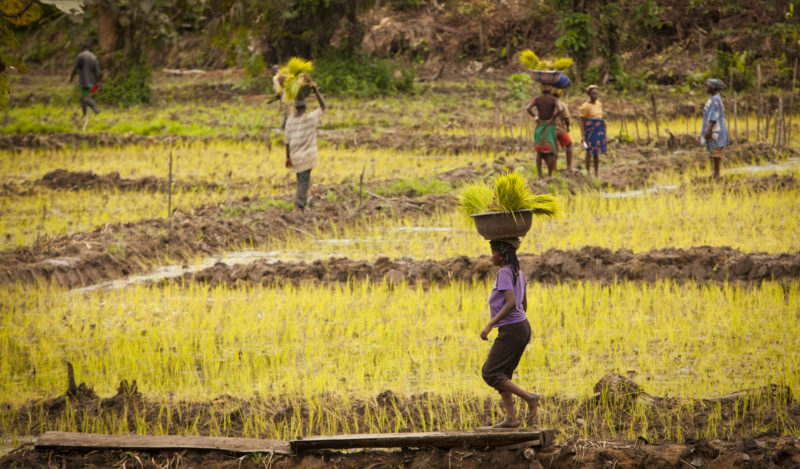
Food security remains one of the most critical, yet elusive, pillars of national stability in Liberia. Despite the country's abundant natural resources, fertile soil, and favorable tropical climate, a staggering 47% of the population faces food insecurity. This reality is a tragic paradox for a nation that once aspired to be the breadbasket of the West African sub-region. According to the most recent data from the World Food Programme (WFP), the situation is not merely a statistical anomaly but a humanitarian crisis that threatens the future of the Liberian state.
Most harrowing is the revelation that 23% of children under the age of five suffer from chronic malnutrition, a condition that inevitably leads to stunted physical and cognitive development, thereby handicapping the nation’s future workforce and socioeconomic potential. The history of food insecurity in Liberia is inextricably linked to the legacy of the brutal fourteen-year civil war. When the conflict erupted in 1989, it decimated the agricultural backbone of the country, driving thousands of smallholder farmers off their land and into urban centers or refugee camps. Although the guns fell silent in 2003, the structural damage to the agricultural sector was deep-seated.
Traditional farming systems were abandoned, and the institutional knowledge required to scale up domestic food production was largely lost or interrupted. Today, Liberia finds itself in a precarious position where it is heavily reliant on imported rice—the nation's staple—leaving the population vulnerable to the volatility of global commodity prices and supply chain disruptions. The COVID-19 pandemic served as a harsh wake-up call to this dependency. As global borders closed and internal movement was restricted to curb the spread of the virus, the fragility of Liberia’s food supply chain was laid bare.
Market closures prevented rural farmers from reaching urban consumers, while the rising cost of imported goods rendered basic sustenance unaffordable for the most vulnerable segments of society. The economic impact was immediate, highlighting that food security is not just about the availability of calories, but about the accessibility and affordability of nutritious food. Beyond the legacy of conflict, the lack of basic infrastructure serves as an insurmountable barrier to growth. In rural Liberia, the 'last mile' problem is profound.
The absence of all-weather roads means that during the rainy season, large swaths of the country are essentially cut off from major markets. Farmers often find themselves sitting on perishable surpluses they cannot sell, leading to massive post-harvest losses. These losses are not just financial; they represent a waste of human energy, land, and water resources. Without proper storage facilities, drying floors, or cold-chain logistics, a significant portion of Liberia’s domestic harvest never reaches the dinner table.
This infrastructure deficit is compounded by the existential threat of climate change. As the 2019 IPCC Special Report on Climate Change and Land warned, Liberia is increasingly susceptible to erratic weather patterns. Farmers who once relied on predictable cycles of rain now face unpredictable droughts that wither crops, followed by intense, flooding rains that wash away topsoil and destroy harvests. The seasonality of climate-driven disaster is becoming more frequent, turning traditional farming methods into a high-stakes gamble.
The economic ramifications are severe: rural households, which make up the majority of the poor in Liberia, see their livelihoods erased by a single climate event, forcing them into a cycle of permanent indebtedness. To combat these systemic issues, the Liberian government has pivoted toward policy frameworks like the Smallholder Agriculture Transformation and Agribusiness Revitalization Project (STAR-P) and the Liberia Agricultural Transformation Agenda (LATA). These initiatives seek to move agriculture from a subsistence model toward a market-oriented agribusiness structure. The goal is to provide farmers with improved inputs, such as climate-resilient seeds and fertilizers, while simultaneously fostering the private sector investment needed to process agricultural products locally.
However, policy design is only half the battle. The implementation of these programs often faces challenges related to budget constraints, lack of technical capacity, and the slow pace of decentralization. For these projects to succeed, they must go beyond the capital, Monrovia, and reach the hinterlands where the bulk of the agricultural production occurs. Nutrition-sensitive agriculture is also a necessary evolution of the government's strategy.
This involves not only increasing the volume of rice production but diversifying the food basket to include legumes, vegetables, and tubers that can provide a more balanced diet. Food fortification and community-based nutrition education are vital tools in addressing the silent epidemic of malnutrition that plagues the country’s youngest citizens. International partners, including the World Food Programme, the African Development Bank, and the International Fund for Agricultural Development (IFAD), have provided essential lifelines through humanitarian aid and developmental loans. However, there is a growing consensus among analysts that aid alone cannot solve a systemic structural deficit.
The shift must be toward sustainable investment that empowers local farmers to act as entrepreneurs. The regional significance of Liberia’s food security cannot be understated; in the context of the ECOWAS protocol, a stable and food-secure Liberia is essential for the economic integration of the West African bloc. Instability caused by hunger leads to migration, social unrest, and a drain on national resources that could otherwise be used for education or healthcare. Addressing the root causes of food insecurity in Liberia requires a multi-generational commitment.
It demands significant investment in rural road networks to connect farms to markets, heavy reliance on climate-smart agricultural technologies to mitigate environmental shocks, and a robust commitment to land rights reform to ensure that farmers have the security to invest in their own plots of land. Furthermore, the political will to prioritize agriculture as a national security issue—rather than just an economic one—is essential. We must recognize that food sovereignty is the bedrock upon which any successful national development strategy must be built. As we move forward, the conversation must shift from emergency response to long-term resilience.
The data is clear, the problems are documented, and the stakes could not be higher for the Liberian people. True progress will be measured not by the amount of aid received, but by the number of Liberians who can independently access affordable, nutritious, and home-grown food year-round. This is the challenge of our time, and meeting it will define the stability and prosperity of the Liberian nation for decades to come. If you have additional facts to add to this insight, or if you hold a perspective on the agricultural policies currently being implemented, we invite you to reach out and share your voice.
We believe that public discourse is the catalyst for reform, and we encourage stakeholders, farmers, and students to join the dialogue on our platform. Please contact us with your insights or opinions at analysis@insightsliberia.com. Together, we can shed more light on this critical issue and hold institutions accountable for the sustainable transformation of our agricultural sector.


