
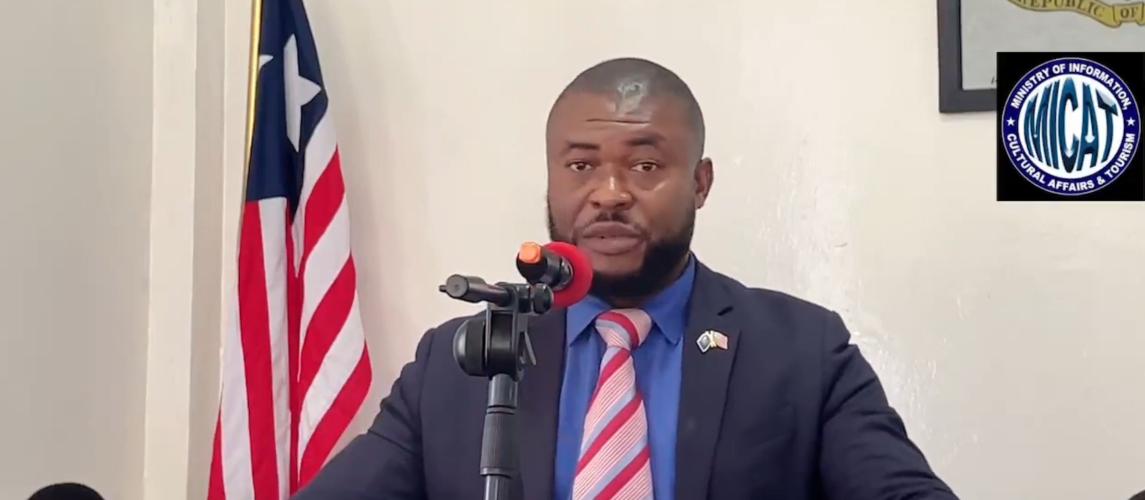
The Liberian government's fiscal trajectory for the 2024 fiscal year has ignited a firestorm of debate, capturing the attention of policymakers, economists, and an increasingly vigilant public. At the core of this contention lies a glaring fiscal paradox: despite a high-profile, aggressive campaign to sanitize the civil service and curb public spending, the projected wage bill for 2024 is slated to climb from $299 million to a staggering $309 million. According to Finance Minister Augustine Ngafuan, this $10 million expansion in expenditure stands in direct contradiction to the administration's stated goals of fiscal consolidation and bureaucratic optimization. This development raises foundational questions regarding the efficacy of current reform efforts and the transparency of Liberia’s public financial management systems.
The Civil Service Agency (CSA), under the current leadership, has touted significant progress in headcount reduction, successfully paring the workforce from approximately 65,000 to 61,000 individuals. By excising 'ghost workers'—fictional employees whose salaries are siphoned into illicit pockets—and enforcing the mandatory retirement of overage civil servants, the CSA sought to realize substantial savings. Theoretically, a leaner workforce should translate into lower payroll costs. However, the reality of a rising wage bill suggests that the structural ailments of the Liberian state apparatus run deeper than mere headcount statistics. The situation serves as a litmus test for the government’s ability to reconcile its reform rhetoric with the complex, often opaque mechanics of national budgeting.
To understand this fiscal misalignment, one must navigate the tension between necessary economic prudence and the volatile political realities of Liberia. The current administration operates under intense pressure to satisfy campaign promises, which often require expanding influence or patronage within the bureaucracy, while simultaneously adhering to fiscal targets set by international financial institutions like the International Monetary Fund (IMF). The wage bill is not merely an accounting line item; it is a vital political instrument that sustains the livelihoods of thousands of families while serving as a primary target for donor-driven austerity measures.
The paradox is rooted in several interconnected dynamics, the most significant of which is the friction between administrative reconciliation and the hidden liabilities uncovered during the cleanup process. When the CSA launched the Employee Status Regularization Project (ESRP), the intent was to purge the payroll of 'double dippers,' unqualified staff, and phantom employees. However, this forensic audit acted as a double-edged sword. In the process of identifying these fraudulent entities, the government inadvertently uncovered layers of neglected financial obligations. For instance, the reconciliation of salary discrepancies—where individuals were erroneously paid or underpaid—often necessitated retroactive adjustments. Furthermore, the systematic removal of illegitimate names necessitated the processing of severance packages and the settlement of long-overdue arrears for legitimate staff who had been caught in the crossfire of bureaucratic dysfunction. Essentially, the 'cost of cleaning' the payroll has, at least in the short term, outweighed the immediate savings from the personnel reductions.
Moreover, the structural wage adjustments implemented by the government have added a significant layer of expenditure. Harmonizing pay scales, particularly for frontline sectors such as healthcare, education, and national security, is a policy move designed to stem the "brain drain" of skilled professionals to the private sector or overseas. While these adjustments are necessary to improve morale and institutional capacity, they inevitably exert upward pressure on the aggregate wage bill. When the government increases the base salary of an essential worker to match regional or inflation-adjusted standards, the savings generated by removing a dozen unqualified junior staff members can be wiped out in a single payroll cycle. This is the inherent difficulty of modernizing a civil service that has long suffered from stagnant wages and systemic underinvestment.
Data integrity remains the primary antagonist in this fiscal narrative. Despite the removal of thousands of names, the persistence of payroll irregularities signals that oversight mechanisms remain fragile. The CSA’s discovery that individuals completely unaffiliated with the government were receiving regular payments—and in some cases, via mobile money platforms—demonstrates that the rot within the payroll system is not merely about headcount; it is about the architecture of payment delivery and the lack of robust internal controls. The decision to terminate mobile money payments for government employees was a necessary corrective measure, but it also exposed the extent to which digital, decentralized payroll systems can be exploited by the unscrupulous.
From an analytical perspective, the rising wage bill also highlights the fragility of Liberia’s broader economic environment. With high inflation and a private sector struggling to generate meaningful employment, the public sector remains the largest and most sought-after employer in the country. This creates a supply-side pressure that is difficult for any administration to ignore. The government faces a perpetual dilemma: how to shrink the bureaucracy without triggering social instability or stifling the primary engine of formal wage labor in the country. If the government proceeds with radical, rapid cuts, it risks undermining the very bureaucratic functions required to manage the economy, potentially leading to a collapse in service delivery in critical sectors.
Furthermore, the discrepancy between reported personnel reductions and the rising financial outlay has eroded public trust. For the average Liberian citizen, the optics are clear: the government claims to be cutting 'fat' from the system, yet the 'cost' of governance continues to climb. This creates a fertile ground for cynicism regarding corruption and mismanagement. When the public hears of payroll padding schemes—such as the recent investigation involving the Ministry of State for Presidential Affairs—the narrative shifts from 'reform' to 'cronyism.' Without transparent communication that explains the nuances of these financial movements, the administration risks losing the mandate of the people, which is essential for the painful, long-term fiscal reforms that lie ahead.
For Liberia’s international partners, particularly the IMF, these figures are of critical concern. The approval of a 40-month Extended Credit Facility (ECF) amounting to approximately US$210 million is contingent upon disciplined fiscal management and the successful implementation of structural benchmarks. If the government fails to demonstrate that it can control its wage bill, it risks jeopardizing the flow of these essential funds, which are needed to stabilize the macroeconomy and shore up foreign exchange reserves. The IMF will undoubtedly be looking for more than just a list of removed names; they will demand proof of institutional systems that prevent the re-emergence of ghost names and ensure that every dollar of the wage bill is tied to a verifiable, productive position.
Moving forward, the government’s strategy must evolve from 'headcount management' to 'fiscal architecture reform.' While the CSA’s effort to implement a real-time dashboard is a positive step toward transparency, this technological intervention must be supported by a legal and administrative framework that holds department heads accountable for payroll accuracy within their respective entities. The current approach is too centralized, placing an impossible burden on the CSA to audit 103 different government entities. A decentralized system of accountability, where payroll compliance is tied directly to the budget performance of each ministry, would create an internal incentive to eliminate ghosts and prioritize professional recruitment.
Finally, the government must engage in an honest, evidence-based dialogue with the public regarding the cost of civil service reform. If the wage bill is to rise due to necessary pay harmonizations or the settlement of historical arrears, the administration should be upfront about these costs, labeling them as 'investment in institutional capacity' rather than 'increased expenditure.' Distinguishing between the costs of corruption (which must be eliminated) and the costs of structural improvement (which must be funded) will be vital in navigating the remaining years of the administration’s tenure. The paradox of the rising wage bill is not necessarily a sign of failure, but it is certainly a loud alarm, signaling that the structural transformation of the Liberian state is a far more arduous and costly endeavor than initial projections suggested. For the sake of Liberia’s future, the government must move past the surface-level metrics and address the systemic, institutional, and political roots of the fiscal burden that continues to haunt the national treasury.
