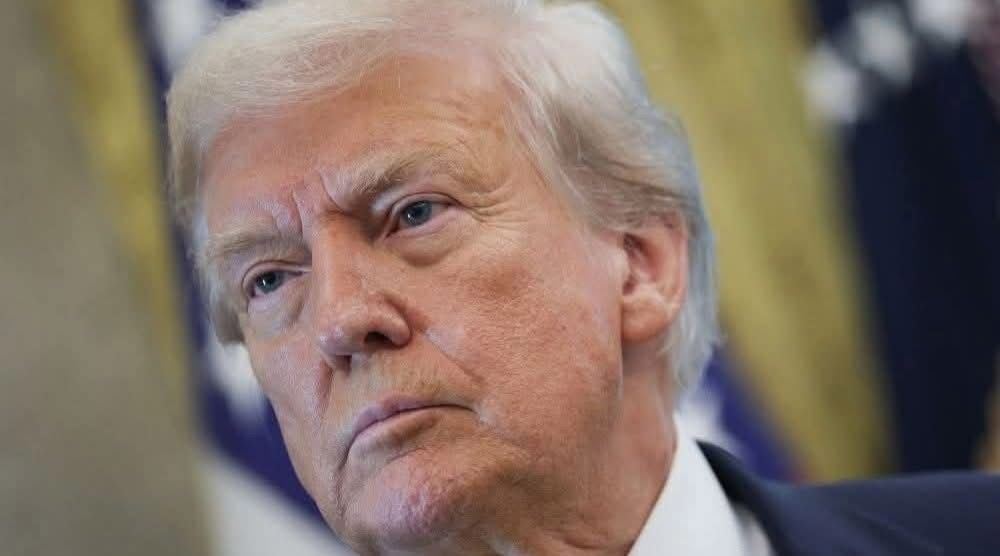
The recent directive from the White House, spearheaded by President Donald Trump, to accelerate and expand the deportation of migrants to African nations—specifically Uganda, Eswatini, South Sudan, and Rwanda—represents a seismic shift in international relations, one that fundamentally redefines the relationship between the United States and the African continent. This move, which has been cloaked in the administrative language of 'law and order,' essentially transforms these fragile, developing states into repository sites for America’s unwanted social and judicial burdens. By outsourcing the management of these individuals, Washington is not merely enforcing immigration policy; it is weaponizing state sovereignty under the guise of diplomatic cooperation, turning Africa into a convenient dumping ground for liabilities that the American political apparatus no longer wishes to address. To understand the gravity of this development, one must look beyond the immediate political rhetoric and examine the underlying mechanisms of this mercenary diplomacy.
For the Biden administration and his predecessors, deportation was often handled through bilateral repatriation agreements based on humanitarian considerations and due process. Conversely, the current strategy reflects a transactional cynicism that prioritizes domestic political optics over the complex realities of international stability. Washington’s recent agreements with Kigali, Kampala, and other capitals are reportedly sweetened with undisclosed aid packages, security cooperation promises, and quiet financial incentives. This is not the hallmark of an equal partnership; it is a clear example of asymmetrical pressure where the raw economic and geopolitical leverage of the United States is used to coerce governments that are often struggling with their own internal social crises.
The fundamental problem with this approach lies in the complete disregard for the sociocultural realities of the destination countries. Many of the migrants currently being targeted for removal have spent the vast majority of their formative years, if not their entire lives, in the United States. To transplant these individuals into environments where they have no familial, linguistic, or cultural ties is not only a failure of the American judicial system to integrate its own residents, but a humanitarian crisis in the making. In countries like South Sudan, which is still grappling with the volatile aftermath of a protracted civil war, the influx of individuals who have no familiarity with local customs or the prevailing political instability creates a new, entirely unnecessary source of social tension.
When these deportees arrive, they are often cast adrift in an unfamiliar land, viewed with suspicion by the local population and neglected by the very governments that have accepted them to satisfy American demands. This is not immigration management; it is state-sponsored abandonment. Historically, the United States has often projected itself as the global arbiter of human rights and the rule of law, yet this policy creates a jarring contradiction. By labeling these individuals as 'threats,' 'felons,' or 'undesirables' without providing the public with transparent evidence or access to robust due process, the U.
S. government is effectively bypassing the very constitutional protections it claims to uphold. The rhetoric utilized by President Trump is designed to frame this policy as a protective measure for American citizens, yet it simultaneously erodes the international standing of the United States. It signals to the world that if a social or judicial problem becomes too cumbersome or politically inconvenient at home, the American solution is to ship that problem to a location where the accountability mechanisms are weaker and the potential for resistance is minimal.
This is a practice of 'exporting instability' that has profound regional implications for Africa. Nations like Rwanda and Uganda, which are already navigating complex internal political landscapes and are often subject to intense scrutiny from international human rights organizations, are being forced to take on an unpredictable population of migrants in exchange for American political and financial patronage. This creates a dangerous precedent. It allows for the commodification of human beings, where asylum and residency statuses are no longer treated as fundamental rights, but as tradeable assets in a geopolitical marketplace.
The cost of this policy is not merely financial; it is societal. The everyday citizens of these African nations, already living under the strain of economic uncertainty, high unemployment, and the pressures of development, now find themselves bearing the weight of a foreign government’s failures. As these new arrivals are integrated—or more accurately, dumped—into communities, the potential for friction grows. This policy ignores the reality that stability is fragile; by introducing volatile elements into these social fabrics for the sake of a domestic political scoreboard in the United States, Washington is undermining the very development goals it ostensibly supports through its various aid programs.
Furthermore, the cynicism of this policy reveals a profound abdication of leadership. A superpower with the resources and influence of the United States should be capable of managing its internal affairs through reform, integration, and judicial due process rather than by externalizing its failures onto states that lack the capacity to absorb them. By engaging in this transactional, coercive diplomacy, the United States is fostering a legacy of resentment. It is confirming the suspicions of many in the Global South that the international order is rigged in favor of the powerful, where smaller, developing nations are treated as pawns rather than partners.
The historical irony is palpable; a nation built on the ideals of immigration and opportunity is now utilizing deportation as a blunt-force instrument to purge its society of those it deems 'troublesome.' We are witnessing the birth of a new era of mercenary geopolitics. History will not look kindly upon this approach. It is a strategy that measures success by the number of individuals cleared from a deportation docket, rather than by the long-term impact on the lives of those individuals or the stability of the nations receiving them.
As an investigative platform, Insights Liberia views this development with deep concern. The implications for regional security, the erosion of human rights standards, and the destabilization of local communities are immense. If the United States continues to treat African nations as convenience stores for its own domestic headaches, the partnership between Washington and the continent will not just wither—it will turn into an adversarial relationship defined by the memory of this exploitation. It is time for international bodies to demand transparency regarding these secret deportation deals.
We must ask: what exactly was promised to these African governments behind closed doors? Are there secret clauses regarding military base access, trade preferences, or the silence of these nations on other American human rights abuses? The public deserves to know the true price of these 'agreements.' Ultimately, the weaponization of deportation is a symptom of a deeper malaise in modern American politics—a preference for populist, punitive optics over the hard, slow, and necessary work of functional domestic policy.
By outsourcing this burden, the United States is not solving its problems; it is merely relocating them to the most vulnerable corners of the globe, hoping that the consequences remain out of sight and out of mind for the American voter. However, in an interconnected world, these consequences will eventually return to haunt the global order. The instability created today in Kampala or Kigali is the security challenge of tomorrow. For now, the migrants remain the primary victims, caught in a cycle of displacement that makes a mockery of the international legal system.
They are the collateral damage of a cynical, transactional game played by men who view people as figures on a balance sheet rather than human beings with lives, histories, and rights. This article serves as an appeal for accountability, a call to examine the human cost of what is being marketed as common-sense immigration policy, and a reminder that the global community must resist the normalization of this mercenary behavior before it fundamentally alters the landscape of international cooperation for the worse. Worse.