
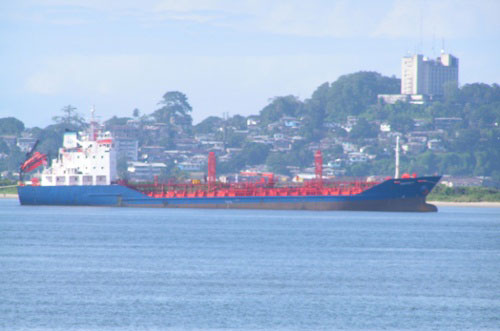
Export promotion remains the foundational pillar for Liberia's long-term economic prosperity and sustainable development, particularly as the nation seeks to pivot away from a reliance on volatile commodity markets. For decades, the Liberian economy has operated largely as an extractive enclave, characterized by the export of raw materials with minimal domestic processing. While this model has historically provided short-term fiscal injections, it has failed to insulate the nation from global price shocks or to generate the robust employment numbers necessary to sustain a burgeoning youthful population. To transform this trajectory, Liberia must aggressively pursue export-led growth through the modernization of its manufacturing sector, shifting the narrative from a supplier of raw commodities to a value-added producer.
According to World Bank data, Liberia's top five exports in 2019—iron ore, rubber, gold, diamonds, and timber—collectively accounted for more than 85 percent of total export revenue. This figure is not merely a statistic; it is a diagnostic indicator of structural fragility. Relying on raw material exports exposes the national budget to the whims of global market fluctuations, where prices are set in London or Shanghai rather than Monrovia. The imperative, therefore, is clear: Liberia must foster an environment where processing occurs locally, capturing a greater share of the global value chain and creating high-quality domestic jobs.
The path toward a more complex economy involves identifying products where Liberia possesses a distinct comparative advantage. The agricultural sector is ripe for such a transformation. While cocoa, coffee, cashews, and the vast maritime wealth of the Atlantic coast remain underutilized, they represent the low-hanging fruit of industrialization. For instance, exporting processed cocoa butter or refined cashews rather than raw beans allows for the retention of significant capital that currently leaks to foreign processors.
These sectors not only promise high demand in international markets but also offer a mechanism to revitalize the rural economy, which has been stagnant since the end of the civil conflict. Beyond agriculture, Liberia must capitalize on its strategic position within the Economic Community of West African States (ECOWAS). With a regional market of over 300 million people, Liberia stands at the nexus of a burgeoning trade bloc. By leveraging the African Continental Free Trade Area (AfCFTA), Liberia has the potential to become a regional hub for light manufacturing, provided it can resolve internal bottlenecks that currently render its goods uncompetitive.
The challenges, however, are deeply entrenched. The primary obstacle remains the acute infrastructure deficit. Reliable electricity, a rehabilitated national road network, and efficient, modern port facilities are not luxuries; they are the basic requirements for industrial operation. Currently, the prohibitive cost of energy—often cited as the highest in the region—makes manufacturing ventures economically unviable for many small and medium-sized enterprises.
When a factory in Monrovia must rely on high-cost, self-generated diesel power, it cannot compete with regional peers who benefit from stable, subsidized grids. Furthermore, the logistical nightmare of transporting agricultural products from rural Lofa or Nimba counties to the Freeport of Monrovia adds layers of costs that erode profit margins. Addressing this requires a systemic approach to infrastructure investment, prioritizing economic corridors that connect production zones to export gateways. Closely linked to the infrastructure gap is the human capital crisis.
Liberia's current education system struggles to align with the technical demands of a modern manufacturing sector. The labor market is often characterized by a mismatch between the skills taught in classrooms and the competencies required on the factory floor. To bridge this divide, the government and the private sector must collaborate on robust vocational training and technical education programs. Investment in technical and vocational education and training (TVET) centers that focus on food processing, mechanical engineering, and digital logistics is essential.
A skilled workforce is the only sustainable way to attract long-term foreign direct investment (FDI) that moves beyond simple extraction and into manufacturing. Access to finance remains another critical barrier. For the aspiring industrialist, credit is either unavailable or prohibitively expensive. The banking sector’s inherent risk aversion, stemming from the country’s history of instability and weak contract enforcement, has created a credit vacuum for manufacturing startups.
Without dedicated export financing, government-backed credit guarantee schemes, or specialized industrial development banks, local entrepreneurs are largely unable to scale their operations. A conducive regulatory environment is the final piece of the puzzle. This includes simplifying the tax regime, protecting property rights, and reducing the bureaucratic red tape that currently stifles entrepreneurship. The government must move beyond mere talk of economic diversification and actively implement policies that incentivize value addition, such as tax credits for companies that process materials domestically and the creation of special economic zones (SEZs) equipped with dedicated utility services.
The need for this transition is underscored by the current economic data. With manufacturing contributing only 12 percent to the GDP in 2021 and an unemployment rate hovering around 15 percent, the status quo is increasingly untenable. The nation’s high import dependency—importing almost everything from basic foodstuffs to construction materials—drains the country’s foreign exchange reserves and exerts downward pressure on the Liberian Dollar. Every finished product that is imported could, in theory, be produced locally if the right incentives and infrastructure were in place.
By shifting focus toward a localized, export-oriented manufacturing strategy, the government can transform Liberia from a passive consumer of global goods into an active participant in the international industrial economy. This transformation is not merely an economic necessity; it is a matter of national security and social stability. A robust manufacturing sector provides the stability of regular employment and the promise of a middle-class future for the next generation of Liberians. As the regional landscape shifts toward greater integration, the window of opportunity for Liberia to redefine its economic identity is open, but it will not remain so forever.
Success will require political will, sustained investment, and a departure from the extractive policies of the past.
