
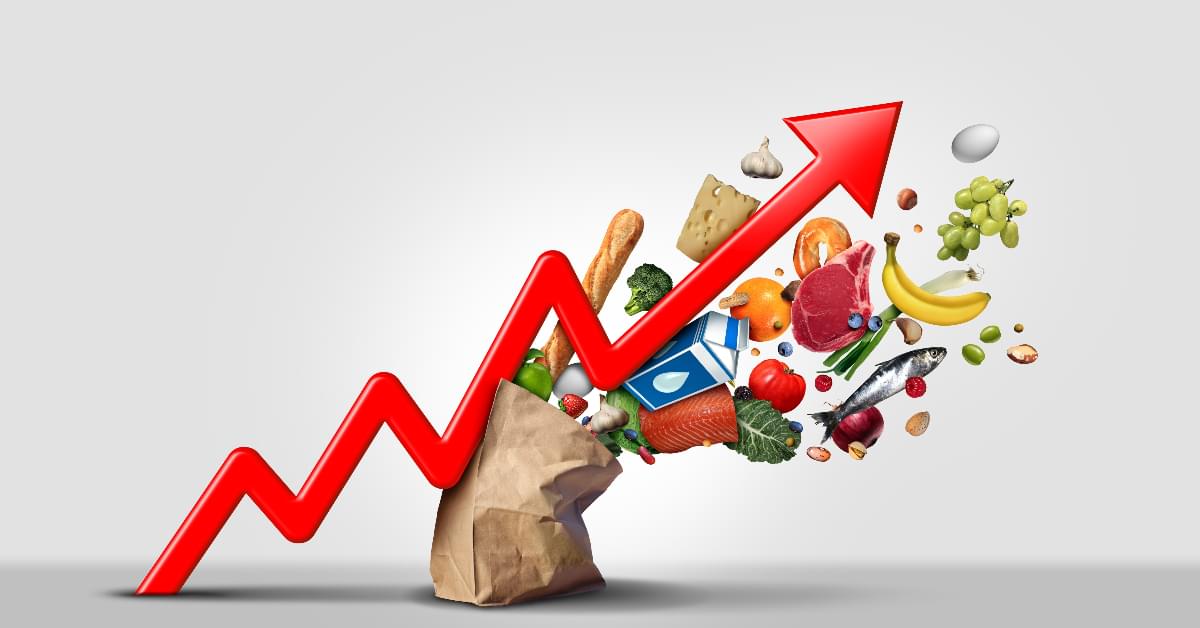
The intricate relationship between exchange rate stability and domestic inflationary pressure represents one of the most pressing challenges for the Liberian macroeconomy. In a nation where the economy is characterized by high levels of import dependence, the purchasing power of the Liberian dollar (LRD) acts as a primary determinant of the cost of living for millions. As an economy that consumes what it does not produce, Liberia finds itself uniquely vulnerable to the volatility of global markets transmitted through the lens of currency valuation. Insights Liberia explores this nexus, assessing how currency fluctuations act as a catalyst for imported inflation and what policy frameworks are necessary to foster a more resilient economic future.
The structural anatomy of the Liberian economy is heavily tethered to foreign exchange dynamics. With imports accounting for approximately 55.5 percent of the national Gross Domestic Product (GDP) as of 2021, the domestic price level is inextricably linked to the performance of the Liberian dollar against the United States dollar (USD). When the LRD depreciates, the cost of bringing essential goods—ranging from staple food items like rice to petroleum products and machinery—increases instantaneously.
This process, known as cost-push inflation, creates a cascading effect that degrades the real income of households, particularly those at the bottom of the socioeconomic pyramid. To understand the gravity of this, one must look at daily market realities. On April 12, 2023, the market recorded an exchange rate of L$161.78 per US$1.
00 for buying and L$163.98 for selling. By the following day, slight shifts to L$161.80 and L$164.
00 respectively, while seemingly marginal, illustrate the persistent upward pressure on the currency. While daily fluctuations are standard in any floating exchange rate regime, the cumulative effect of these increments over fiscal quarters results in substantial price volatility. This volatility disrupts business planning, complicates investment forecasts, and forces retailers to constantly adjust shelf prices, fueling a cycle of uncertainty that discourages long-term capital commitment. Inflation in the Liberian context is a multi-dimensional phenomenon.
While currency depreciation is a chief suspect, it is bolstered by domestic factors such as the expansion of the money supply, supply chain bottlenecks, and fluctuations in global commodity prices. The Central Bank of Liberia (CBL) often faces the daunting task of balancing the pursuit of price stability with the need for economic liquidity to support growth. In 2022, inflation reached 10.5 percent, notably eclipsing the CBL’s strategic target of 7 percent.
This divergence suggests that while monetary policy tools are being utilized, the structural headwinds—namely the lack of a productive export-oriented base—constrain the efficacy of standard interest rate adjustments. The mechanics of inflation are well-documented but manifest uniquely in Liberia. When the government expands the money supply beyond the pace of real economic growth, excess liquidity chases limited goods, driving prices upward. Similarly, when the demand for imported goods outstrips the supply of foreign currency available through export earnings or remittances, the LRD naturally weakens.
Furthermore, Liberia’s vulnerability is compounded by political and economic shocks that can trigger capital flight or reduce foreign direct investment (FDI), further depreciating the currency. The exchange rate is not merely a number; it is a sentiment index of the economy's health. High interest rates in developed economies can pull capital away from emerging markets, putting further downward pressure on currencies like the LRD. If Liberia’s inflationary rate remains persistently higher than that of its trading partners, the theory of Purchasing Power Parity suggests that the LRD must depreciate to reflect these realities.
Therefore, the battle for a stable exchange rate is, in essence, a battle to improve the fundamental competitiveness of the Liberian economy. To mitigate these risks, a multi-pronged policy approach is required. First, building robust foreign exchange reserves is essential. These reserves serve as a war chest, allowing the Central Bank to intervene during periods of extreme speculative pressure.
By selling USD into the market, the CBL can temporarily satisfy demand and prevent a disorderly collapse of the exchange rate. However, reserves are a finite resource, and this strategy must be augmented by sustainable policies. Second, the use of monetary policy remains a critical lever. By adjusting the policy rate, the Central Bank can incentivize the holding of Liberian dollars by offering higher yields, theoretically slowing the velocity of money and reducing inflationary pressure.
However, in an economy where the formal banking sector does not fully penetrate the informal market, the transmission mechanism of these interest rate changes remains weak. Monetary policy must therefore be complemented by fiscal discipline. Excessive government spending financed by monetary expansion is the most direct path to inflation. A move toward fiscal consolidation, where the budget deficit is controlled and aligned with productive spending, would signal to the market that the government is committed to price stability.
Third, the implementation of an exchange rate band—a corridor within which the currency is allowed to fluctuate—could provide a degree of predictability. By setting bounds, the government provides a psychological anchor for businesses and traders. This requires significant credibility; the market must believe that the CBL has both the willingness and the capacity to defend these boundaries. Should the market sense that the government lacks the reserves to defend a band, it invites speculative attacks, which can be far more damaging than a free-floating currency.
Ultimately, the long-term solution lies in structural transformation. As long as Liberia remains a net importer of its most basic needs, it will remain at the mercy of global supply chains and exchange rate volatility. Diversification of the economy, the promotion of import substitution through local manufacturing, and the aggressive development of the agricultural sector are not just development goals—they are macroeconomic necessities. By increasing the local production of goods, Liberia can reduce its dependence on foreign currency for basic sustenance, thereby insulating the economy from external shocks.
In conclusion, the quest for exchange rate stability is the heartbeat of Liberia’s economic policy. While the Central Bank of Liberia possesses the tools to manage short-term volatility, lasting stability requires a holistic approach that integrates monetary prudence with a transformative industrial policy. The path forward demands transparency, rigorous data analysis, and a commitment to protecting the purchasing power of all Liberians. Without a stable currency, the ambitious goals for economic development and poverty reduction remain elusive.
The volatility witnessed in recent years serves as a stark reminder of the fragile nature of our economic progress, but it also highlights the urgent need for a disciplined, institutional, and strategic approach to managing our national wealth and the value of our currency. Insights Liberia remains committed to monitoring these metrics and fostering the debate necessary to secure our collective economic future. We invite our readers, policymakers, and economic analysts to continue this dialogue. Do you have additional facts or insights on how Liberia can navigate these inflationary pressures?
We value your perspective and encourage you to engage with our team to help us shape the narrative toward a more prosperous Liberia.
