
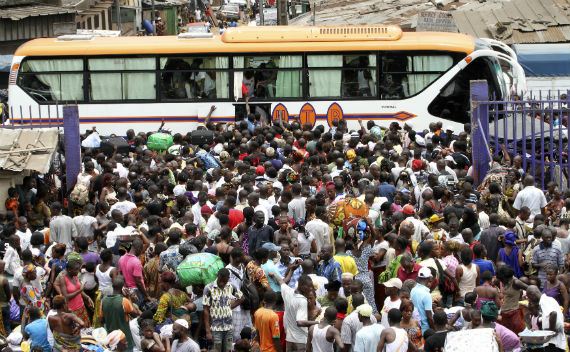
Liberia stands at a critical demographic juncture. As the nation navigates the complexities of the 21st century, the stark reality of its rapidly expanding population has moved from a subject of academic curiosity to a central challenge for national development. Projections indicate that Liberia's population, currently hovering around 5 million, is on an unrelenting trajectory to double within the next two decades, potentially reaching 10 million people by 2043. This demographic surge is not merely a statistical curiosity; it represents a fundamental shift that will test the resilience of the Liberian state, its economic institutions, and its social fabric.
The historical context of this growth is deeply intertwined with Liberia's journey toward post-conflict stability. Following the cessation of the brutal civil wars that spanned over a decade, the return of refugees and a subsequent baby boom have catalyzed a high growth rate. According to the World Bank, Liberia experienced an average annual population growth of 2.4% between 2010 and 2020.
This trajectory is fueled by a total fertility rate (TFR) of 4.5 to 4.9 children per woman, a figure that dwarfs the global average of 2.4 and remains far above the standard replacement rate of 2.
- This demographic profile is further characterized by a remarkably young median age of just 19.7 years. While such a youthful demographic, often termed a 'demographic dividend' in other global contexts, holds immense potential for innovation and productivity, it presents a daunting hurdle in a nation still struggling to provide the foundational education and job opportunities required to harness this energy.
The socioeconomic implications of this rapid expansion are profound, touching every facet of Liberian life from the bustling markets of Monrovia to the most remote rural villages in the interior. Economically, a ballooning population creates a paradox of supply and demand. On one hand, it represents a growing consumer base, potentially stimulating markets and increasing the demand for goods and services. However, in the Liberian context, this growth frequently outstrips the capacity of the current economic architecture.
The result is intensified competition for scarce resources, stagnant wages, and high levels of underemployment, particularly among the youth who enter the job market with insufficient technical or vocational training. When the growth of the labor force outpaces the growth of the economy's ability to create productive roles, the nation risks falling into a cycle of chronic poverty rather than prosperity. Furthermore, the pressure on land and water resources is reaching critical levels. Traditional agricultural practices, which form the backbone of the rural economy, are increasingly strained as more families divide smaller plots of land, leading to soil exhaustion and diminished yields.
This environmental degradation is a silent crisis that complicates the nation's food security objectives. The healthcare system, already characterized by systemic vulnerabilities, faces an existential threat. The demand for primary and maternal healthcare services is set to explode as the number of childbearing women and children increases. In a country where healthcare facilities are often understaffed, underfunded, and geographically inaccessible, the prospect of a doubled population necessitates a radical rethinking of service delivery.
High infant mortality rates, which historically have driven families toward larger sizes as a security mechanism, create a vicious feedback loop. Unless the government can provide reliable healthcare, the cycle of high fertility and child mortality will remain difficult to break. This is not just a policy failure; it is a structural barrier to development that requires sustained investment in rural clinics, reproductive health education, and maternal nutrition programs. Social infrastructure—education, housing, and transportation—is similarly ill-equipped for this demographic explosion.
The Liberian education system is currently wrestling with overcrowded classrooms, a shortage of trained teachers, and curricula that often fail to align with the needs of a modern economy. As the number of school-aged children continues to climb, the gap between the demand for quality education and the state's capacity to deliver it will widen unless there is a massive and coordinated public-private investment strategy. Similarly, urban centers like Monrovia are witnessing unplanned, rapid urbanization, leading to the proliferation of informal settlements that lack sanitation, electricity, and clean water. This creates significant public health risks and hampers social mobility.
The regional significance of Liberia's demographic path cannot be overstated. As a member of the Economic Community of West African States (ECOWAS), Liberia’s stability and development are linked to the broader regional trends. Managing this population growth is not just a domestic policy preference; it is essential for maintaining the regional balance of labor, migration, and trade. If Liberia fails to create sufficient internal opportunity, the resulting social pressures could lead to increased regional migration and potential instability.
To navigate these turbulent waters, the Liberian government and its partners must move beyond reactionary measures. A comprehensive approach is required, centered on several pillars of intervention. First, the promotion of reproductive health and family planning is non-negotiable. This requires a cultural and educational campaign to empower women with reproductive autonomy, thereby naturally aligning family sizes with economic reality.
Second, the government must prioritize the 'demographic dividend' by aggressively investing in vocational training and STEM education. By equipping the youth with the skills necessary for the digital and manufacturing economies, the nation can transform its demographic burden into an engine for growth. Third, infrastructure development must be linked to decentralization strategies. By promoting economic activity in regional hubs outside of Monrovia, the government can relieve pressure on the capital and foster more balanced national development.
Finally, the role of stakeholders, including international donors, civil society, and the private sector, is paramount. Transparency and accountability in the allocation of resources are the only ways to ensure that investments in health, education, and infrastructure reach the people who need them most. The challenge is immense, but it is not insurmountable. Liberia’s population growth is a trend that can either define the nation’s decline or its rise, depending on the foresight and efficacy of current policy frameworks.
By embracing a strategy that puts human capital development at the center of the national agenda, Liberia can begin to build a future where every citizen, regardless of the population size, has the opportunity to thrive. This transformation will not occur overnight; it requires a generational commitment to structural reform and a willingness to confront the harsh truths of our current demographic trajectory. As Insights Liberia continues to monitor these developments, we encourage our readers to engage with these issues. Your perspectives and local experiences are the heartbeat of our analysis.
Whether you are a student, a worker, a business owner, or a policymaker, your voice adds to the mosaic of solutions required for our nation’s progress. We invite you to join the conversation and contribute your thoughts on how Liberia can best navigate this era of rapid growth to secure a prosperous and stable future for all.



