
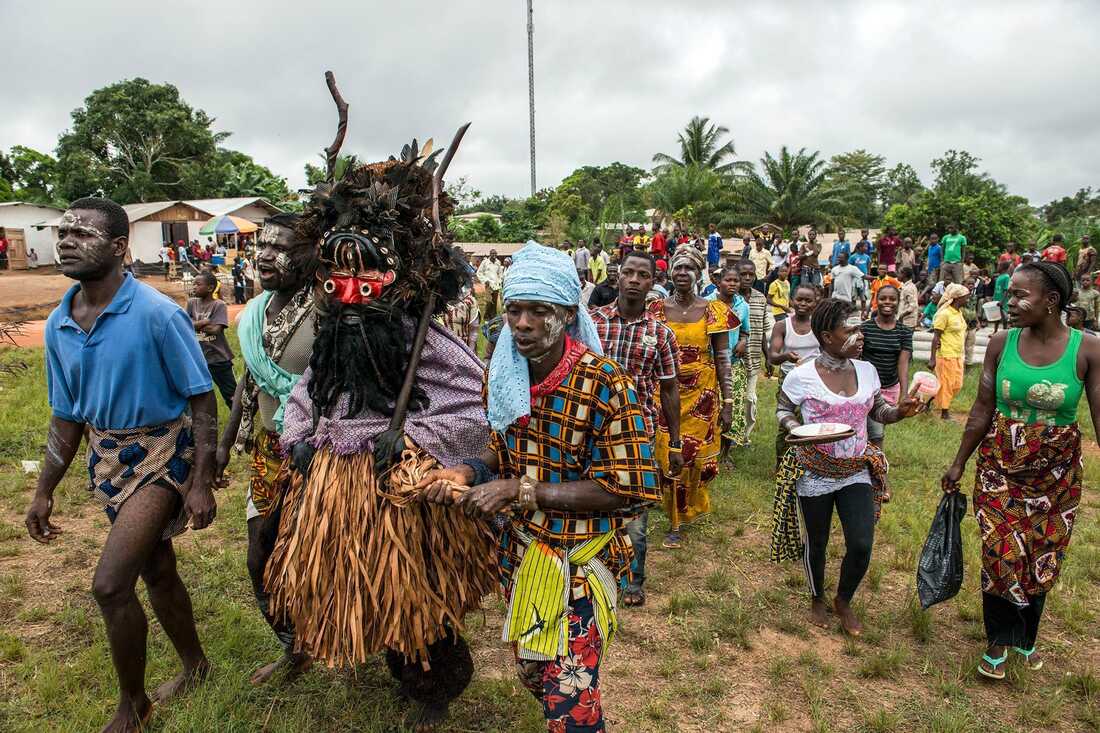
Liberia, a nation defined by its strategic position on the Atlantic coast of West Africa, is a country of profound historical complexity and vibrant cultural tapestry. With a population comprising over 20 distinct ethnic groups, the nation represents a mosaic of linguistic diversity, ancestral traditions, and social structures that have evolved over centuries. While this diversity is often celebrated as the bedrock of the Liberian spirit, it simultaneously presents a multifaceted challenge in the pursuit of a unified national identity. To understand modern Liberia, one must navigate the historical tensions, institutional structures, and socio-economic dynamics that have shaped the relationship between the indigenous majority and the historical legacy of the Americo-Liberian settlers.
Liberia’s identity is not merely a collection of ethnic labels; it is the product of a unique state-building experiment initiated in the early 19th century. Established by the American Colonization Society in 1822, the colony was intended as a sanctuary for freed enslaved people from the United States. This historical genesis created a dualistic society: the Americo-Liberian elite, who occupied the upper echelons of political and social power, and the indigenous population, comprising groups such as the Kpelle, Bassa, Grebo, Gio, Mano, Krahn, Gola, and Mandingo. For over a century, this settler-indigenous divide dictated the contours of political patronage, land ownership, and economic opportunity, creating structural inequalities that resonated well into the late 20th century.
The Kpelle, historically the largest ethnic group, reside primarily in the central regions and have long been integral to the agricultural output of the country. Similarly, the Bassa, who dominate the coastal areas of Grand Bassa, River Cess, and Montserrado, have played a critical role in the maritime and administrative history of Liberia. The Grebo in the southeast, the Gio and Mano in the north-central regions, and the Krahn and Mandingo populations each carry distinct cultural practices and historical narratives that contribute to the national whole. The Vai people, notably, possess one of the few indigenous scripts in Africa—a testament to the intellectual depth and historical sophistication of Liberia's interior peoples.
This script remains a symbol of cultural resilience, even as English—the official language—serves as the medium for government, law, and commerce. Beyond these primary ethnic categories, Liberia’s social fabric is woven with threads of deep-seated traditional beliefs, which often coexist alongside the widespread practice of Christianity and Islam. Religious tolerance is a hallmark of the Liberian experience; mosques and churches often exist in the same neighborhoods, with little friction in daily life. This tolerance is a vital resource for reconciliation, especially in a post-conflict environment where social cohesion was severely tested during the two civil wars that ravaged the nation between 1989 and 2003.
Gender roles in Liberia remain a subject of active discourse and evolution. Traditionally, rural societal structures often delineated tasks by gender, with men focused on land clearing, cash cropping, and external commerce, while women managed the domestic sphere, child-rearing, and the vital informal market trade that sustains local economies. However, this dichotomy is increasingly porous. The influx of international NGOs, the presence of humanitarian missions like the Peace Corps, and the rise of women in political and corporate leadership have gradually challenged traditional paradigms.
The emergence of women as the primary engines of the micro-economy and their increasing participation in academic and political life suggests a slow but significant shift in societal expectations. The importance of understanding these dynamics cannot be overstated. When we examine the challenges of governance in Liberia, we are often observing the friction between centralizing national policies and the localized, ethnic-based expectations of constituents. To foster social cohesion, there must be a rigorous, evidence-based approach to acknowledging the distinct experiences of these groups.
For too long, political rhetoric has either ignored ethnic identity to its own peril or exploited it for narrow electoral gains. A mature national identity requires the integration of indigenous history into the formal education curriculum. Schools must move beyond a sanitized version of history that prioritizes colonial-era narratives and instead celebrate the contributions of the Gola, Kpelle, and other groups to the development of the Liberian state. Furthermore, the role of media in Liberia is paramount.
As the country navigates a digital age where information—and misinformation—travels rapidly, media institutions bear a responsibility to curate narratives that bridge ethnic divides rather than widen them. Editorial standards must emphasize the 'One Liberia' ethos while still providing a platform for local cultural expressions. Media houses should actively avoid the use of ethnic stereotypes in political reporting, as these can easily inflame tensions in a society still healing from past fragmentation. The government’s role, meanwhile, is to act as the ultimate arbiter of equity.
True national development is hampered when access to jobs, infrastructure, and resources is perceived to be distributed along ethnic or kinship lines. By adopting policies that strictly prioritize merit and geographic inclusivity, the government can dissolve the patronage systems that have historically favored specific groups. Legislative action that promotes decentralization is one path toward this goal, as it empowers regional communities to manage their own resources and cultural affairs under the umbrella of the national constitution. Cultural exchange serves as the connective tissue that binds these diverse threads together.
Festivals, such as the celebration of the Vai script, the performance of traditional dances, or national holiday events, provide forums where Liberians can see their shared destiny. It is through these collaborative acts that the 'settler vs. indigenous' narrative is eventually supplanted by a narrative of shared Liberian citizenship. When a Kpelle farmer and a descendant of the settlers recognize their common interest in a stable economy and transparent governance, the challenges of diversity begin to transform into the benefits of a pluralistic democracy.
In conclusion, Liberia’s ethnic and cultural heritage is not a liability to be managed, but an asset to be leveraged. The path forward requires a deliberate effort to dismantle the legacy of exclusionary politics, invest in inclusive education, and empower the media to serve as an honest broker of truth. The resilience of the Liberian people, who have survived immense hardship and continue to strive for development, is a testament to the strength that lies within their diversity. By fostering a environment where every citizen—regardless of their ethnic origin or social standing—can see their future linked to the success of the nation, Liberia can finally realize its promise as a stable, prosperous, and truly united West African power.



