
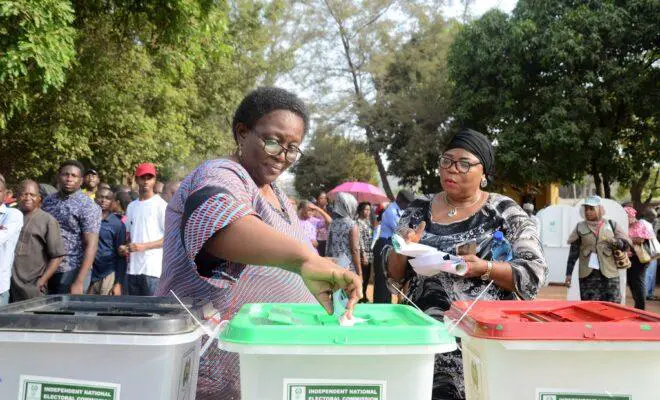
Elections serve as the bedrock of modern democratic governance, functioning as the primary mechanism through which citizens exercise their sovereignty to select representatives and hold leadership accountable. In the context of Liberia, a nation characterized by a profound history of civil conflict and a fragile democratic transition, the integrity of these processes takes on heightened significance. While the country has successfully conducted multiple cycles of elections since the restoration of peace in 2003, the recurring specter of fraud allegations, technical irregularities, and partisan manipulation continues to threaten the stability of its democratic institutions. This analysis delves into the intricate state of electoral integrity in Liberia, scrutinizing the existing legal framework, the performance of the National Elections Commission (NEC), and the essential reforms required to safeguard the national mandate.
The evolution of Liberia's political landscape necessitates an electoral system that is not only procedurally sound but also perceived as legitimate by a skeptical and highly vigilant electorate. The legitimacy of any government in Monrovia hinges directly on the public's belief that their ballots were cast and counted in accordance with the law, free from the shadow of systemic malpractice. Unfortunately, recent electoral history suggests a persistent gap between the procedural requirements of the law and the practical implementation of election activities, leading to frequent litigation and public outcry. The legal scaffolding of Liberia's electoral system is anchored in the 1986 Constitution, which serves as the supreme law of the land, supplemented by the Elections Law of 1986 and the National Elections Commission (NEC) Act of 1994.
These documents codify the fundamental rights of the citizenry, including universal suffrage and the requirement for competitive, transparent balloting. However, legal experts have long contended that these instruments are increasingly outdated in the face of modern technological and political challenges. For instance, the transition from paper-based manual voting systems to biometric voter registration (BVR) has created a lacuna in the regulatory framework, where traditional laws struggle to address modern data integrity and cybersecurity concerns. During the 2017 presidential elections, the opposition Liberty Party and the Unity Party brought formal challenges to the Supreme Court, alleging that the NEC failed to comply with basic electoral regulations, including the proper cleaning of the voter roll.
The resulting legal crisis, which nearly derailed the second round of voting, highlighted that the current legal framework is often reactive rather than proactive, lacking the mechanisms to prevent disputes before they occur. Furthermore, the absence of independent auditing requirements for electoral outcomes leaves a vacuum that is frequently filled by speculation and allegations of manipulation. The National Elections Commission, as the constitutionally mandated body responsible for the stewardship of Liberia’s democracy, occupies a precarious position in the political hierarchy. Tasked with the registration of political parties, the maintenance of the voter roll, and the final adjudication of electoral complaints, the NEC is the ultimate arbiter of democratic success.
Nevertheless, the commission has been beset by recurrent criticisms regarding its political independence. Because the President appoints the commissioners—subject to confirmation by the Senate—the perception remains that the NEC acts as an extension of the ruling party’s interest. This perceived lack of impartiality was particularly acute during the 2017 election cycle, when the Supreme Court had to intervene to address issues of administrative bias. While the NEC has attempted to mitigate these concerns by establishing internal hearing officers, these measures are often viewed as insufficient by political stakeholders.
The inability of the commission to foster a climate of total trust reflects a deeper malaise in institutional independence. Without structural changes to the appointment process, such as allowing for nominations from a broader cross-section of society including religious leaders, academic experts, and civil society groups, the NEC will continue to fight an uphill battle against skepticism. Moving forward, a multipronged reform agenda is imperative to restore the sanctity of the ballot. Chief among these is the need to decouple the NEC from direct presidential influence.
Implementing a more transparent, competitive vetting process for commissioners, coupled with a robust, predictable funding stream that prevents the Commission from needing to lobby the executive branch for its operational budget, would significantly enhance its autonomy. Additionally, technical modernization must be matched with legal clarity. If Liberia is to embrace biometric systems, the electoral law must be amended to provide strict guidelines on data privacy, validation, and third-party verification to ensure that modern tools do not introduce new, hidden vulnerabilities. Furthermore, there is a critical need to formalize the role of civil society organizations (CSOs).
Domestic observer groups, such as the Elections Coordinating Committee (ECC), have proven invaluable in performing parallel vote tabulations (PVT), which offer a data-backed check against official results. By integrating formal reporting mechanisms from recognized CSOs into the NEC’s audit process, the government can foster a more collaborative atmosphere of oversight. The statistical landscape of electoral integrity in Liberia offers a sobering reminder of the hurdles ahead. The 2020 Corruption Perception Index by Transparency International, which ranked Liberia 137 out of 180 countries, provides a broad backdrop of the systemic challenges faced by all public institutions, including the NEC.
When the public perceives that corruption is pervasive in the judicial and executive branches, that suspicion inevitably bleeds into the electoral arena. In the 2017 presidential race, despite a relatively peaceful transfer of power, the shadow of irregularities hung heavy over the results. While the winner, George Weah, secured 61.5% of the vote in the runoff, the entire process was clouded by legal challenges that delayed the proceedings and created a period of dangerous uncertainty.
Data from the Electoral Integrity Project further underscores this trend. Scoring 58 out of 100 in 2017 and a marginal improvement to 60 in 2020, Liberia remains in the ‘moderate’ category of electoral quality. This stagnation is largely attributed to persistent issues in voter roll management, where inaccuracies lead to legitimate grievances, and the continued threat of voter intimidation or inducements in more remote counties. The socio-economic implications of these failures are profound.
When citizens feel that the electoral playing field is tilted, they are less likely to engage in the formal political process, potentially leading to increased disillusionment, apathy, or, in extreme cases, civil unrest. Regional stability in West Africa is currently under immense pressure, with several neighboring nations grappling with coups and constitutional crises. Liberia's ability to maintain a robust, credible electoral process is not just a matter of domestic concern; it is a critical component of regional democratic resilience. By strengthening its institutions and fostering a culture of transparency, Liberia can serve as a beacon of democratic stability.
In conclusion, electoral integrity is not merely a bureaucratic function but the lifeblood of Liberia's nascent democracy. The current framework, while functional in a basic sense, is insufficient to meet the demands of an evolving political climate. Addressing these challenges requires more than just administrative tweaks; it demands a fundamental commitment to institutional independence, legal reform, and active civil engagement. As Liberia moves toward future election cycles, the burden of proof rests on both the government and the electoral commission to ensure that the will of the people remains the final authority.
By implementing comprehensive reforms—ranging from insulating the NEC from political pressure to modernizing the laws that govern election disputes—Liberia can safeguard its future. The ultimate goal is to ensure that every ballot cast is a testament to the nation's progress and a secure step toward a more equitable and prosperous society. The integrity of the vote is the integrity of the nation.
