
The Liberian National Bar Association (LNBA), an institution historically revered as the bedrock of legal advocacy and the ultimate guardian of constitutional integrity in Liberia, has recently displayed a shocking level of cowardice and complicity. As the nation faces a precipitous decline in democratic norms under the administration of President Joseph Boakai, the LNBA—despite its statutory and moral mandate to uphold the rule of law—has chosen to remain conspicuously silent. This profound silence is not merely an act of omission; it is a betrayal of its core mission, a dereliction of professional duty, and a stinging affront to the Liberian people who look to the legal profession as the final bulwark against authoritarian overreach. In the complex landscape of Liberia’s post-conflict democracy, where the wounds of institutional fragility are still healing, the Bar’s failure to act as a countervailing force against executive hubris is a dereliction of historical responsibility that threatens to reverse decades of fragile democratic progress.
The LNBA has long served as the voice for the voiceless; by retreating into a sheltered, silent posture, it has essentially abandoned the very principles it was chartered to defend. One of the most egregious examples of the LNBA's failure is its utter refusal to condemn President Boakai's systematic and unconstitutional suspensions of tenured officials. The president's arbitrary removal of Central Bank Governor Aloysius Tarlue and National Elections Commission Chairperson Davidetta Brown-Lansanah serves as a chilling case study in executive overreach, violating the clear protections enshrined in Article 20(a) of Liberia’s Constitution, which guarantees due process. Tenured positions were purposefully designed to insulate vital institutions from political whim and executive coercion, ensuring that those in charge of monetary policy and electoral management could serve without fear of retribution.
When the executive branch unilaterally decides to bypass these safeguards, it tears at the fabric of the separation of powers. Despite urgent, principled calls from respected jurists, including Judge Joe Barkon, for the Bar to "constructively engage" the administration over these glaring constitutional abuses, the LNBA’s leadership has maintained a deafening and shameful silence. This passivity sends a message of tacit approval, emboldening a government that seems increasingly convinced that its political agenda takes precedence over the supreme law of the land. The Boakai administration’s repeated violations of the principle of the separation of powers have gone largely unchallenged by the LNBA, leaving the legislature and judiciary vulnerable to manipulation.
Most notably, the president’s direct endorsement of a rogue legislative faction in its illicit attempt to oust Speaker J. Fonati Koffa represents a significant crisis. The House of Representatives itself characterized this maneuver as "ultra vires"—beyond the power of the actors involved—and a blatant threat to constitutional democracy. Even after the Supreme Court intervened by issuing a stay order to halt the removal, allies of the President pressed forward with a blatant disregard for judicial authority.
Such open defiance of the highest court is a dangerous signal in any republic, yet the LNBA—the professional home of the nation’s lawyers—remained on the sidelines. This lack of intervention undermines the judicial branch's efficacy, suggesting that court orders are mere suggestions rather than mandates. The weaponization of security forces against political opposition figures further complicates this grim picture. The Liberia National Police (LNP) and the National Security Agency (NSA) have been widely accused of engaging in violent raids on opposition party headquarters, conducting arbitrary detentions, and employing state-sponsored intimidation tactics.
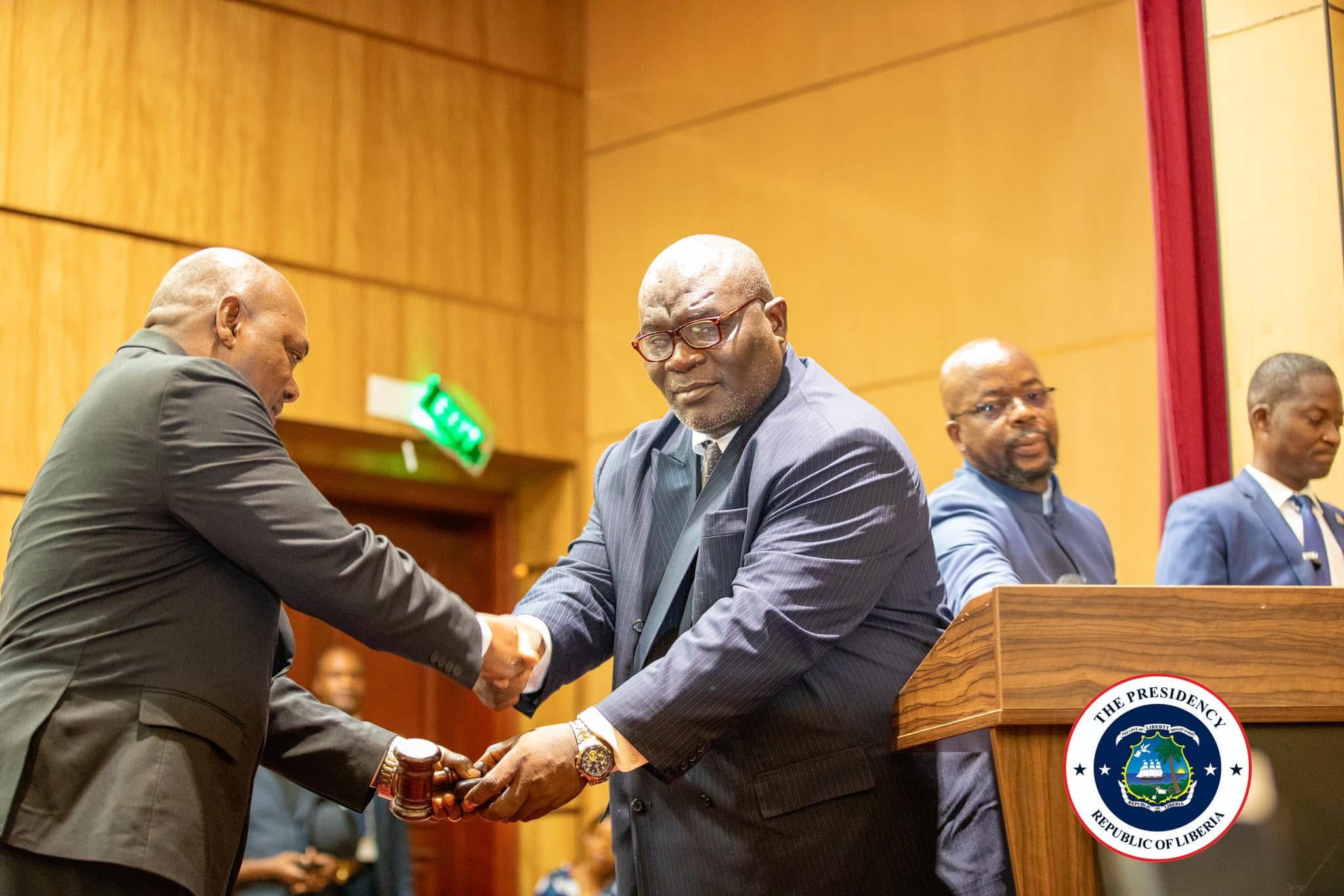
These actions recall the darkest periods of Liberian history, where the machinery of the state was used to silence dissent and stifle political competition. Human rights groups and international observers have documented these abuses with alarming frequency, yet the LNBA, whose membership includes the leading legal minds of the country, remains silent. By refusing to speak out, the Bar effectively provides a veneer of legitimacy to this state-sponsored repression, alienating its membership from the grassroots struggle for justice. Perhaps the most stinging example of the LNBA’s institutional hypocrisy was its decision to invite President Boakai as the keynote speaker for a recent induction ceremony, even as his administration’s record of constitutional and human rights abuses continued to mount.
This decision was more than a breach of optics; it was an act of profound complicity. It served to whitewash the executive’s crimes and signaled to the public that the LNBA is willing to trade its moral authority for political proximity. Such behavior erodes the very public trust that the Bar relies upon to function as an independent entity. If the lawyers who are sworn to defend the Constitution are seen fraternizing with those who dismantle it, what hope remains for the average citizen seeking redress through the courts?
The erosion of judicial independence is starkly evident in the fact that Supreme Court justices felt compelled to boycott the President’s State of the Nation Address (SONA) due to unresolved constitutional grievances. This unprecedented act of protest by the judiciary should have served as a clarion call for the LNBA to mobilize in defense of its partners in the justice system. In previous administrations, the LNBA acted decisively against far lesser ethical breaches, creating a standard of vigilance that is conspicuously absent today. Furthermore, the economic mismanagement and pervasive corruption under the Boakai administration have been met with total indifference by the Bar.
The 2025 national budget has faced significant criticism from economic analysts and legislative watchdogs for prioritizing "off-budget expenditures" and failing to account for millions of dollars. With over $15 million in misallocated funds and vast sums tied to opaque expenses, the government appears to be drifting toward a model of governance that prioritizes patronage over public welfare. The Bar’s continued silence on these economic malfeasances helps normalize kleptocracy, undermining the economic stability of the nation and fostering a environment where lawlessness is incentivized at the highest levels. Constitutional violations regarding public appointments have become another hallmark of the administration.
Senator Thomas Nimley has repeatedly lambasted the President’s practice of making indefinite "acting" appointments to tenure positions—a clear evasion of the Senate confirmation process that violates Article 56(b) of the Constitution. This tactical maneuver serves to entrench patronage networks, bypassing the necessary legislative oversight that prevents absolute executive dominance. By failing to challenge these appointments, the LNBA contributes to the weakening of critical governance structures. The international community, including U.
S.-based advocacy organizations like the Panoramic Justice Group, has begun to take notice of Liberia’s democratic backsliding, calling for congressional hearings on executive overreach, torture, and illegal detentions. The LNBA’s failure to align with these international calls for accountability risks damaging Liberia’s hard-won reputation as a democratic model in the West African sub-region. The depth of the current crisis is perfectly captured by the widespread boycotts of President Boakai’s leadership, involving over 30 lawmakers and the entire bench of the Supreme Court.
These are not trivial protests; they are symptoms of a nation at a crossroads. Opposition leaders have accused the President of fostering an environment where "the law is whatever the President says." This is a damning indictment of the current state of governance, yet it is a reality that the LNBA seems unwilling or unable to confront. Public trust in government institutions has plummeted under the weight of the "ARREST Agenda," with citizens grappling with severe poverty, uncontrollable inflation, and the decay of essential infrastructure.
The LNBA’s failure to serve as a check on executive power has only accelerated this erosion of faith. As Liberia stands at this critical juncture, the Bar’s betrayal of its mandate threatens to undo years of democratic progress. The emergence of the Rule of Law Caucus and other civil society groups, which have actively demanded transparency and accountability, highlights the void left by the LNBA’s inaction. Unless the leadership of the Bar reclaims its independence and resumes its duty to strictly uphold the Constitution, the Liberian democracy remains in extreme peril.
The silence of the legal establishment is not just a missed opportunity—it is a dangerous catalyst that risks pulling the nation back toward the tragedy of its past, where the rule of law was merely a ghost, and the whims of the few outweighed the rights of the many.


