
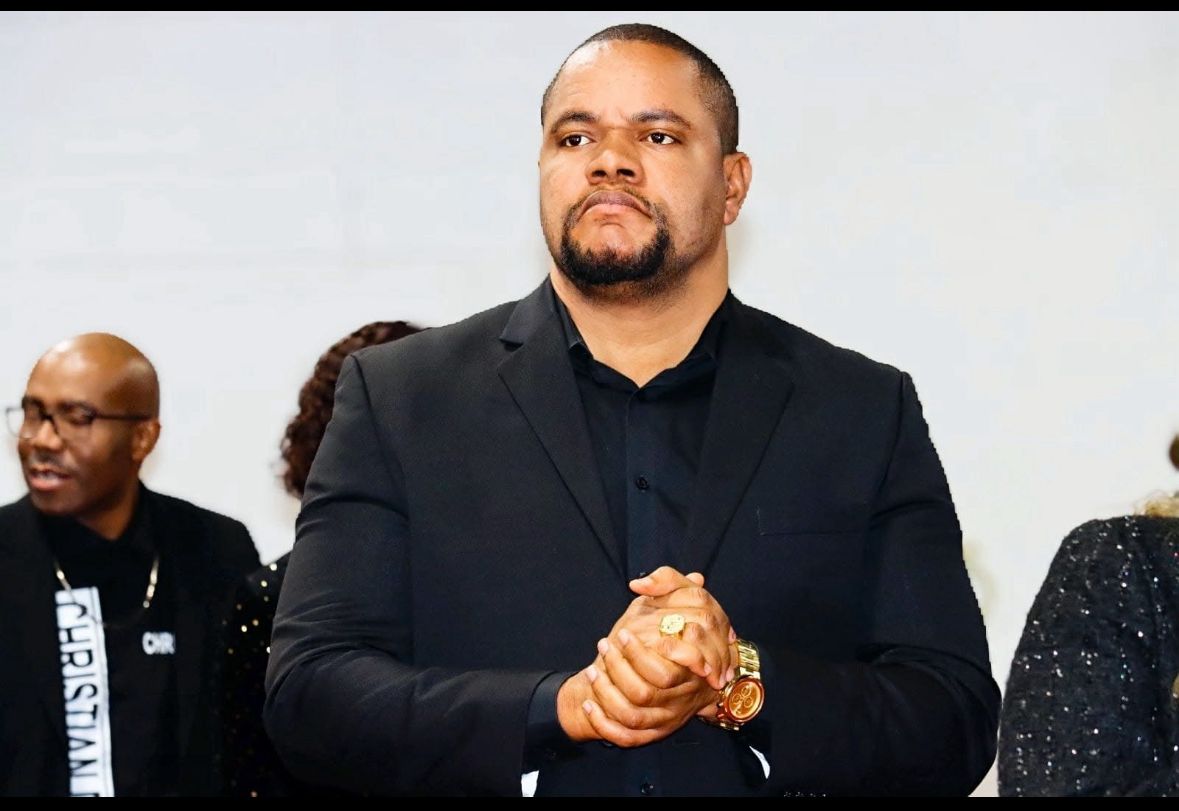
In a startling turn of events that has reverberated across the political landscape of Liberia, Henry Costa, arguably the nation’s most polarizing talk show host and a pivotal figure in the mobilization of the ‘Save the State’ protests, has issued a public apology to former President George Manneh Weah. The pivot concerns one of the most contentious issues of the Coalition for Democratic Change (CDC) administration: the utilization of private jet travel for presidential missions abroad. During his tenure, President Weah faced relentless fire from the opposition—of which Costa was the ideological spearhead—for what critics labeled as the ‘extravagant and insensitive’ use of private aviation while the country grappled with endemic poverty and systemic underdevelopment. Speaking via a Facebook podcast last Friday, Costa stripped away years of combative rhetoric, declaring, ‘I was wrong, President Weah was right!
Flying private isn’t a luxury; it’s a necessity for a sitting president. I regret ever criticizing him for that.’ This admission, which has sent shockwaves through the political establishment, serves as more than just a personal reversal; it acts as a post-mortem on the performative nature of Liberian political opposition. The timing of this mea culpa is critical.
It follows a similarly striking retreat by Senator Abraham Darius Dillon, the ‘Light’ of the opposition, who recently acknowledged that his past critiques regarding the security and logistical requirements of presidential transit were fueled by a fundamental misunderstanding of the burdens of the Liberian presidency. These sequential apologies have illuminated a wider, often uncomfortable, reality in the nation’s body politic: the chasm between the populist promises made on the campaign trail and the pragmatic, and often harsh, realities of actual governance. To understand the gravity of Costa’s reversal, one must examine the role he played during the Unity Party’s rise and the subsequent administration of President Joseph Nyuma Boakai. Costa was not merely a broadcaster; he was an engine of mass political sentiment.
His platform was the primary conduit for a narrative that painted the Weah administration as disconnected from the grassroots. By weaponizing the issue of private jets, Costa and other opposition figures successfully framed the CDC as an elite clique profiting at the expense of the impoverished. Now, with the current administration under Boakai navigating its own complex logistical challenges, the necessity for secure, efficient travel has become a bipartisan realization. The transition from the opposition benches to the realities of the executive branch is a crucible that has consumed many.
The argument presented by the defectors of this critique—that presidential travel must be treated as a matter of national security rather than a metric for financial profligacy—is essentially an admission that the opposition’s past rhetoric was fundamentally dishonest. This, however, raises profound questions about the integrity of political discourse in Liberia. If the opposition knowingly used a national security necessity as a cudgel to damage their rivals, what does this imply about the ‘sincerity’ of their other platforms? For the ordinary Liberian, who continues to endure the daily struggles of a fragile economy, the sight of political elites walking back their claims in unison is both jarring and cynical.
It underscores a pattern of ‘politics as a theater,’ where the issues that ignite the public are often jettisoned as soon as they become inconvenient for those in power or those vying for proximity to it. Critics have been quick to point out that while the mechanics of the presidency do indeed require high-level logistical support, the optics of such travel remain problematic. In a country where basic healthcare is underfunded and public infrastructure remains decrepit, the appearance of opulence—even when framed as a security mandate—will continue to strike a nerve. The apology does not erase the pain that many citizens felt during those years of intense socioeconomic hardship, nor does it necessarily reconcile the divide between the political class and the people.
Furthermore, this trend of backpedaling is not isolated to travel protocols. We have seen similar shifts in rhetoric regarding campaign financing and executive accountability, such as the confusion surrounding campaign contributions during the 2023 electoral cycle. The ambiguity surrounding financial influence in Liberian politics, as evidenced by conflicting statements from the ruling Unity Party’s inner circle, mirrors the confusion seen in these recent apologies. It suggests a political culture where principles are flexible, designed to be adapted to the exigencies of the moment.
Regional analysts view this as a potential symptom of a deeper crisis in the Liberian democratic process. When the primary opposition mechanism becomes an exercise in ‘gotcha’ politics rather than ideological or policy-driven debate, the entire system suffers from a deficit of trust. The ‘hypocrisy,’ as some have termed it, is not merely a political failure but a systemic one. It reinforces the perception that the political elite operate within a separate reality, one where issues like poverty, corruption, and mismanagement are secondary to the preservation of status and the management of optics.
The move by Costa, Dillon, and their peers to align their views with the realities of executive survival might be a sign of maturation, but to the public, it feels like an abandonment of the ideals that once mobilized the streets. As the country moves forward, this discourse on ‘privilege vs. necessity’ remains unresolved. The line between a legitimate requirement for the safety of a head of state and the indulgence in excess remains as blurred as ever.
If Liberia is to move toward a more stable and transparent future, the conversation must evolve past these performative apologies. It requires a more grounded engagement from both the government and the opposition—a commitment to policies that prioritize the needs of the vulnerable over the convenience of the powerful. Whether this shift by Costa and his colleagues marks the beginning of a more pragmatic, mature political culture or simply another chapter of transactional politics remains to be seen. What is clear, however, is that the Liberian public is becoming increasingly aware of the games being played.
As the dust settles on this current controversy, the challenge remains for the political leadership to move beyond the politics of convenience and address the substantive issues that have plagued the nation since the transition to a modern democratic state. The debate over the private jet was never just about a plane; it was a proxy battle for the soul of the country’s leadership. By conceding this point, these figures have inadvertently exposed the fragility of their own past claims and the ease with which they can trade their stated ‘principles’ for a more comfortable, if less credible, political reality. The path forward demands more than just apologies; it requires a new, transparent, and consistent standard for what we expect from those who seek to lead the Republic of Liberia.
