
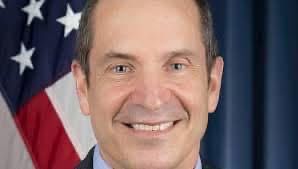
Monrovia—In the complex theater of Liberian geopolitics, the United States Embassy has long occupied a role that transcends traditional diplomacy. For decades, it has functioned as the ultimate arbiter of democratic standards, a silent monitor of human rights, and the principal guarantor of political stability in a post-conflict nation still grappling with the scars of two brutal civil wars. Yet, in the twilight of Ambassador Toner’s tenure, that historical position of neutrality has come under intense scrutiny. A disturbing pattern of selective engagement—most recently punctuated by the Embassy’s conspicuous silence surrounding a major, highly anticipated opposition-led protest in Monrovia—has ignited a firestorm of speculation regarding the shifting priorities of Washington’s representatives on the ground.
The Embassy is widely recognized for its robust 'Demonstration Alert' system, a procedural standard designed both to ensure the safety of U.S. citizens residing in Liberia and to signal to the political establishment that international eyes are watching. When large-scale civil actions are planned, these alerts are the routine, expected rhythm of diplomatic life.
However, on this occasion, the silence was deafening. Despite widespread media coverage, heavy police mobilization across the capital, and public anxiety regarding potential unrest, the Embassy issued no guidance. This departure from protocol is not merely a bureaucratic hiccup; for many observers, it is a glaring symbol of a strategic pivot that favors government stability over democratic accountability. Critics argue that this silence is part of a broader, more troubling narrative in which the Embassy’s risk management communications are becoming increasingly politicized.
When contrasted with the Embassy’s vocal, unambiguous support for the contentious HPX rail and port concession—a project fraught with allegations of corruption, opacity, and questionable economic benefits—a picture of institutional bias begins to emerge. The HPX deal, which has been described by some local analysts as a sweetheart arrangement benefiting foreign investors at the expense of national sovereignty, remains a major point of contention. The Embassy’s active advocacy for this project, paired with its reluctance to issue statements on mounting legislative crises, internal bribery scandals, and systematic abuses of executive power, suggests a deepening alignment with the current administration. This is a departure from the recent past, where embassies in Monrovia were noted for their willingness to exert quiet, yet firm, public pressure on the government regarding governance and corruption.
Ambassador Toner’s tenure has, by many accounts, been characterized by a reserved, government-friendly posture that stands in stark contrast to the legacy of his predecessors. By failing to issue an alert for a protest that was fundamentally rooted in public frustration over economic hardship and governance failures, the Embassy has inadvertently invited the perception that it is actively choosing sides. This silence, seen through the lens of ordinary Liberians who are struggling with rising costs of living and a lack of basic services, is interpreted as a signal of tacit endorsement for the government’s reaction to dissent. The implication is that the Embassy is prioritizing the smooth operation of foreign-backed infrastructure projects over the fundamental rights of the Liberian people to assemble and protest.
The question of international standard practice cannot be ignored. The United States State Department policy, explicitly codified in the Foreign Affairs Manual (7 FAM 070 and 7 FAM 1300 Appendix H), mandates that embassies assess and issue security alerts when there is credible potential for disruption or threats to U.S. citizens.
Given the high degree of public anticipation, the mobilization of police forces, and the historical volatility of such events in Monrovia, the absence of an advisory appears on its face to be an inconsistency that defies established regulatory requirements. Is the omission an administrative oversight, or is it a calculated maneuver designed to provide the government with a clearer path to manage opposition without the specter of international scrutiny looming over their actions? To understand why this matters, one must look at the broader regional context. Liberia is currently a focal point for geopolitical competition in West Africa.
As major powers vie for influence over the region’s mineral wealth and logistical infrastructure, Liberia’s political stability is being tested by forces both internal and external. The HPX project, which seeks to integrate rail and port infrastructure to transport iron ore, is seen by proponents as a critical driver of growth, but by skeptics as an example of neo-colonial extraction. When the U.S.
Embassy aligns itself so closely with the government on these controversial deals, it risks losing its status as an honest broker. The social implications are profound: when the public loses faith in the Embassy as an impartial arbiter, the democratic space shrinks. Citizens may perceive that they can no longer look to the United States to uphold the democratic values of accountability and transparency that it has historically championed. This creates a dangerous vacuum.
If the U.S. retreats from its role as a principled voice on governance, it risks alienating the very civil society actors who have long looked to Washington for support. The silence on the protest is not an isolated event but rather the most recent chapter in a growing list of concerns regarding U.
S. policy in Liberia. From allegations that internal 'deep state' actors—allegedly with pro-China leanings—are influencing infrastructure policy to claims that political patronage is undermining the rule of law, the environment is rife with suspicion. The Embassy’s reticence to engage on these issues only deepens the divide.
In the eyes of many political analysts in Monrovia, the Embassy’s silence serves to embolden those within the government who would prefer to ignore public grievances. If the U.S. is not willing to use its diplomatic weight to ensure that the voices of the people are heard and protected, then the value of the 'strategic partnership' touted by both nations becomes increasingly hollow.
The history of U.S.-Liberia relations is a complex web of mutual dependency, marked by moments of deep cooperation and periods of intense frustration. Throughout the 20th century, the U.
S. was the bedrock of Liberian stability. However, the legacy of that relationship is often debated; was it a partnership of equals or an exercise in soft power and control? Today’s skepticism arises because the modern Liberian citizen is more politically aware and connected than ever before.
The rise of social media and independent investigative platforms means that the Embassy’s actions—or lack thereof—are analyzed, debated, and dissected in real-time. When a pattern of behavior emerges, it cannot be easily dismissed as accidental. The lack of transparency surrounding the decision-making process for security alerts is particularly damaging to the Embassy's credibility. If the Embassy wishes to restore its image as a guardian of democratic norms, it must return to a posture of even-handedness.
This requires more than just issuing boilerplate statements; it requires a renewed commitment to engaging with the spectrum of Liberian political life, rather than focusing exclusively on the interests of the executive branch and foreign investors. The failure to issue a warning for the recent protests serves as a warning in itself: the U.S. Embassy in Monrovia is at a crossroads.
It can continue down a path of government-alignment, which may yield short-term stability for specific economic interests but will ultimately erode the Embassy’s long-term influence and the respect it commands among the citizenry. Alternatively, it can pivot back to a more balanced approach, one that recognizes the legitimacy of popular protest and holds all actors—government and opposition alike—to the high standards of democratic governance that the United States claims to represent. Until this balance is restored, and until the Embassy adopts a more transparent approach to its public communications, public cynicism will continue to grow. For a nation that has spent years working to solidify its fragile democracy, the role of international partners has never been more critical.
The silence from the Embassy on recent events is not just a missed opportunity for communication; it is a signal that the rules of the game in Monrovia are changing, and for many who care about the future of Liberia, that change is a source of profound concern.
