
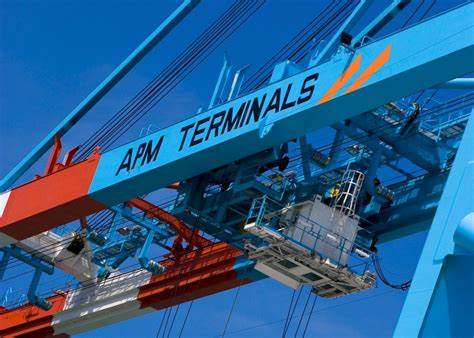
The recent announcement of a 4.61% tariff increase at the Freeport of Monrovia by APM Terminals is not merely a routine adjustment in a global shipping landscape; it is a profound manifestation of corporate exploitation facilitated by systemic governmental complicity. This move, which adds a layer of financial pressure on an already struggling population, stands as a testament to the failings of the 2010 Concession Agreement—a document that has long been criticized as a "bottleneck" to Liberia’s economic sovereignty. While APM Terminals positions itself as an international partner in development, the reality on the ground suggests a different narrative: one of profit maximization at the expense of national stability.
To understand the gravity of this situation, one must look at the historical context of the Freeport of Monrovia, the nation’s primary economic artery. Following years of civil strife that decimated Liberia’s infrastructure, the post-conflict era saw a rush to privatize state assets. The 2010 agreement with APM Terminals, a subsidiary of the Danish shipping giant A.P.
Moller-Maersk, was marketed as a panacea for the port's inefficiency. However, the 25-year duration of this deal has effectively handcuffed successive Liberian administrations, stripping the state of its regulatory authority and placing the keys to national commerce into the hands of a foreign entity. The recent hike, which adds USD 10.46 for a standard 20-foot import container, is a micro-aggression against the broader economic health of the country.
This increase follows a disturbing pattern of serial hikes; in 2021, the company implemented a 9.67% increase, pushing the cost of clearing a 20-foot container from USD 189 to USD 207. These compounded costs are not absorbed by corporations alone; they are passed down to the Liberian consumer, manifesting as higher prices for rice, fuel, construction materials, and medicine. In an economy where the vast majority of the population lives below the poverty line, these incremental "adjustments" are equivalent to a tax on survival.
The timing of these hikes is perhaps the most egregious aspect of this corporate strategy. As Liberia struggles to recover from the fiscal shocks of the global pandemic and inflationary pressures, the rigidity of the concession agreement is being used as a shield against public outcry. APM Terminals justifies these increases by citing a formula embedded in the 2010 contract—a clause that critics argue was either poorly negotiated by Liberian officials or deliberately skewed to favor the operator. This creates an environment where the company can technically claim to be in compliance with the letter of the law, while simultaneously violating the spirit of its mandate to foster economic growth.
The remorse expressed by lawmakers, such as Senator Edwin Melvin Snowe, who publicly labeled the agreement "the worst concession we ever passed in this Legislature," reflects a growing consensus that the sovereignty of Liberia was traded away for short-term promises of modernization. This remorse, while notable, does not alleviate the burden currently being felt by the Liberian people. The agreement is essentially an ironclad contract that limits the government’s maneuverability, creating a scenario where, according to company officials, any attempt to review or revise the terms would require the Liberian government to pay hefty compensations to ensure the company is not 'short-changed.' This is a classic example of corporate hostage-taking, where the development needs of a nation are held captive by the contractual interests of a multinational corporation.
Beyond the fiscal numbers, there is a dark underbelly to the operational side of APM Terminals in Liberia. The company has faced persistent allegations regarding labor malpractice, including the arbitrary dismissal of long-term employees and a persistent refusal to abide by government-issued directives regarding reinstatement. By disregarding the directives of the Ministry of Labor, the company signals a defiance of local authority that undermines the rule of law. Such behavior suggests that the operator views the Liberian regulatory framework as an inconvenience rather than a foundation for cooperation.
Furthermore, the financial opacity surrounding the port’s operations has raised alarming questions about revenue leakage. There have been consistent reports and allegations that the state is being defrauded of millions in potential revenue. If these allegations of financial impropriety are linked to the structural lack of government oversight, the result is a massive hemorrhage of resources that should be funding hospitals, schools, and roads. The government’s continued inability or perceived unwillingness to investigate these claims aggressively points to a troubling alignment between the political elite and the corporate entity.
Is there collusion? When public outcry is ignored and legislative probes are consistently stalled or watered down, one is forced to consider that the beneficiaries of the current status quo extend well beyond the company’s boardrooms. The political class, having signed these agreements, may find themselves too deeply entrenched to dismantle the framework, even as the public grows increasingly restless. The threat of public uprising, as warned by Senator Snowe, is not mere hyperbole; it is a reflection of the boiling point that occurs when citizens perceive that their government has failed to protect them from foreign exploitation.
As an entry point for almost all imported commodities, the Freeport of Monrovia is the pulse of the nation. Every tariff increase acts as a constriction on that pulse. The cascading effects are clear: decreased purchasing power, slowed industrial activity, and a widening gap between the wealthy and the impoverished. This is a regional concern as well; as Liberia seeks to integrate into the African Continental Free Trade Area (AfCFTA), the inefficiency and high cost of its primary port operations make it less competitive compared to its neighbors.
If the gateway to the country remains mired in expensive, exclusionary contracts, the nation will struggle to attract the very investment it so desperately needs. To move forward, a comprehensive audit and a legal challenge to the 2010 agreement are non-negotiable. The government must move beyond the rhetoric of 'win-win' scenarios and confront the reality that a 25-year lock-in is fundamentally incompatible with the shifting economic realities of the 21st century. The state must reassert its regulatory sovereignty, demand transparency in all financial reporting from the port operator, and ensure that labor rights are protected as a non-negotiable pillar of the contract.
If the government fails to take decisive action to renegotiate these terms, it risks cementing its role as an enabler of corporate exploitation rather than a defender of the public interest. The Freeport of Monrovia should be the engine of Liberia’s prosperity; under the current structure, it remains a symbol of its economic subjugation. The time for passive observation has passed; only active, bold, and transparent governance can reclaim this national asset for the benefit of all Liberians.
