
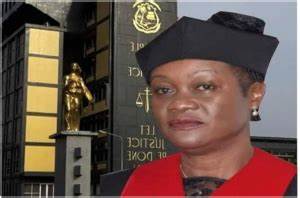
As June 26, 2025, approaches, Liberia’s legal and political landscape finds itself focused on the Temple of Justice. Chief Justice Sie-A-Nyene Gyapay Yuoh, the third woman to ascend to the highest judicial office in the nation’s history, will reach the constitutionally mandated retirement age of 70 on that date. However, rather than triggering an immediate vacancy or an abrupt administrative transition, her tenure will experience a structured, constitutionally-mandated extension. By virtue of Article 72(b) of the 1986 Liberian Constitution, Chief Justice Yuoh will remain at the helm of the Supreme Court for as long as is necessary to finalize the cases she has already commenced.
This provision is far from a mere administrative formality; it is a profound structural safeguard designed to ensure judicial continuity and protect the sanctity of the adversarial process in a nation still actively consolidating its democratic foundations. Article 72(b) states, 'Any Justice of the Supreme Court or any Judge presiding over any court of record who has attained the age of seventy years shall retire from office, but a justice or judge who has attained that age may continue in office for as long as may be necessary to enable him to render judgment or perform any other judicial duty in any proceeding already commenced before him.' By invoking this clause, the Chief Justice ensures that the litigants appearing before the High Court are not subjected to the uncertainty of a 'de novo' review or the disruptive impact of a change in judicial personnel mid-deliberation. This constitutional design choice reflects a pragmatic understanding of the Liberian judicial system, where the depth of institutional memory and the consistency of legal reasoning are paramount.
In many legal systems worldwide, judicial retirement is an absolute cutoff; however, Liberia’s approach prioritizes the completion of the judicial duty over the rigidity of the age-based deadline. This reflects a commitment to the principle that a case heard by a specific bench should be concluded by that same bench, thereby preserving the coherence of the final verdict. This is not an uncharted path for the Liberian judiciary. In recent memory, the tradition of extending service beyond the age of 70 to resolve pending matters has been established by esteemed predecessors.
Chief Justice Francis S. Korkpor, Sr., whose tenure was defined by significant efforts toward judicial reform and administrative discipline, utilized this provision upon his retirement in 2022 to clear his docket. Similarly, Associate Justice Philip A.
Z. Banks, III, utilized the provision in 2018. These precedents have effectively cemented the practice as a recognized and respected aspect of the Liberian legal tradition, serving as a buffer against administrative chaos. The decision to remain serves to insulate the judiciary from the kind of abrupt shifts that might otherwise invite instability during sensitive political transition periods.
Appointed in September 2022 by former President George Manneh Weah, Chief Justice Yuoh assumed office during a time of immense challenge. Her tenure has been characterized by a blend of administrative modernization efforts and involvement in high-stakes political mediation. She has presided over a number of complex cases, most notably the recent, highly contentious leadership crisis within the House of Representatives. Such matters are not merely legal technicalities; they are foundational issues that dictate the functionality of the Liberian state.
When the judiciary intervenes in such disputes, it is often viewed through a political lens, yet the Chief Justice has consistently navigated these waters by grounding her decisions in the procedural mandates of the Constitution. Her tenure has been a testament to the heavy burden carried by the head of the third branch of government. In her recent farewell address to the judiciary—a poignant moment of reflection for a jurist who has spent a lifetime in the service of the law—Yuoh addressed the inevitable friction between the bench and the public. She spoke with a sense of solemn duty, acknowledging that the court’s rulings, while based on the letter of the law, have at times drawn intense criticism.
'We are aware that our opinions have been met with criticism, oftentimes what I considered bias, particularly in cases where political figures are involved,' she remarked. This admission of the existence of public skepticism is significant. By extending an apology to those who felt aggrieved, she demonstrated a level of humility rarely seen in high-level state officials, suggesting an understanding that the legitimacy of the judiciary relies as much on public perception as it does on legal precedent. The history of the Liberian judiciary has often been one of resilience against political pressure.
Since the end of the civil wars, the courts have been central to the effort to move away from rule by decree toward a society governed by the rule of law. However, the legacy of judicial subservience to the executive branch in earlier decades still haunts the public discourse. Consequently, every decision made by the Supreme Court, especially those involving political figures, is subjected to rigorous, often polarized, analysis. Chief Justice Yuoh’s insistence on remaining in office until her docket is clear serves as a final act of stewardship, ensuring that the cases she has handled are not abandoned to an uncertain fate.
The broader economic and social implications of her tenure cannot be ignored. A stable, predictable, and independent judiciary is the cornerstone of any nation’s investment climate. Investors look to the Supreme Court for consistency; when they see that cases move through the appellate process without being derailed by sudden personnel changes, confidence increases. Conversely, the political scrutiny surrounding the appointment of her successor is immense.
In a young democracy, the selection of the Chief Justice is often viewed as a litmus test for the executive branch’s commitment to judicial independence. There is a palpable anxiety in legal circles that if the selection process becomes overtly partisan, the judiciary risks being viewed merely as an extension of the political party currently holding power. This would be a detrimental blow to the progress made since the Comprehensive Peace Agreement. As Liberia looks toward the future, the transition following Chief Justice Yuoh’s eventual departure will be a defining moment.
It will require the leadership of the Executive and the confirmation process of the Legislature to prioritize merit and institutional integrity over political patronage. The judiciary must be a safe harbor for rights, not a theater for political warfare. Chief Justice Yuoh’s legacy will ultimately be defined by her commitment to the continuity of the institution. By staying to resolve the cases she began, she is not merely fulfilling a constitutional obligation; she is reinforcing the sanctity of the courtroom itself.
As the nation watches the upcoming transition, the hope remains that the judiciary will emerge stronger, more independent, and increasingly capable of commanding the trust of the Liberian people. The rule of law in Liberia is an ongoing project, one that requires, above all else, leaders who respect the institution’s longevity more than their own tenure. Chief Justice Yuoh’s decision is a reflection of this ethos, signaling that even in retirement, the duty to ensure justice is rendered remains the foremost priority of the Chief Justice of the Republic of Liberia.
