
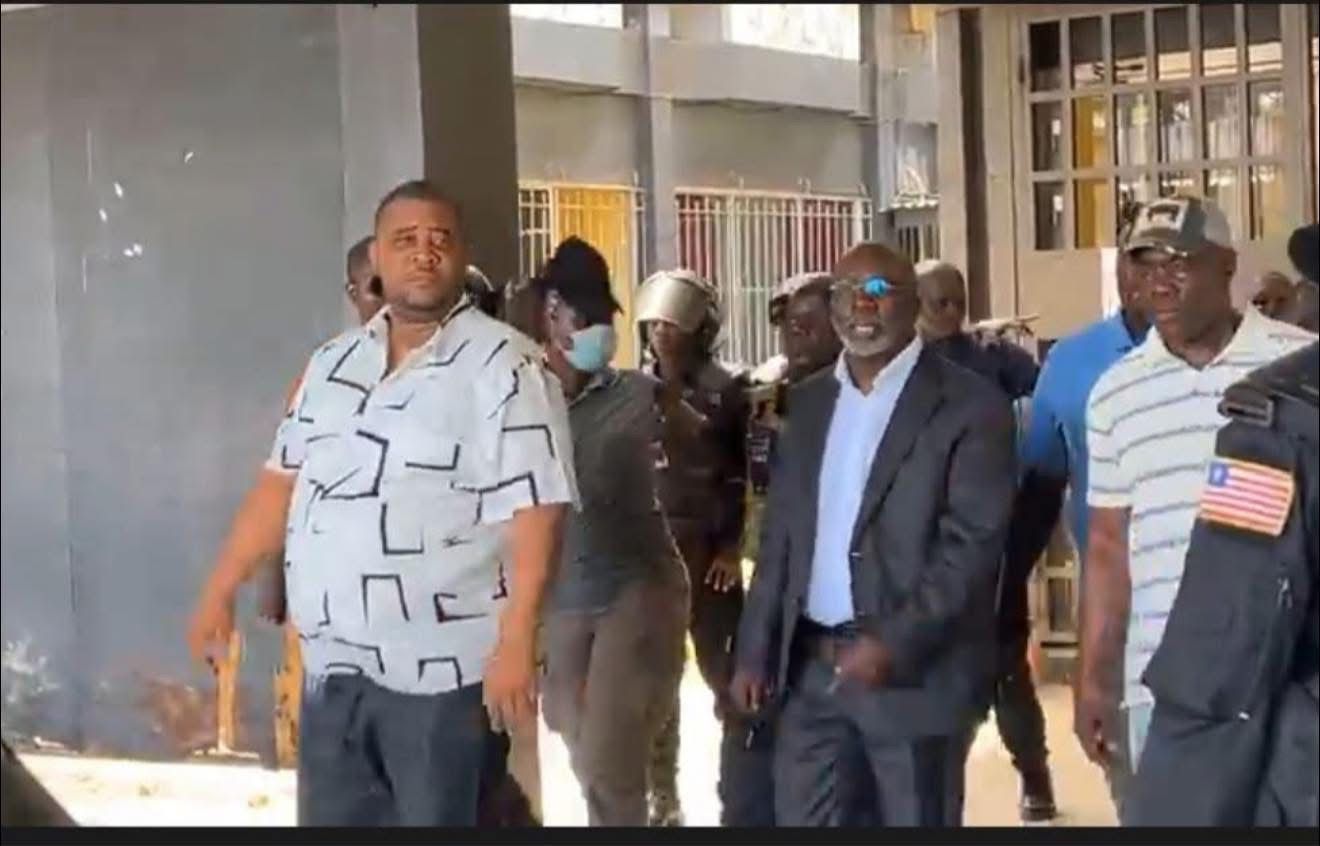
The political landscape of Liberia reached a fever pitch on June 9, 2025, when Judge Ben Barco of the Monrovia City Court signed a property bond valued at $1.8 million, facilitating the conditional release of former House Speaker J. Fonati Koffa and four of his legislative colleagues. The release concludes a tense period of remand following their arrest in connection with the catastrophic December 2024 fire that decimated the historic Capitol Building.
While the bond serves as a technical legal milestone, the atmosphere surrounding the Monrovia City Court suggested that this is far from a standard criminal proceeding. Instead, it is increasingly viewed by observers as a pivotal struggle for the soul of Liberian democracy, pitting the executive branch’s influence against the autonomy of the legislative body. The five individuals at the center of this firestorm—Koffa, Abu Bana Kamara, Dixon Wlawlee Seboe, Jacob C. Debee, and Priscilla A.
Cooper—stand accused of serious crimes including arson, criminal conspiracy, and criminal facilitation. However, as the legal technicalities unfold, the broader narrative remains dominated by questions of political retribution, the fragility of the rule of law, and the precarious nature of separation of powers in a post-conflict democracy. The fire that erupted on December 18, 2024, was not merely a physical disaster resulting in $8 million in damages; it was a symbolic wound to the state. The Capitol Building, the seat of the First Branch of Government, serves as the sanctum of legislative discourse and democratic representation in Liberia.
When flames consumed the chambers, the nation witnessed more than just a structural collapse; it saw the literal burning of the venue where the country's most contentious political battles are settled. This incident occurred against the backdrop of a bitter and protracted leadership struggle within the House of Representatives, which had left the body paralyzed for weeks. The investigators allege that the fire was not an accident but a calculated act of sabotage, claiming the accused lawmakers provided the financial and logistical support necessary to execute the arson. For the government, this is a matter of national security and criminal accountability.
For the accused, it is a textbook case of political persecution disguised as judicial process. The handling of the arrests themselves has drawn significant criticism from constitutional experts and civil society organizations. When the lawmakers were summoned to police headquarters on the Friday preceding their release, their appearance was subject to a six-hour delay. This period of uncertainty, characterized by conflicting reports and high-stakes maneuvering, fueled widespread allegations that the executive branch intentionally sought to prolong their detention.
Critics argue that the decision to remand the lawmakers to prison, coupled with a rigid travel ban, was a demonstration of force intended to humiliate and intimidate political opponents. Legal analysts have pointed out that the continued detention of individuals after formal charges have been filed, when bail options exist and are applicable, often pushes the boundaries of Liberian constitutional due process. The presence of former President George Weah at the court proceedings on the day of the bond signing added another layer of intrigue to an already volatile situation. Weah’s attendance was widely interpreted as an attempt to project strength and solidarity with the accused, signaling to his political base and the ruling coalition alike that the opposition is not prepared to surrender the political narrative.
His presence, while symbolic, underscored the high political stakes, turning the courtroom into a stage where Liberia's past and present political elites clash. The history of the Liberian Capitol Building is itself intertwined with the country’s turbulent journey toward democracy. Built to represent the stability of governance, the building has endured years of civil unrest and the slow process of institutional rebuilding. A fire in such a location carries deep psychological weight for a population still recovering from years of conflict.
Consequently, the public response has been polarized. Some citizens applaud the police for taking a hard line against high-level corruption and criminality, viewing the charges as a necessary step toward ending the culture of impunity that has plagued the legislative branch for decades. Others, however, see a dangerous precedent where the police, directed by the executive, are weaponized against political rivals to neutralize opposition during a fragile legislative session. The economic implications are equally staggering.
Beyond the $8 million estimate in direct physical damages, the cost of legislative inactivity during a period of national budget negotiation and policy-setting has likely run into the millions. The disruption of the legislative calendar has delayed critical fiscal reforms and public interest bills, further straining a Liberian economy already facing inflationary pressures and unemployment challenges. This case also highlights the broader regional significance of Liberia’s political instability. As the West African sub-region faces its own wave of democratic backsliding and political volatility, international observers are closely monitoring how Liberia handles this high-profile constitutional crisis.
The independence of the judiciary is currently being tested; if the court is perceived as a tool of the executive, it could severely damage Liberia’s standing with international donors and regional bodies like ECOWAS, which have long championed the solidification of the rule of law in Monrovia. As the legal battle shifts to the next phase, the focus will likely remain on the evidentiary support for the police claims. The public and the press will be scrutinizing the state’s ability to prove that these lawmakers were indeed the architects of the Capitol inferno. Without transparent, ironclad evidence, the perception of political foul play will persist, potentially leading to further social unrest and deepening the divides that the fire exposed.
The bond signed by Judge Barco allows the lawmakers to be released into the custody of their legal counsel, but the travel ban remains a significant limitation on their freedom. As the trial proceeds, the defense will undoubtedly challenge the legality of the detention, the credibility of the evidence, and the neutrality of the investigation. For now, the Capitol fire remains an open wound, and the trial of these five lawmakers is set to become the definitive political and legal story of the year. The outcome will likely determine the power balance in the House for the remainder of the current administration’s tenure.
Whether this case marks a turning point toward genuine accountability or a descent into autocratic political maneuvering remains the most pressing question for the future of Liberia’s democratic experiment.
