
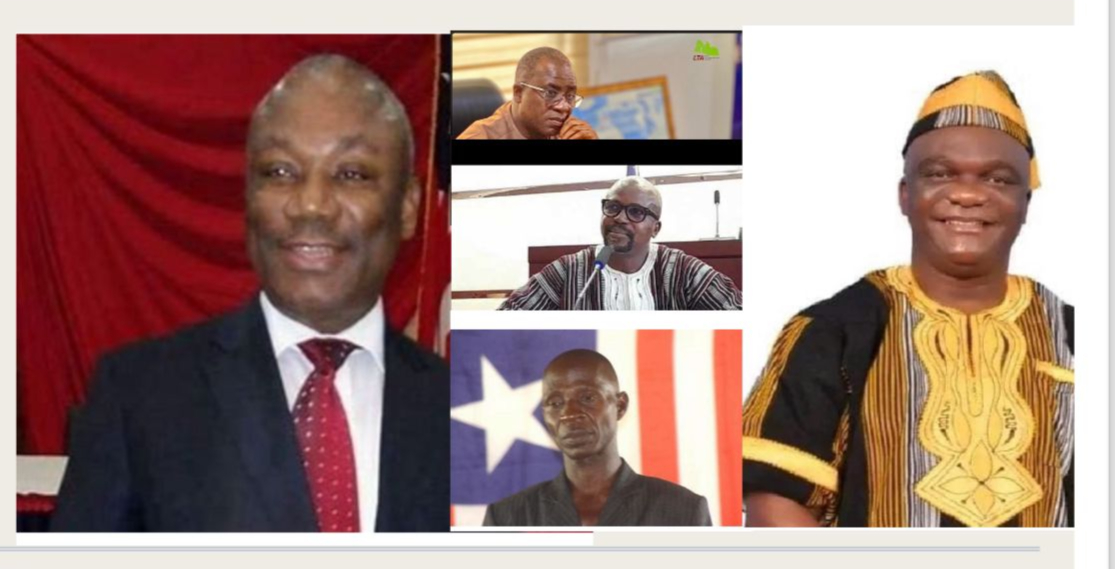
The administration of President Joseph Nyuma Boakai, which assumed office under the ambitious 'ARREST' agenda—centered on Agriculture, Roads, Rule of Law, Education, Sanitation, and Tourism—is increasingly facing a crisis of legitimacy. Barely into its tenure, the executive branch finds itself mired in a pervasive culture of political patronage and institutionalized impunity. While the administration campaigned on a promise of transparency and the restoration of integrity to the Liberian state, the reality has diverged sharply from this rhetoric. Instead of a bold purge of malfeasance, the current political climate is defined by the retention of officials implicated in systemic corruption, financial irregularities, and academic fraud.
This analysis examines the 'Sacred Cows' of the Boakai era—high-ranking figures whose continued presence in government signals a disturbing prioritization of loyalty over the rule of law. The endurance of these officials within the state apparatus is not merely a failure of administrative oversight; it is a profound betrayal of the electorate's mandate for change. When individuals facing credible allegations of misappropriation and ethical breaches remain at the helm of sensitive ministries and agencies, the message sent to the citizenry is clear: in this government, political connections offer an effective shield against accountability. This pattern of behavior is eroding public trust and undermining the very foundations of the Liberian democracy.
The administration's failure to purge its ranks creates a moral vacuum where incompetence and theft are shielded, effectively normalizing corruption as an instrument of governance. Central to this troubling trend is the case of Sylvester Grisby, the Minister of State for Presidential Affairs. As one of President Boakai's most influential advisors, Grisby has become the face of executive branch entanglement. Prior to the administration’s formal inauguration, Grisby was implicated in a scandal involving the National Social Security and Welfare Corporation (NASSCORP).
Reports indicate he allegedly directed the appropriation of public funds for the procurement of five luxury SUV vehicles, valued at approximately $117,000, for purposes outside official governmental functions. That these assets were acquired while Grisby occupied a nebulous role as an advisor to the then-president-elect suggests a calculated misuse of proximity to power. Despite calls from members of the legislature, including Representative Yekeh Y. Kolubah, for a transparent investigation into whether Grisby possessed the authority to requisition millions of dollars in funds, he remains firmly ensconced in his position.
His retention serves as a litmus test for the administration’s commitment to ethics; it appears that in the corridors of the Executive Mansion, proximity to the President provides an ironclad immunity against the consequences of fiscal misconduct. The Liberia Telecommunications Authority (LTA) has similarly become a theater of controversy under the acting chairmanship of Abdullah Kamara. The institution, tasked with regulating a vital sector of the digital economy, has been overshadowed by findings from the General Auditing Commission (GAC). These findings link Kamara, during his tenure as CEO of TAMMA Corporation, to questionable payments totaling over L$262 million and US$450,000, allegedly bypassing standard procurement protocols.
Compounding these financial concerns are allegations of a $2.6 million digital literacy scam that effectively defrauded thousands of young Liberians. Despite the Center for Transparency and Accountability in Liberia (CENTAL) formally demanding his removal based on these audit findings, Kamara remains in his post. The failure of the administration to suspend him while investigations proceed undermines the authority of the GAC and signals to other public servants that audit reports are optional, rather than mandatory, benchmarks for reform.
In the Ministry of Public Works, Minister Roland Giddings presents a different, yet equally concerning, form of management failure. Giddings has candidly admitted to rampant corruption within his sector, acknowledging that numerous infrastructural projects remain abandoned despite full or partial payment to contractors. However, his admission of the problem is not matched by his performance in solving it. Giddings has faced intense scrutiny over a US$4.
8 million contract for road construction machinery, where a significant shortfall in delivered equipment resulted in a loss of over US$800,000 in public funds. Furthermore, his claims of deploying US$22 million on road maintenance have been met with skepticism as the roads in question remain largely impassable. His continued tenure, in the face of these tangible failures, reinforces the perception that the administration is comfortable with mediocrity as long as it is managed by loyalists. The academic fraud scandal involving Dorr Cooper, Inspector General at the Ministry of Commerce and Industry, strikes at the heart of public institutional integrity.
A leaked investigative report from the University of Liberia reveals that Cooper allegedly orchestrated an elaborate scheme, including the payment of $10,000 to university staff to impersonate a deceased student, to fabricate an academic record. The recommendation by the university’s investigative committee for the revocation of his degree and his subsequent prosecution for academic fraud should have triggered an immediate resignation or termination. Instead, Cooper continues to represent the Ministry, casting a long shadow over the administration’s stated goals of education and professional development. When the government retains an official who is accused of orchestrating fraud to attain his position, it effectively legitimizes the culture of deception.
The Liberia Revenue Authority (LRA), the nation’s primary source of domestic resource mobilization, has also found itself at the center of the 'Modad Vehicle Scandal.' Commissioner General Dorbor Jallah is under intense pressure due to his alleged role in the purchase of a US$96,000 vehicle for former Commerce Minister Amin Modad. Critics, including former diplomat Isaac W. Jackson Jr.
, argue that Jallah authorized this expenditure via the Customs Capacity Building Fund under a contract with MEDTECH Scientific Limited without the requisite due diligence or public interest consideration. The LRA’s defense—that these funds were contractual—does little to assuage the public concern regarding the appropriateness of such luxury spending in an economy struggling with inflation and fiscal deficits. Beyond individual scandals, the Boakai administration has faced systemic criticism for the alteration of the national budget. Reports suggesting the concealment of US$251 million in loans—while publicly disclosing a significantly smaller figure—indicate a deliberate effort to bypass transparency requirements.
This practice, combined with the 'Yellow Machine' controversy where the government issued conflicting reports regarding the acquisition of 285 earthmoving machines, suggests an administration prone to erratic communication and poor fiscal control. The LACC’s investigation into potential misappropriation of over US$15 million in off-budget spending only adds to the growing pile of evidence that the administration is playing fast and loose with the national purse. The pattern of illegal dismissals of tenured officials further suggests that the Boakai administration is using its power to consolidate control, often at the expense of independent oversight. These actions, collectively, paint a picture of a presidency that is retreating from its own reformist promises.
The persistence of these 'sacred cows' in government is a strategic choice, not an oversight. It reflects a traditional Liberian political framework where patronage—not competence—is the currency of survival. If President Boakai is to salvage his legacy, he must move beyond the cycle of political protectionism. Accountability is not a threat to his administration; it is the only path toward the stability and progress that the Liberian people voted for.
True governance reform requires the courage to detach from compromised allies and to subject every official, regardless of their closeness to the Executive Mansion, to the full rigors of the law. Until that happens, the administration will continue to grapple with the consequences of its choices, as the gap between the promise of the ARREST agenda and the reality of its implementation continues to widen, threatening to alienate the very citizens who hoped for a new, honest, and transparent era in Liberian politics.


