
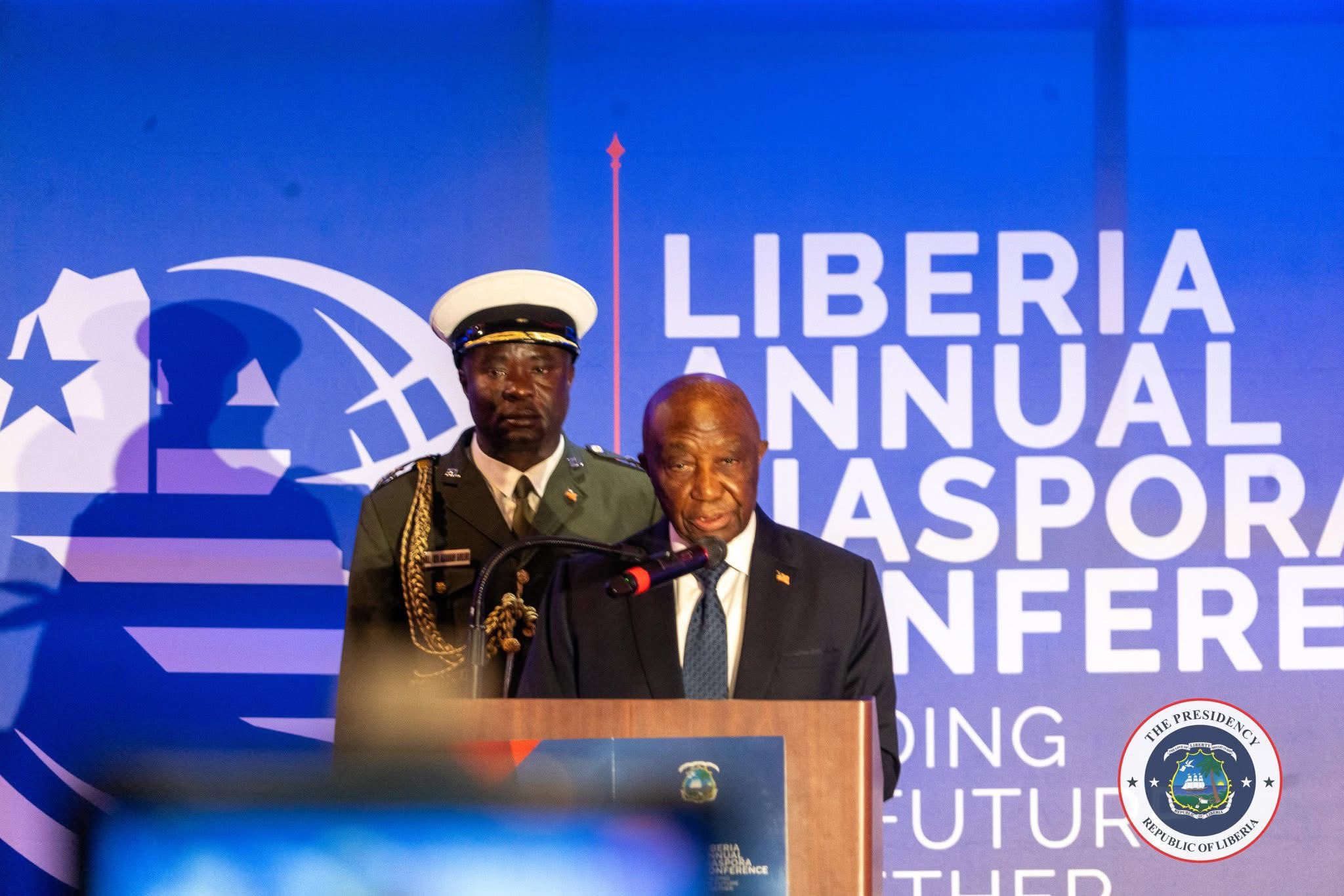
President Joseph Nyuma Boakai’s recent impassioned plea for patience during a major Diaspora conference has reverberated far beyond the halls where it was spoken, landing with a heavy, uncertain thud across the streets of Monrovia and the scattered communities of the Liberian diaspora. As the timeline of his presidency transitions from the initial honeymoon phase of 2024 into the more unforgiving reality of 2025 and moving toward 2026, the administration finds itself at a critical juncture. The promise of the 'Rescue Mission,' which propelled Boakai to victory, is currently confronting the hard, unyielding wall of economic reality. While the president’s rhetoric centers on the necessity of time to fix systemic decay, the lived experience of the average Liberian suggests a growing disconnect between the executive mansion and the kitchen table.
The economic turmoil currently gripping the nation is not merely a seasonal fluctuation; it is a structural crisis defined by mounting frustration and a palpable sense of abandonment among the electorate. Despite vigorous campaign assurances that his government would implement swift, transformative reforms to alleviate poverty and stabilize the national currency, Boakai is now navigating a period of unprecedented public discontent. The consequences of what his administration has frequently termed 'reckless' policies inherited from his predecessor continue to ripple through every sector of the economy, yet the political capital required to blame the past is rapidly depreciating. Inflation remains the primary antagonist in this narrative.
After a brief period of optimism in 2024, where rates eased from double digits to a manageable 8.4%, the economic recovery proved illusory. By early 2025, inflation rebounded sharply to 13.1%, effectively dismantling the purchasing power of the middle class and pushing the cost of essential goods—most notably rice and petroleum—well beyond the reach of millions of vulnerable citizens.
This inflationary pressure is not merely a number on a ledger; it is a daily struggle that manifests in diminished caloric intake, increased school dropouts, and a general decline in the quality of life for the majority of the Liberian population. Compounding this is the stubborn persistence of poverty. While national data indicated a hopeful drop from a peak of 40.9% in 2022 to 26.
4% at the end of 2024, these figures mask the reality that more than half of the population remains trapped in a precarious state of survival, existing far below the poverty line. The Liberian economy has long suffered from 'jobless growth,' where the GDP might show signs of movement, but the labor market remains stagnant, particularly for the teeming youth demographic. This demographic—often referred to as the 'Zogos' or simply the 'unemployed masses'—represents a demographic time bomb that is increasingly sensitive to the rhetoric of political opportunists and disillusioned activists. Public debt, the silent killer of development in post-conflict states like Liberia, remains a persistent concern.
Hovering stubbornly at approximately 57% of GDP, the debt burden acts as a massive anchor on the nation’s potential. Despite a modest decline since 2023, the interest payments alone continue to crowd out critical investments in the social sector. Boakai, who campaigned on the promise of prioritizing health, education, and infrastructure, finds his budgetary room for maneuver severely constrained by the obligations of past borrowing and the inability to attract meaningful foreign direct investment. This leads to the fundamental grievance cited by his administration: the state of 'broken institutions and depleted coffers.'
The President often highlights the structural rot he inherited, framing his tenure as a salvage operation rather than a standard transition of power. However, as the calendar inches deeper into 2025, the 'inheritance narrative' is losing its potency. Critics, including vocal members of the diaspora, argue that the government has had sufficient time to initiate systemic change. Jimmy Forkpa, an active voice within the Liberian diaspora, captured the collective sentiment succinctly: 'Boakai is asking for patience, but Liberians see little change in their lives.
Food prices keep rising, opportunities are few, and the infrastructure is in disrepair.' This sentiment is echoed across various civil society organizations and labor unions who argue that the administration’s focus on fiscal consolidation has come at an unacceptable human cost. While the deficit narrowed to 2.7% of GDP in 2024, opponents contend this achievement was manufactured through severe service cuts rather than legitimate revenue growth or efficiency.
The social implications of these cuts are devastating: clinics without drugs, schools without supplies, and roads that remain impassable during the rainy season. Beyond the numbers, the administration is plagued by a deepening crisis of confidence fueled by recurrent corruption scandals. The lack of transparency in government procurement and the perceived leniency toward officials accused of graft have eroded the trust that was so essential to Boakai’s electoral mandate. For a population that has endured decades of civil war followed by periods of kleptocracy, the demand for accountability is not just a political preference; it is a prerequisite for stability.
The broader regional significance of Liberia’s current struggles cannot be overstated. As a nation striving to solidify its post-conflict democratic gains, Liberia serves as a bellwether for West Africa. If the Boakai administration fails to address the economic anxieties of its people, the resulting instability could have contagion effects, feeding into a regional trend of political disillusionment and governance failures. The diaspora, which represents a crucial lifeline of remittances, is increasingly signaling that their support is contingent upon transparent governance and measurable results.
When diaspora members like Forkpa voice skepticism, it is not merely a critique; it is a withdrawal of the 'social credit' that the current administration needs to leverage for international support and private investment. As President Boakai continues to advocate for patience, he must recognize that patience in a developing economy is not an infinite resource. It is a commodity that is purchased through the delivery of tangible relief. Without a clear pivot toward inclusive economic policy, a radical overhaul of the corruption-prone bureaucratic apparatus, and a transparent plan to address the cost-of-living crisis, the optimism of the campaign trail will continue to evaporate.
Liberians are a resilient people, but they are also a tired people. They have heard the promises of reform for decades, and the threshold for 'meaningful relief' is becoming increasingly difficult to meet. The administration stands at a crossroads: it must either prove that it can transform the hollow shell of governance it inherited into a functional machine of progress, or it will be forced to accept that the promises made in the heat of an election year were destined to expire before they could ever bloom into reality. The patience requested by Boakai is currently being tested against the relentless reality of hunger, unemployment, and systemic stagnation—a battle he is currently losing in the court of public opinion.
