
Blood Money: Guinea's $2 Million Payoff for Liberia's Extrajudicial Kidnapping. The geopolitical landscape of the Mano River Union, historically fragile and prone to volatility, has recently been shaken by a clandestine operation that threatens to redefine the boundaries of diplomatic integrity and state sovereignty. At the epicenter of this brewing storm is the clandestine arrest and subsequent extrajudicial extradition of Ibrahima Khalil Cherif, a Guinean national with deep-seated ties to the administration of ousted President Alpha Condé. While the official narrative initially centered on the maintenance of regional stability, deeper investigative inquiries conducted by Insights Liberia reveal a more harrowing reality: a sophisticated conspiracy fueled by foreign provocation, the corruption of high-ranking Liberian officials, and an illicit transactional relationship between Monrovia and the military junta in Conakry.
This article seeks to untangle the web of greed and power that transformed Liberia into a staging ground for regional subversion, ultimately culminating in what can only be described as a 'blood money' payoff. The conspiracy began with the strategic exploitation of Liberia’s porous security architecture. Cherif, acting as a financier with significant political capital, sought to leverage Liberia as a base for recruitment and training of anti-junta forces. By preying on the economic vulnerabilities of post-conflict Liberia, he effectively seduced key state actors, effectively weaponizing the country’s institutions against its neighbor.
The scale of this operation was alarming; intelligence reports indicate that the Liberian Drug Enforcement Agency (LDEA), under the leadership of Abraham Kromah, was repurposed into an instrument of foreign political ambition. Despite the agency’s constrained mandate and limited personnel—roughly 600 officers—it became the primary vehicle for a massive recruitment drive. Sources allege that $1.2 million was channeled to facilitate the training of a force exceeding 1,590 recruits, predominantly of Guinean Mandingo descent.
The utilization of a specialized drug enforcement agency for such a high-stakes, geopolitically sensitive project raises profound questions regarding the vetting process for key security appointments and the oversight mechanisms intended to prevent the hijacking of state machinery. The involvement, however, was not confined to the LDEA. The conspiracy allegedly permeated the upper echelons of the Liberian security and legal apparatus, drawing in figures ranging from the Attorney General to the leadership of the National Security Agency (NSA) and the Liberia National Police. This institutional complicity created an environment where the sovereignty of the Liberian state became a negotiable commodity.
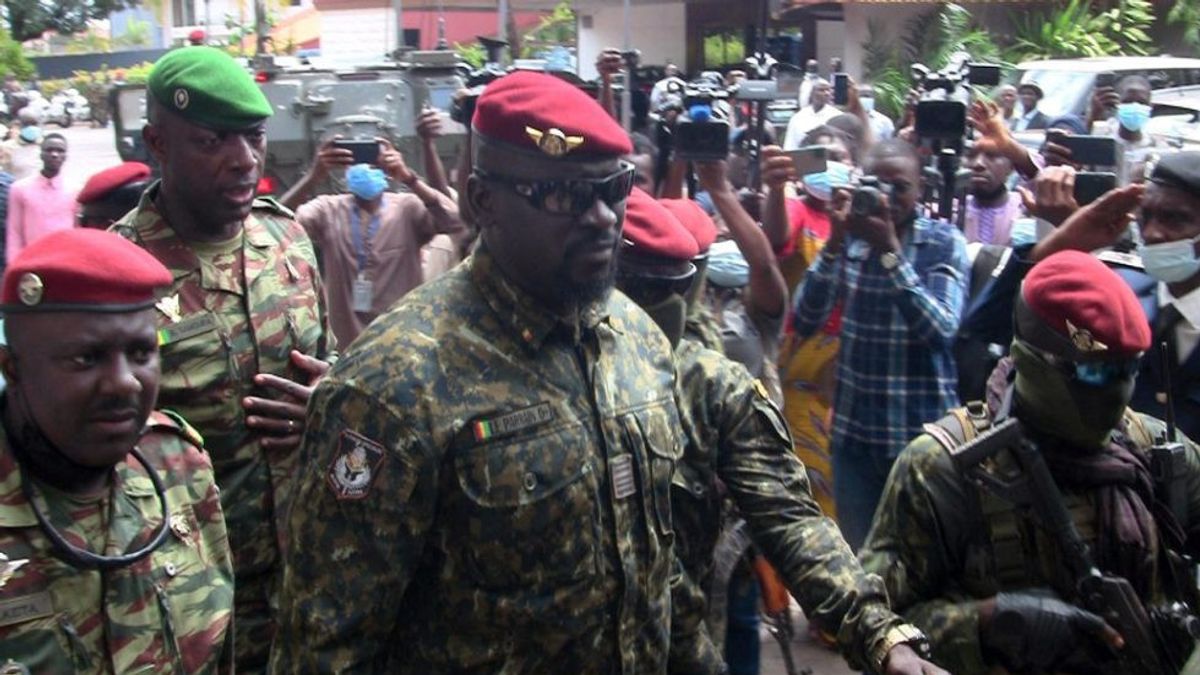
By facilitating Cherif’s operations, these officials did not merely fail to protect their own borders; they actively participated in an act of international aggression that nearly brought Liberia and Guinea to the brink of a full-scale armed conflict. When the military junta in Conakry, led by Mamady Doumbouya, intercepted intelligence regarding these training camps on Liberian soil, the diplomatic fallout was immediate and severe. Recognizing that their hold on power was being actively undermined by forces operating out of Monrovia, the Guinean leadership dispatched a stern ultimatum. The demand was unambiguous: halt all recruitment, dismantle the training apparatus, and extradite Ibrahima Khalil Cherif to face the consequences in Conakry.
The pressure applied by the junta was not merely diplomatic; it was existential, with reports suggesting that Guinea was prepared to deploy aggressive countermeasures should Liberia fail to comply. Faced with the stark reality of their own compromised positions, Liberian authorities abandoned the rule of law. The eventual arrest and transfer of Cherif were conducted under a shroud of darkness, bypasssing the constitutional safeguards and international legal standards that govern extradition. Kabineh Ja'neh, a former Associate Justice of the Supreme Court of Liberia and legal counsel for the accused, rightly characterized the operation as a flagrant violation of human rights and due process.
The lack of involvement from the Ministry of Foreign Affairs and the Ministry of Justice, which are mandated by law to oversee such high-level diplomatic processes, serves as a damning indictment of the clandestine nature of the transaction. The most disturbing facet of this unfolding scandal is the subsequent 'gratitude' displayed by the Guinean junta. Sources with direct knowledge of the negotiations allege that members of the Guinean military leadership traveled to Liberia to deliver $2 million in cash to the officials who facilitated the extrajudicial handover. This transaction, which has been described by insiders as 'blood money,' represents a commodification of human life and a total collapse of professional ethics within the Liberian government.
This is not merely an accusation of bribery; it is a fundamental betrayal of the trust placed in public servants. The impropriety was further cemented by the public actions of President Joseph Boakai, who, during a visit to Lofa County, acknowledged that the Guinean junta had donated ten pickup trucks to Liberia as a gesture of appreciation for the ongoing security cooperation. In the context of the extrajudicial extradition and the cash payoffs, the acceptance of such 'logistical support' sends a chilling message. It implies that the Liberian government is now an active partner in the junta’s regional security strategies, potentially trading its neutrality for material gain.
Even more troubling are reports that agents of the Guinean junta are currently operating within the borders of Liberia with the implicit permission of the state. These operatives are reportedly tracking down former recruits and associates involved in the initial training scheme. By granting foreign military actors the freedom to conduct search and detention operations within Liberian territory, the government has essentially relinquished sovereignty, allowing the reach of the Conakry junta to extend past its own borders. This creates a dangerous precedent where any individual residing in Liberia can be targeted by foreign authorities if they are deemed a threat by the regimes in neighboring states.
The broader implications for West African regional security are staggering. The ease with which state institutions were co-opted to serve the interests of an external military power highlights the fragility of governance in the sub-region. It demonstrates that as long as financial incentives remain available, the rule of law is easily sacrificed for political convenience. For Liberia, the reputational damage may prove irreversible.
The country, which has worked tirelessly to shed its image as a destination for regional instability and mercenary activity, is now facing accusations of engaging in the exact conduct it previously spent decades trying to suppress. Public trust, which is the cornerstone of any democracy, has been fundamentally undermined. If officials at the highest level of government can be purchased to violate the rights of individuals and betray regional alliances, the entire security apparatus loses its legitimacy. Looking forward, the implications for Liberia’s future are dire.
The country stands at a crossroads, needing to choose between the path of transparency and international legal compliance or the path of transactional, autocratic-style politics. The lessons from this scandal should be a clarion call for the urgent reform of security sectors and the establishment of robust, independent oversight bodies. Without a transparent, independent investigation into the role of the LDEA and other security agencies, the stain of this scandal will continue to fester, potentially inviting further foreign interference and eroding the stability that Liberia has struggled so hard to maintain. The regional landscape is currently fraught with uncertainty, and the actions of the current administration have only added fuel to a fire that could have been avoided.
As Liberia looks toward consolidating its democratic gains, the prioritization of ethical governance over short-term financial windfalls is not just a moral imperative—it is a matter of national survival. The 'Blood Money' saga is a sobering reminder that corruption is not merely a domestic issue; when it involves the lives of citizens and the sovereignty of nations, it becomes a threat to regional peace. It is incumbent upon civil society, the press, and the international community to hold those in power accountable for this betrayal of the public trust. The story of Ibrahima Khalil Cherif is not just about a coup plotter; it is about the fragility of the institutions designed to protect us, and the high cost of allowing them to be traded for silver.
