
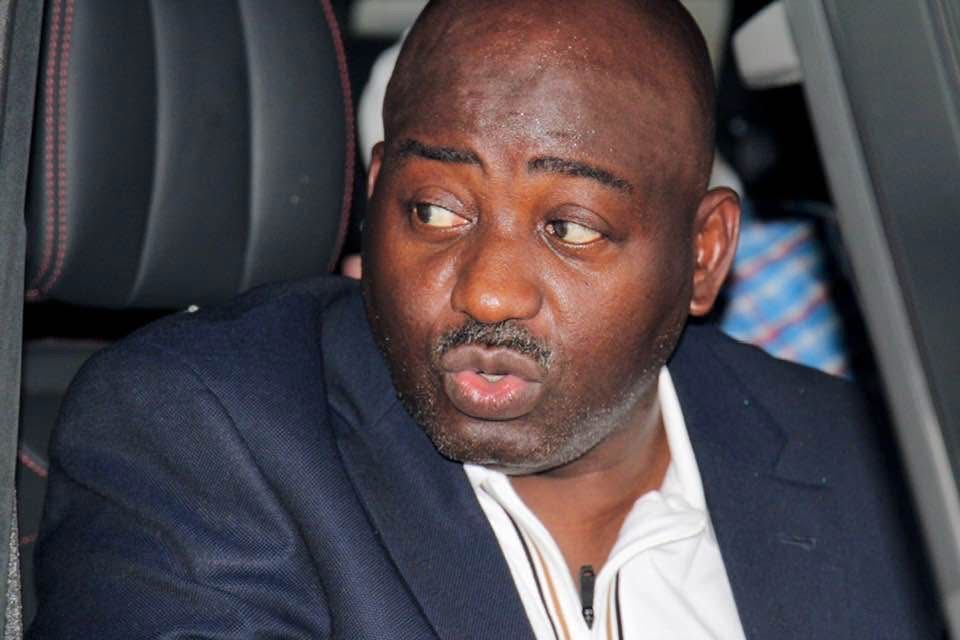
In a bold move that has sent shockwaves through the corridors of power at the Capitol Building, Honorable Musa Hassan Bility, the Representative of Nimba County District 7, has launched a blistering critique of the Executive Branch’s fiscal management. In an open letter addressed to President Joseph Nyuma Boakai, Bility has leveled grave accusations regarding a proposed recast of the 2025 National Budget. This document, which represents the fiscal roadmap for the nation, is now at the center of a brewing political storm. Bility alleges that a clandestine effort is underway to resubmit the budget for a revision that would serve little purpose other than to 'quietly refill' exhausted budgetary allocations, a maneuver he characterizes as an economic crime against the suffering masses of Liberia.
For a nation grappling with persistent systemic poverty, the accusation that the legislative and executive branches are colluding to manipulate public funds for self-enrichment hits a raw nerve. The Liberian public, long accustomed to the opacity of budget hearings and the lack of accountability in resource allocation, is watching this development with a mixture of skepticism and profound fatigue. The budget process in Liberia has historically been a tool for political patronage rather than a development instrument. When the Executive intends to bring a budget back to the Legislature for a recast just months into the fiscal year, it often suggests either poor initial planning or a deliberate strategy to create slush funds outside of public scrutiny.
Bility’s warnings are not merely anecdotal; they emerge against a backdrop of increasing public outcry over the 2025 budget, which critics argue is heavily tilted toward administrative overheads rather than critical social services like healthcare, education, and road connectivity. The legislative branch, in particular, has faced intense criticism for its self-serving budgetary habits, with many observers pointing to the lack of independent oversight as the primary reason for such persistent fiscal irregularities. By demanding that the President reject this recast, Bility is challenging the foundational legitimacy of the current administration’s fiscal policies. He posits that any surplus—if one indeed exists—should be prudently carried over to the next budget cycle to fund essential infrastructure and support the agricultural sector, which remains the backbone of the rural Liberian economy.
The reluctance of the Legislature to subject itself to an audit has been a recurring theme in Liberian politics. Historically, the Capitol has treated its internal accounting as a sovereign enclave, shielded from the oversight of the General Auditing Commission. This culture of impunity has fostered a disconnect between the political elite and the citizens who endure the brunt of underfunded public institutions. When classrooms lack desks and hospitals lack essential medicines, the sight of lawmakers maneuvering to pad their own legislative appropriations becomes a catalyst for civil unrest.
Bility’s assertion that the move is an 'abuse of power' is a stark reminder of the social contract that is increasingly fraying. For President Boakai, who campaigned on the 'ARREST' agenda—emphasizing Agriculture, Roads, Rule of Law, Education, Sanitation, and Tourism—this moment represents a critical litmus test. Can the President break the cycle of patronage that has defined post-war Liberian governance, or will he succumb to the pressures of the Legislature to sustain a system of 'quiet refills'? The regional significance of this struggle cannot be understated.
As Liberia strives to deepen its democratic credentials within the ECOWAS framework, fiscal integrity remains a core pillar of regional stability. Corruption in the budget process is not just a domestic issue; it diminishes investor confidence and complicates the nation’s relationship with international financial institutions like the IMF and the World Bank. When a government consistently exceeds its fiscal limits or engages in off-budget spending, it erodes the credibility of the entire state apparatus. The allegations brought forward by Bility are supported by a growing body of evidence regarding the government’s fiscal behavior.
Recent reports suggest that off-budget expenditures have become a normalized practice, complicating the oversight role of civil society organizations. The lack of transparency in how the $880 million budget is dispersed is further exacerbated by the division within the House of Representatives, where factions are often more concerned with securing political dominance than addressing the national interest. This environment makes it extremely difficult to track whether funds are being used for genuine development or for administrative bloat. The historical context of this struggle traces back to decades of legislative dependency on the Executive.
For years, the Legislature has been viewed as a rubber stamp for executive desires, but when the two branches find common ground in self-preservation, the public suffers the most. Bility’s intervention is an attempt to disrupt this comfort zone. By calling for an audit, he is echoing the demands of civil society groups like the Institute for Research and Democratic Development (IREDD), which have continuously graded the 55th Legislature poorly for its lack of transparency. The Capitol Building, once a symbol of the people's power, has increasingly become a site of public indignation.
The ongoing debate surrounding the arson trial of the Capitol and the broader culture of financial secrecy are symptoms of a deeper malaise. Bility’s call to action is not just a legislative critique; it is a moral plea to the President to prioritize the collective survival of the Liberian state over the narrow interests of political loyalists. If the President chooses to sign off on the recast, he risks validating the perception that his administration is continuing the status quo of high-level state capture. The economic implications are dire: with rising inflation and the cost of living skyrocketing, every dollar diverted to legislative luxuries is a dollar taken away from a school lunch program or a maternal health clinic.
Ultimately, the question remains whether the Liberian Legislature will finally submit to the rigorous standards of financial transparency that the electorate demands. If the 2025 budget is allowed to be distorted by internal manipulation, it will set a dangerous precedent for future fiscal cycles. Representative Bility has drawn a line in the sand, daring the establishment to prioritize the people’s welfare. The 'future of our country depends on leaders who can say no,' Bility’s letter reminds us.
This is a moment of reckoning for the Boakai administration, a defining point where the rhetoric of reform must be matched by the difficult, often unpopular, work of cutting costs and enforcing accountability. The eyes of the Liberian people, and the watchful gaze of international observers, remain fixed on the Executive Mansion, waiting to see if this warning will be heeded or dismissed as merely another political distraction in an increasingly volatile political season. The integrity of the 2025 National Budget is not just a matter of bookkeeping; it is a fundamental question of whether the Liberian state is capable of serving the needs of its people or if it will remain trapped in the cycle of self-enrichment that has hindered its development for generations.
