
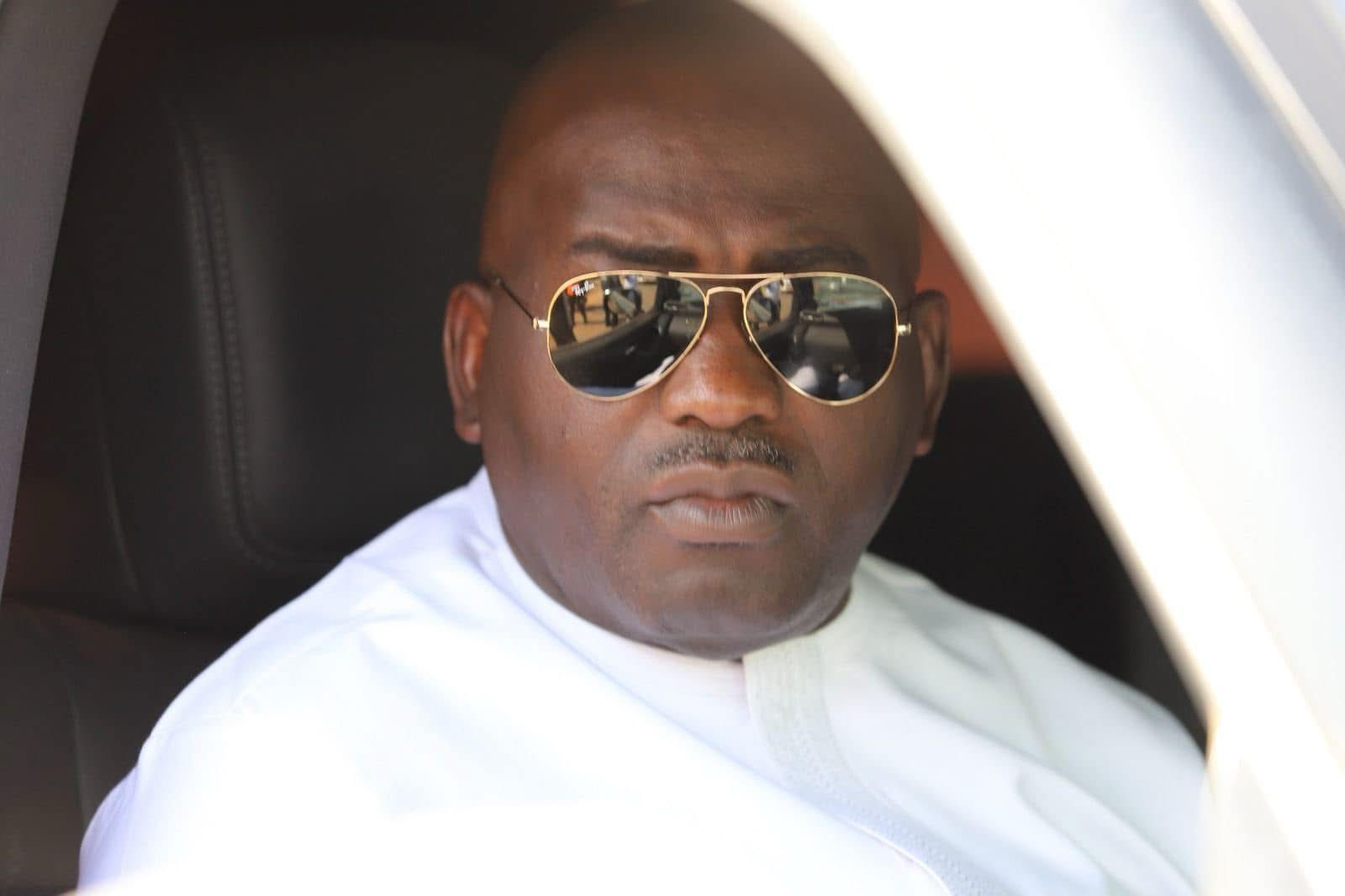
In a political landscape often defined by entrenched privilege and the perceived insulation of the elite from the struggles of the common citizen, Representative Musa Hassan Bility has made a move that resonates far beyond the halls of the Capitol Building in Monrovia. His decision to slash his own legislative salary by 50 percent, in direct response to the recent suspension of USAID assistance to Liberia, serves as both a symbolic act of defiance against fiscal irresponsibility and a jarring wake-up call regarding the fragility of the nation's economic model. This gesture comes at a juncture where the Liberian state is teetering on the edge of a fiscal cliff, illustrating with stark clarity the inherent dangers of a developmental path heavily reliant on external benevolence rather than internal ingenuity. The suspension of USAID funding is not merely an administrative hurdle; it is a seismic event that threatens to undo years of painstaking post-war recovery, affecting over 232 ongoing projects and jeopardizing more than US$150 million in critical development capital.
In this climate, Bility’s announcement—and his subsequent commitment to channel those funds toward the Saclepea Comprehensive Health Center—has ignited a firestorm of debate regarding the morality of legislative compensation in one of the world's poorest nations. The context of this development must be understood through the lens of Liberia's history. Since the end of the brutal civil wars that decimated the country's infrastructure and human capital, Liberia has occupied a position of extreme dependency. International partners, led by the United States, have acted as the primary financiers for everything from health and education to the construction of critical infrastructure and the professionalization of security sectors.
For years, this arrangement provided a necessary buffer, allowing the government to focus on stabilization. However, it also fostered a culture of complacency, where domestic revenue mobilization remained stagnant while government spending—specifically in the form of lavish salaries and benefits for elected officials—ballooned to levels that are objectively unsustainable. Recent data indicates that Liberian legislators can command monthly compensation packages reaching US$15,000, a figure that is galling when measured against the local economic reality, where the average annual income hovers around US$570. This disparity is not just a statistical anomaly; it is a profound moral indictment of a governance structure that prioritizes the comfort of the political class over the basic needs of the populace.
By moving to halve his salary, Bility has essentially challenged the status quo, forcing a conversation about whether the legislature is a body of service or an institution of enrichment. The Saclepea Comprehensive Health Center, the beneficiary of his gesture, stands as a symbol of the broader healthcare crisis currently gripping Liberia. Following the news of the USAID freeze, healthcare providers across the country have reported that they are essentially flying blind, with essential drugs, vaccines, and operational funding suddenly evaporating. The health sector is perhaps the most visible casualty of aid dependency, as the vast majority of primary and tertiary care services have been subsidized by international agencies for over a decade.
When these funds are paused, the impact is immediate and fatal. Bility’s choice to target his personal income toward this specific facility serves to highlight how direct, localized intervention can mitigate the effects of national policy failures. However, it is imperative to note that a single legislator’s salary, while significant for a local clinic, is a drop in the ocean compared to the massive fiscal shortfall created by the USAID suspension. The real importance of this act lies in its potential to set a precedent.
If the leadership of the House and Senate were to adopt similar measures, it would not only create a pool of emergency domestic funding but would also signal to international partners that the Liberian government is finally serious about tightening its belt. The broader regional context further complicates this narrative. Across West Africa, countries are grappling with similar pressures; global inflationary shocks and the withdrawal of international development support have forced a reckoning with the 'aid-dependent' model. Liberia’s situation is unique, however, due to its historical tethering to the United States—a relationship that is both a strategic advantage and an economic cage.
While U.S. aid has been the bedrock of post-war Liberia, it has also arguably delayed the maturation of the state’s fiscal policy. When external funding is removed, the structural weaknesses of the Liberian economy—namely its over-reliance on raw material exports and its inability to capture tax revenue from its informal sector—become painfully evident.
Representative Bility’s call for a reevaluation of government priorities is essentially a call for a new, more sober form of nationalism. This shift requires more than just salary cuts; it necessitates a fundamental overhaul of how the Liberian state collects and spends its revenue. Corruption, which remains endemic, leaks billions of Liberian dollars out of the economy annually. If the government’s response to the current aid crisis is limited to symbolic gestures, the impact will be transient.
Genuine reform must include a robust crackdown on graft, a transparent audit of public sector expenditure, and a diversification strategy that moves the country away from a subsistence-based economic model toward one capable of supporting itself. President Joseph Boakai’s administration has faced significant pressure to address these issues, and while some officials have signaled a willingness to join the salary reduction movement, the skeptics remain vocal. The fear, often voiced by civil society groups, is that the current administration might use the aid suspension as a scapegoat for systemic mismanagement that predates the freeze. There is a palpable tension between the political elite and the citizens, who see the suspension of aid not as an abstract diplomatic dispute, but as a direct assault on their livelihood.
In this environment, Bility’s move is a high-stakes gamble. If it fails to spark a wider movement, it will be dismissed as political theater. If it succeeds, it could form the bedrock of a new, more responsible era of governance. As Liberia moves forward, the coming months will be a crucible.
The USAID suspension acts as a stress test for the integrity of Liberia’s institutions. The country must demonstrate that it is more than just a recipient of charity; it must show that it possesses the political will to manage its own house in order. Representative Bility has initiated a conversation that can no longer be ignored. The question remains whether his colleagues will view this as an opportunity to salvage the country’s dignity or whether they will retreat behind the walls of their privilege.
The history of post-war Liberia is replete with missed opportunities for reform, but the current crisis is different in scale and urgency. Without the cushion of predictable foreign aid, the state has nowhere left to hide. The path toward economic independence is long and arduous, requiring the painful dismantling of structures that have benefited the few at the expense of the many. Whether the salary cuts are the start of a genuine shift toward accountability or merely a tactical retreat in the face of public pressure, one thing is clear: the era of business as usual is over.
Liberia is at a crossroads where it must choose between the inertia of the past and the uncertainty—yet potential—of a new, self-determined economic future. Ultimately, the survival of the nation depends on its ability to forge a social contract that values the welfare of the governed as much as the comfort of those who govern.
