
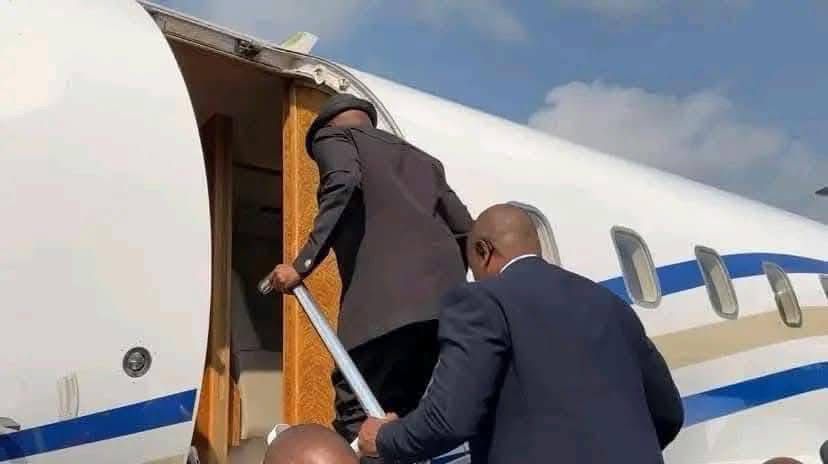
Another Private Jet? In a Drowning Economy?
The Resurgence of Luxury Travel Amidst Liberia's Economic Woes
President Joseph Boakai's recent utilization of a private jet for official travel on December 14, 2024, to Nigeria, marks the second such instance this year, reigniting a firestorm of public controversy. This decision has not only echoed the criticisms leveled against his predecessor, George Manneh Weah, but has also cast a long shadow over President Boakai's own campaign promises of frugality and accountability. During his electoral bid, Boakai was a vocal critic of the Weah administration's perceived extravagant spending, particularly its frequent reliance on private aircraft for foreign engagements. The stark contrast between his campaign rhetoric and his current actions has led to widespread accusations of hypocrisy, significantly eroding the public trust he sought to cultivate. This analysis delves into the multifaceted implications of this recurring issue, exploring the administration's defense, the visceral public reaction, and the broader socio-economic context that makes such choices particularly sensitive in Liberia.
A Promise Under Scrutiny: Campaign Rhetoric vs. Present Actions
President Boakai ascended to the presidency on a wave of public desire for change, a change largely defined by a promise to steer Liberia away from perceived corruption and ostentatious governance. His campaign platform consistently highlighted the need for fiscal discipline, transparency, and a government that empathized with the everyday struggles of Liberians. The frequent use of private jets by the previous administration was a recurring theme in his critique, presented as a symbol of a disconnected and self-serving elite. He publicly pledged to adopt more austere travel practices, famously stating his intention to continue flying commercially unless a private jet was provided at no cost to the nation. This statement, made just a day before boarding the private plane with tail number CN-SYA for a trip to Guinea Bissau, now hangs heavy over his administration. The perception is that the president, while not directly expending Liberian taxpayer funds for this specific flight, has broken a solemn campaign promise and demonstrated a willingness to embrace the very practices he condemned. This dissonance between his words and actions has created a significant credibility gap, fueling public disappointment and raising questions about the sincerity of his commitment to reform.
The Administration's Defense: "No Cost to Liberia"
In response to the burgeoning criticism, the Boakai administration has mounted a defense centered on the assertion that the travel did not impose any financial burden on the Liberian government. Presidential Press Secretary Kula Nyei Fofana clarified that the private jet used for the trip to Guinea Bissau was provided by Guinea-Bissau's President Umaro Sissoco Embaló. Fofana emphasized that President Boakai remains resolute in his opposition to using government resources for private jet travel and reiterated that such arrangements would only be considered if they were entirely cost-neutral for Liberia. While this explanation aims to address the financial aspect, it largely fails to mollify the public's concerns. Critics argue that even if no direct monetary cost is incurred, the optics of a Liberian President, particularly one who campaigned on austerity, utilizing private jet services, even if gifted, sends an undesirable message. This is especially true given Liberia's precarious economic situation. The defense, while technically addressing the financial ledger, overlooks the crucial element of public perception and the symbolic weight of such actions in a nation grappling with profound economic hardship.
Public Reaction: A Symphony of Disappointment and Distrust
The public outcry following the news of President Boakai's private jet usage has been swift and overwhelmingly critical. Across social media platforms, in informal discussions, and in more formal media critiques, Liberians have expressed a deep sense of betrayal. Many feel that this action directly contradicts the principles of transparency and accountability that formed the bedrock of Boakai's appeal. While the administration points to the absence of direct government expenditure, the public's concern is more nuanced. They argue that the use of a private jet, regardless of who foots the bill, creates an undeniable perception of elitism and a disconnect from the daily realities faced by the vast majority of Liberians. The nation continues to grapple with high poverty rates, limited access to basic necessities like healthcare and education, and a persistent struggle for economic stability. In this context, any display of luxury or privilege by those in power, even if seemingly cost-free, can be perceived as insensitive and out of touch. This situation has inevitably sparked broader conversations about the nature of governance in Liberia, questioning the commitment to fiscal responsibility and the consistency in leadership practices, regardless of which political party is in power.
Liberia's Economy: A Foundation of Fragility
Understanding the depth of public sentiment requires acknowledging the stark economic realities of Liberia. The nation remains one of the poorest in the world, with an economy heavily reliant on foreign aid, natural resources (whose revenues are often volatile), and remittances. Decades of civil conflict, coupled with structural economic weaknesses and challenges in governance, have left the country with a fragile economic base. Growth rates have been inconsistent, and the benefits of any growth have not adequately trickled down to the majority of the population. Reports consistently highlight high unemployment rates, particularly among the youth, and widespread poverty. Access to essential services remains a significant challenge for many. It is within this landscape of pervasive economic struggle that the image of a president, any president, using a private jet – even if gifted – becomes a potent symbol of inequality and misplaced priorities. Critics argue that government leaders should be visibly and demonstrably focused on addressing these pressing socio-economic issues, leading by example in demonstrating fiscal prudence. The perceived extravagance, even if indirectly funded, is jarring for citizens who are struggling to afford basic food items, pay for school fees, or access medical care. This economic backdrop amplifies the public's frustration and fuels the perception that the political elite operates in a bubble, detached from the realities of the populace.
Historical Context: The Specter of Extravagance in Liberian Governance
The controversy surrounding presidential travel, particularly the use of private jets, is not entirely new to Liberia. During the administration of former President George Weah, similar practices drew significant criticism. Weah, like Boakai, campaigned on a platform of inclusivity and a commitment to improving the lives of ordinary Liberians. However, his administration was frequently scrutinized for its spending habits, including the acquisition and use of private aircraft. This pattern has led some analysts to suggest a cyclical nature to Liberian politics, where successive administrations, despite differing ideologies, can fall into similar traps of perceived excess. This historical precedent makes the current situation all the more sensitive. For many Liberians, the Boakai administration represented a chance to break this cycle. His direct criticism of Weah's travel habits meant that his own adoption of similar practices, even under different circumstances, carries a heavier weight. It raises questions about whether the issue is one of personal inclination, systemic pressures within governance, or a broader failure to institutionalize stricter financial controls and ethical standards for public officials. The "Unity Party" government, of which Boakai is the standard-bearer, faces the challenge of demonstrating that its approach to governance is fundamentally different and more aligned with the public's expectations for austerity and integrity.
Deeper Analysis: The Optics, The Guilt by Association, and The Slippery Slope
The defense that the jet was provided by a foreign leader and incurred no direct cost to Liberia, while factually correct regarding immediate financial outlay, sidesteps critical aspects of responsible governance. Firstly, there is the issue of "optics." In a nation desperately seeking examples of prudent leadership, any appearance of luxury or privilege can be detrimental to public morale and trust. This is particularly true when campaign promises of frugality have been made. Secondly, there is the concept of "guilt by association." While President Boakai might not have paid for the flight, accepting such a significant gift from a foreign leader, especially for a presidential trip, can create perceptions of indebtedness or undue influence. It can be seen as accepting a benefit that might cloud diplomatic judgment or create an obligation. Furthermore, accepting such favors can set a dangerous precedent, encouraging a culture where leaders become accustomed to receiving such perks, potentially leading to a normalization of what many citizens deem extravagant. The administration's failure to anticipate or adequately address the negative public reaction suggests a potential disconnect between policy decisions and public sentiment, or perhaps an underestimation of the public's memory and expectations.



