
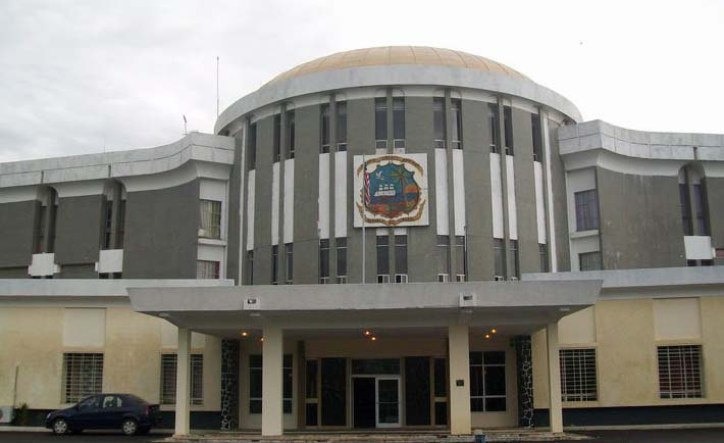
The hallowed halls of the Capitol Building, historically intended to serve as the bastion of Liberian democracy, have increasingly morphed into a theater of political theater and visceral instability. The recent, egregious incident involving the storming and subsequent vandalism of the office of Speaker J. Fonati Koffa represents far more than a mere internal legislative dispute; it is a profound rupture in the social contract of our nation. When individuals elected to represent the people, such as Representative Kolleh and his cohort, decide to bypass the established norms of the Liberian Constitution in favor of extra-legal maneuvers, they are not merely exercising 'political decision-making.'
Instead, they are dismantling the foundational pillars of our republic. This brazen act of aggression, characterized by the forced entry and disruption of the Speaker’s chambers, is an affront to every Liberian citizen who views the rule of law as the only barrier between order and anarchy. The Capitol, as the seat of the legislative branch, is meant to function through rigorous debate, plenary sessions, and constitutional oversight. By replacing these mechanisms with physical intimidation and mob-like tactics, the perpetrators have set a terrifying precedent: that in Liberia, might makes right, and the law is merely a suggestion rather than a mandate.
This erosion is not a spontaneous event; it is the culmination of a creeping culture of impunity that has permeated our political elite for far too long. Since the end of our protracted civil wars, Liberia has struggled to cultivate a culture of democratic institutionalism. We have made strides, yet the fragility of these gains is being exposed by a political class that appears allergic to accountability. When lawmakers ignore the clear, unambiguous directives of the Supreme Court, or engage in the unauthorized and often opaque manipulation of the national budget, they signify a retreat from democratic progress.
The persistent reports of arbitrary removals of public officials and the heavy-handed, violent crackdowns on citizens exercising their constitutional right to protest are symptomatic of a governance model that prioritizes self-preservation over public service. This systemic erosion of accountability creates a vacuum where the rule of law should stand, and into that vacuum rushes the influence of those who view the state as a private fiefdom rather than a public trust. The timing of this latest assault on the Speaker’s office—coinciding with the solemnity of Armed Forces Day and the high-stakes diplomatic visit of Sierra Leone’s Head of State—adds a layer of international embarrassment to the domestic crisis. While Liberia should have been projecting an image of a maturing, stable democracy, this act of political vandalism broadcast a different, much darker message to our regional neighbors and international development partners.
It reinforces the perception that Liberia remains a nation where political chaos can erupt at the stroke of a pen or the wave of a hand, potentially jeopardizing the very international support and investor confidence we desperately need for economic revitalization. We must consider the role of the Executive branch in this unfolding drama. The Rule of Law Caucus has issued a clarion call to President Joseph Boakai, and the eyes of the nation are fixed upon him. In a political system that remains largely concentrated around the powers of the presidency, silence from the Executive is often interpreted as tacit endorsement.
If President Boakai does not act decisively to condemn this encroachment on a separate branch of government, he risks presiding over the very instability he was elected to resolve. Furthermore, the role of the Minister of Justice has come under intense, and arguably well-deserved, scrutiny. There are growing, substantiated fears that some political actors, including those within the Ministry itself, have signaled that certain individuals act with a blanket of impunity. For a democracy to survive, the law must be blind to political affiliation.
If the Minister of Justice is perceived as a partisan actor rather than an impartial arbiter of the law, the entire edifice of the Liberian justice system will continue to crumble. The historical context of this legislative infighting cannot be ignored. The Capitol Building itself carries the scars of our past, having been recently scorched by fire, a symbol of the vulnerability of our public institutions. Now, by desecrating the office of the Speaker through vandalism, we are seeing a recurring pattern of disregard for the sanctity of the institutions that are supposed to check and balance power.
This 'politics of convenience' is perhaps the most dangerous trend facing our young democracy. It is a rhetoric that weaponizes the term 'political decision' to bypass the courts, justify the silencing of dissenting voices, and shield politicians from the consequences of their actions. When political interests are elevated above the Constitutional order, trust in the government is the first casualty. We are witnessing the normalization of lawlessness, where internal institutional crises are treated as opportunities to settle personal scores rather than chances to rectify governance failures.
The appeal for assistance from civil society, religious leaders, and international partners by the Rule of Law Caucus is a necessary, albeit late, recognition of the gravity of the crisis. Restoring order will not happen through mere rhetoric; it requires a collective, unrelenting insistence on constitutional compliance. It is time for the political elite to realize that they are temporary stewards of the state, not its owners. If the democratic process is allowed to be bypassed through intimidation, then the very foundations upon which the Liberian state is built will eventually collapse.
The assault on Speaker Koffa is not a localized, private conflict; it is a structural threat to the Liberian Republic. It is an indicator of a growing malignancy—a culture of impunity that views the law as an obstacle to be bypassed rather than a standard to be met. To prevent the further descent into instability, we must demand accountability. We must demand that the legal channels for dispute resolution are utilized, and that those who choose to exercise power through the weaponization of mobs and the violation of constitutional mandates are held to account.
The international community, watching closely, will judge us not by the rhetoric of our politicians, but by our ability to maintain the integrity of our institutions in the face of internal pressure. We are at a crossroads. We can continue down the path of political expediency and perpetual crisis, or we can reaffirm our commitment to the rule of law. The choice will define the legacy of this administration and the future of our democracy.
Let this serve as a warning: the erosion of institutional respect is the precursor to systemic collapse. It is time for the law to be the final word in Liberia, not the violence of the powerful.
