
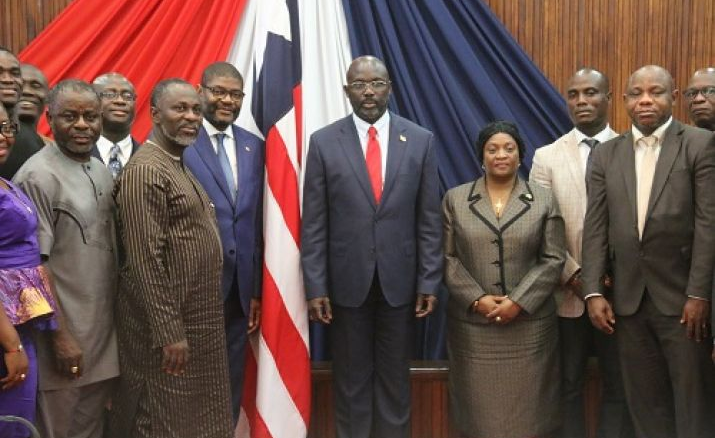
The structural landscape of the Liberian economy has long been defined by a profound dependency on the public sector. For decades, the government has functioned not merely as a regulator or service provider, but as the primary engine for employment. While this model served as a necessary stabilizer in the immediate aftermath of the fourteen-year civil conflict, it now faces mounting scrutiny. As Liberia navigates an increasingly volatile global economic environment, the question of whether this state-led employment model is sustainable has moved from a theoretical economic debate to a pressing policy imperative.
Analyzing the viability of this model requires a holistic look at current fiscal realities, the inhibitors to private sector maturation, and the strategic interventions required to recalibrate the national economic trajectory. The Liberian economy demonstrated resilience in 2022, recording a growth rate of 4.8%. This expansion, which defied global headwinds such as the war in Ukraine and pervasive inflationary pressures, was fundamentally extractive in nature.
Growth was anchored by the mining sector, specifically gold production, which saw industrial output rise by 10.4%, and a 5.9% expansion in agriculture. However, beneath these headline figures, the service sector—a crucial bellwether for domestic consumption and private enterprise—decelerated to 2.
8% from 3.0% in 2021. This divergence highlights a persistent structural imbalance: the sectors driving GDP growth are often capital-intensive and enclave-oriented, failing to generate the broad-based, labor-intensive employment necessary to absorb the country’s burgeoning youth demographic. Furthermore, this growth has not translated into fiscal stability.
The government’s fiscal deficit ballooned to 6.9% of GDP in 2022, a stark increase from 2.4% in 2021. This deterioration, precipitated by expenditure overruns, reliance on volatile mineral royalties, and substantial transfers and subsidies, underscores the fragility of the current status quo.
When the state functions as the employer of first resort, fiscal shocks—such as declining iron ore prices or failures in domestic revenue mobilization—directly threaten the livelihoods of approximately 148,000 citizens, representing 12% of the total labor force. This vulnerability is the defining weakness of the public-sector-centric model. The reliance on the government for employment is deeply rooted in the historical necessity of post-conflict reconstruction. Following the devastation of infrastructure and the collapse of the private sector during the civil war (1989-1996), the state became the only entity capable of providing foundational services and social safety nets.
Programs ranging from public health initiatives to infrastructure maintenance were, and remain, vital. However, these programs have evolved into a permanent fiscal burden that often crowds out private investment. When the government accounts for such a large share of formal employment, it absorbs a significant portion of the country's limited administrative and professional talent. Moreover, state-owned enterprises, such as the Liberia Petroleum Refining Corporation (LPRC), maintain deep involvement in commercial spheres, potentially distorting market competition and deterring private entrants who struggle to compete with state-subsidized entities.
The debate surrounding this model is bifurcated. Proponents of the current system argue that it is a defensive necessity: in the absence of a robust private sector, the government provides the only viable path to middle-class stability and poverty alleviation. Conversely, critics argue that the model is inherently unsustainable because it prioritizes short-term political stability over long-term structural transformation. This cycle creates a 'fiscal trap' where funds that could be directed toward capital expenditure—such as energy, roads, and digital infrastructure—are instead consumed by a bloated wage bill.
Sustainability is contingent upon three variables: the velocity of economic growth, the efficiency of bureaucratic operations, and the political courage to undertake comprehensive reform. If Liberia can transition from growth driven by extraction to growth driven by diversified manufacturing and value-added agriculture, the private sector could gradually assume its role as the primary employer. However, this transition is hampered by deep-seated barriers. Investors consistently cite the high cost of doing business, weak infrastructure, and a persistent skills gap as primary deterrents.
Electricity costs in Liberia remain among the highest in the region, and the lack of reliable connectivity hampers the integration of Liberian businesses into regional and global value chains. Furthermore, regulatory uncertainty and perceived corruption create a high-risk environment that necessitates a premium on return, further depressing domestic and foreign direct investment. Addressing these systemic bottlenecks is no longer optional. International partners have begun to pivot their strategy to reflect this reality.
The International Finance Corporation (IFC) currently maintains a $16 million committed investment portfolio in Liberia, with a $40 million pipeline targeted at the Financial Institutions Group, manufacturing, and agribusiness. These investments are complemented by a $6 million donor agreement with the Swedish International Development Corporation Agency (SIDA), which focuses on business climate reform, agriculture value chains, and trade facilitation. Similarly, the World Bank’s Country Partnership Framework (CPF) has prioritized the development of micro, small, and medium enterprises (MSMEs) and commercial agriculture. These initiatives are not merely development aid; they are strategic interventions designed to catalyze a transition from state dependency to private-led growth.
To shift the needle, the government must move beyond the role of a gatekeeper and become a facilitator. This requires a three-pronged policy shift. First, the state must prioritize infrastructure spending over recurrent expenditures. By reallocating resources toward the 'hard' infrastructure that lowers the cost of production—such as rural road networks and sustainable energy grids—the government can create an environment where private enterprise can thrive.
Second, there must be an aggressive pursuit of institutional reform. The World Bank’s emphasis on transparency and accountability is not just a governance requirement; it is a prerequisite for market confidence. When institutions are transparent, the cost of regulatory compliance drops, and the business environment becomes predictable. Third, human capital development must be aligned with the needs of the emerging private sector.
The current skills gap is a function of an educational system that remains disconnected from the demands of modern agribusiness and manufacturing. By fostering public-private partnerships in technical and vocational training, the government can ensure that the labor force is equipped for the private sector, rather than waiting for civil service examinations. Ultimately, the sustainability of Liberia’s future depends on its ability to decouple employment from the national treasury. The government’s role as the major employer was a vital bandage for a war-torn nation, but it cannot be the foundation for a modern, resilient economy.
The evidence suggests that while the current model has served as a buffer, the fiscal, social, and economic costs of maintaining it have reached a critical threshold. By leveraging international technical assistance and committing to difficult but necessary reforms in taxation, infrastructure, and institutional efficiency, Liberia has the potential to cultivate a vibrant, competitive private sector. Such a transformation would not only liberate the government from the fiscal pressures of an oversized payroll but would also unlock the true potential of the Liberian people, driving the country toward a more stable and prosperous future. The path forward is arduous, yet the goal is clear: the state must pivot from being the sole provider of jobs to the provider of the ecosystem in which jobs are created.


