
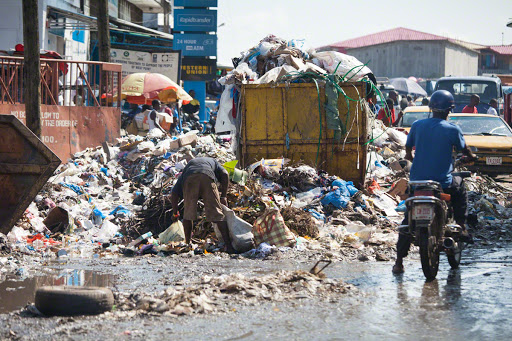
Analyzing the Status of Poverty Reduction in Liberia: A Structural Perspective. In the heart of West Africa, Liberia stands at a precarious juncture. Despite over two decades of relative peace, the nation remains ensnared in a cycle of persistent poverty that affects more than half of its population. Recent data indicates that the poverty rate in 2021 hovered at 51.
0%, a figure that translates into over 3.2 million Liberians struggling to survive on less than $1.90 per day. As an investigative platform, Insights Liberia observes that while top-line narratives suggest modest progress, the lived reality for the average Liberian remains defined by economic fragility, structural exclusion, and systemic institutional weaknesses.
To understand the trajectory of poverty in Liberia, one must look beyond the static statistics and examine the intersectional failures of policy, infrastructure, and human capital development. The history of Liberia’s poverty reduction efforts, most notably through the Poverty Reduction Strategy (PRS) and subsequent frameworks, has been marked by uneven outcomes. While the government has frequently touted the Pro-Poor Agenda for Prosperity and Development (PAPD) as the primary engine for social upliftment, the tangible impact on the ground remains highly contested. The World Bank notes that progress is frequently undermined by a trifecta of issues: poor access to essential public services, stagnant productivity in the agricultural sector, and a profound lack of economic diversification.
Liberia’s reliance on the export of primary commodities—rubber, iron ore, and gold—renders the national budget highly sensitive to volatile global market shifts. When commodity prices dip, the government’s capacity to fund social programs collapses, exposing the inherent vulnerability of a mono-product economic structure. To truly analyze poverty in Liberia, we must break down the foundational pillars of underdevelopment. First is the crisis of human capital.
It is a sobering reality that more than half of Liberians over the age of 15 lack basic literacy skills. This educational deficit acts as a self-perpetuating barrier; without a skilled workforce, the country cannot move up the value chain or attract the kind of high-tech investment that drives modern economic growth. When schools lack textbooks, qualified teachers, and adequate facilities, the youth are systematically excluded from the labor market. This lack of education is inextricably linked to the second pillar: poor health outcomes.
With life expectancy stagnating at approximately 52.9 years, the human cost of poverty is absolute. High rates of preventable diseases, coupled with inadequate sanitation and a fragile national health infrastructure, mean that the Liberian household is perpetually one medical emergency away from total financial ruin. The third pillar is the structural labor crisis.
While official figures cite unemployment at 12.4%, this statistic fails to capture the immense scale of underemployment in the informal sector. A significant portion of the population is trapped in subsistence farming or low-wage, precarious labor that offers no pathway to upward mobility. For the youth, who constitute a large demographic majority, the lack of formal employment opportunities is not just an economic concern but a potential flashpoint for social unrest.
The current government strategy relies on three main instruments: the Pro-Poor Agenda for Prosperity and Development (PAPD), the Liberia Education Trust Fund (LETF), and the National Health Insurance Scheme (NHIS). The PAPD, while ambitious in its policy rhetoric, has struggled with implementation bottlenecks, funding deficits, and institutional corruption. The LETF, intended to bridge the educational gap, has faced challenges in scaling its operations to rural, underserved counties where the need is most acute. Similarly, the NHIS, while a noble effort to cushion the cost of healthcare, faces the daunting task of sustaining funding in an economy with a limited tax base.
The success of these programs is not merely a matter of technical execution; it is a question of political will and private sector integration. Without aggressive reforms to improve the business environment—streamlining regulations, strengthening the rule of law, and tackling the pervasive corruption that hampers local entrepreneurship—these government programs risk becoming mere palliative care for a systemic malady rather than a cure. A critical look at the longitudinal data reveals a complex narrative. According to World Bank indices, the poverty rate stood at 50.
9% in 2016, showing a statistically marginal movement when compared to the 2021 figures. While some observers point to a decline from a high of 64.2% in 2013, the pace of reduction has slowed considerably. This stagnation is often attributed to the country’s underdeveloped infrastructure.
Roads, electricity, and telecommunications are the circulatory systems of a modern economy; in Liberia, these arteries are severely constricted. In many regions, the inability to transport agricultural products from farm-gate to market leads to massive post-harvest losses, effectively destroying the income potential of smallholder farmers. Furthermore, the specter of political instability continues to shadow economic planning. History has shown that investors prioritize stability over potential profit margins; as long as the perception of risk remains high, foreign direct investment will remain limited to extractable sectors rather than sustainable development.
To move beyond the current impasse, Liberia requires a recalibration of its national strategy. This shift must prioritize the transition from an extractive, raw-material-dependent economy to one focused on value addition and regional trade. Moreover, the governance structure must prioritize decentralization. Poverty is not uniform in Liberia; it is intensely regional.
Rural populations in counties far from the Monrovia hub suffer from higher rates of food insecurity and lower access to the very programs the PAPD seeks to implement. A one-size-fits-all policy from the capital will invariably fail. Instead, the government must empower local authorities, invest in rural infrastructure, and incentivize the private sector to expand their footprint beyond the urban center. Education and health must not be treated as line items in a budget to be cut during austerity, but as the primary capital investment for the nation’s future.
There is a need for rigorous oversight and auditing of the funds allocated to the LETF and other social safety nets to ensure that taxpayer money is not lost to bureaucratic waste. The youth, specifically, must be at the center of the solution. Vocational training that aligns with market demands could provide a immediate bridge to employment for those outside the formal school system. In conclusion, the state of poverty reduction in Liberia is a test of the country’s resilience and its capacity for self-correction.
While the government has correctly identified the priority areas, the gap between policy design and social impact remains the primary obstacle. A nation cannot thrive when the majority of its citizens are excluded from the formal economy by lack of skills, health, and opportunity. Achieving a meaningful reduction in poverty will require more than just the drafting of development agendas; it will require a bold commitment to structural reform, transparency, and a relentless focus on the most vulnerable. Liberia has the potential to break these chains, but the window of opportunity is narrowing as a new generation waits for the promise of prosperity to manifest.
Insights Liberia invites our readers to consider these facts deeply. This is not just a policy failure; it is a call for a new paradigm of economic citizenship in Liberia. Do you have additional facts to add to this insight or an opinion you would like to express? Reach out to our investigative desk at analysis@insightsliberia.
com. Your perspectives are the lifeblood of our discourse.



