
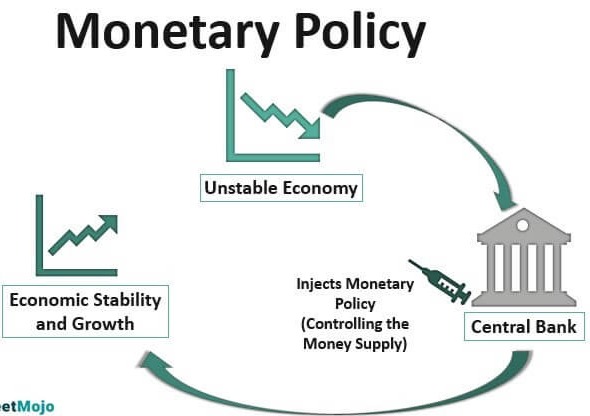
Monetary policy, implemented by a country's central bank, serves as the fundamental architecture for managing the heartbeat of a national economy, specifically regulating inflation and deflation rates. By adjusting the levers of money supply and interest rates, institutions like the Central Bank of Liberia (CBL) influence everything from the cost of a bag of rice at the local market to the viability of foreign direct investment in our infrastructure. Understanding this requires a deep dive into the dual mechanisms of expansionary and contractionary policies, both of which have been utilized with varying degrees of success throughout Liberia’s post-war history. When the CBL pursues an expansionary policy, it increases the money supply and lowers interest rates to stimulate economic growth.
While this creates a fertile ground for business expansion and consumer spending, if executed without restraint, it risks triggering runaway inflation. Conversely, contractionary policy involves decreasing the money supply and raising interest rates to curb inflationary pressures. While this acts as a necessary brake on overheating, it carries the inherent risk of stagnation or even recession if the liquidity squeeze becomes too severe for our fragile commercial banking sector. Liberia’s journey with these tools has been marked by a constant search for the 'goldilocks' zone—a path toward stability that avoids both the erosion of purchasing power and the strangulation of growth.
To grasp the significance of recent fiscal shifts, one must consider the historical context of the Liberian economy. Following years of civil conflict and the subsequent structural adjustments necessitated by international debt relief, Liberia has moved toward a more data-driven monetary framework. The Central Bank of Liberia, established under the Act of 1999, holds the mandate of maintaining price and exchange rate stability. However, this is an uphill task in an economy heavily dependent on commodity exports like rubber, iron ore, and gold, and highly vulnerable to external shocks such as global fuel price volatility.
In August 2022, the CBL’s decision to reduce its policy rate by 500 basis points to 15% was not merely a technical adjustment; it was a calibrated effort to balance inflationary pressures against the desperate need for liquidity. While this policy rate remained high relative to global standards, it demonstrated a cautious commitment to fostering local entrepreneurship. By lowering the cost of borrowing for commercial banks, the CBL aimed to encourage credit flow into sectors like agriculture and manufacturing, which are vital for Liberia's long-term import substitution strategy. The performance of the Liberian economy in 2022, characterized by a growth rate of 4.
8%, provides a compelling case study. Despite the lingering tremors of global inflation and the subdued demand in major trading partner markets, Liberia managed to moderate its annual average inflation rate to 7.6%, down from 7.8% the previous year.
This feat is particularly remarkable given the immense pressure exerted by the surging cost of imported petroleum products and basic foodstuffs, which are the primary drivers of cost-push inflation in our market. The ability to manage these external shocks suggests that the CBL’s alignment of monetary policy with prudent fiscal management has begun to yield dividends. Looking ahead, the projection of inflation rising slightly to 7.8% in 2023, followed by a gradual decline to 5.
5% by 2025, reflects a baseline expectation of policy efficacy. However, sustainability remains the core challenge. Monetary policy cannot operate in a vacuum. The effectiveness of the CBL's decisions is inextricably linked to the broader fiscal environment and the integrity of our financial institutions.
Expansionary monetary policy, for instance, requires a robust banking sector capable of effectively channeling credit to productive sectors. In Liberia, where the informal sector remains massive and credit risk is historically high, the transmission mechanism between the central bank and the average citizen is often fractured. When the CBL lowers interest rates, the impact may be muted if commercial banks remain hesitant to lend due to high non-performing loan ratios. Therefore, the success of monetary policy relies as much on structural banking reforms as it does on the interest rate itself.
Furthermore, we must acknowledge the regional significance of our monetary stability. As a member of the Mano River Union and the wider ECOWAS community, Liberia’s economic health impacts and is impacted by its neighbors. The harmonization of monetary and fiscal policies across these blocs is a long-term goal that promises to facilitate cross-border trade and reduce the risks associated with currency fluctuation. If Liberia can maintain a predictable monetary environment, it positions itself to attract more reliable foreign investment, which is essential for transitioning away from raw material dependency toward value-added production.
The government’s fiscal deficit and public debt ratio also underwent significant scrutiny in 2021 and 2022. The coordination between the Ministry of Finance and Development Planning and the CBL is the bedrock of our macroeconomic stability. When the government spends beyond its means, it often forces the central bank into a position where it must choose between funding the deficit through monetary expansion—which causes inflation—or allowing interest rates to climb, which crowds out private sector investment. The improvements seen in 2021 indicate that the government has recognized the dangers of this trade-off and is prioritizing fiscal consolidation.
This discipline provides the CBL with the political and economic space to implement policies that favor long-term growth over short-term political expediency. Critics, however, argue that the focus on price stability should not come at the expense of necessary public investment. The 'tight' monetary stance maintained through much of 2022 is seen by some analysts as overly cautious, potentially preventing the economy from reaching its full potential. The debate here is a classic one: does an economy in the early stages of development need to prioritize low inflation at all costs, or should it lean into a more aggressive expansionary phase, accepting moderate inflation as the price of rapid industrialization?
In Liberia’s case, the answer seems to be a balanced approach: using targeted contractionary signals to keep the exchange rate stable while ensuring that liquidity is available for critical development projects. Ultimately, the role of the public in this equation cannot be overstated. As a democratic nation, the transparency of the CBL is paramount. When the bank adjusts the policy rate, the average Liberian might not see the mechanics, but they feel the ripple effects in their daily lives.
Therefore, the ongoing monitoring and analysis of these policies by platforms like Insights Liberia are essential. By holding policymakers accountable and providing the public with the tools to interpret these complex financial maneuvers, we contribute to a more informed citizenry. The road to sustainable economic prosperity is rarely straight; it is paved with difficult decisions regarding money supply, interest rates, and the careful management of public resources. As we look toward 2025, the projected moderation in inflation offers a glimmer of optimism.
Yet, this success is contingent upon the continued independence and technical rigor of the CBL, as well as the government's steadfast commitment to the structural reforms required to build a modern, resilient Liberian economy. The intersection of global economic trends, regional geopolitical stability, and domestic policy decisions will define the next chapter of Liberia’s development. It is incumbent upon all stakeholders—from government officials and central bankers to business leaders and the Liberian public—to remain vigilant and committed to the objective of shared, sustainable prosperity.
