
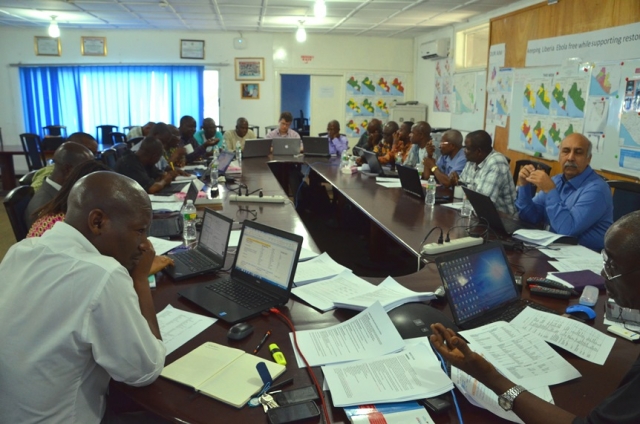
The structural landscape of Liberia’s non-profit sector is currently defined by a profound and complex paradox: while the nation remains heavily reliant on external financial support to bridge critical developmental gaps, this very dependency often undermines the long-term sustainability and local efficacy of the initiatives intended to foster national growth. As Liberia continues to navigate its post-conflict recovery trajectory, the role of civil society organizations (CSOs) and non-governmental organizations (NGOs) has become more vital than ever. Yet, beneath the surface of humanitarian interventions lies a systemic challenge that threatens to turn the development sector into an echo chamber of foreign interests rather than a engine of grassroots transformation. Donor dependency is not merely a fiscal issue; it is a fundamental challenge to the sovereignty of local development narratives.
In 2019, the Organization for Economic Co-operation and Development (OECD) reported that Liberia received approximately $1.3 billion in Official Development Assistance (ODA). When evaluated against the nation’s total GDP, this figure underscores a stark reality: approximately 25% of the national economy is directly supported by foreign aid, positioning Liberia among the most aid-dependent nations globally. This infusion of capital, while essential, masks the underlying precariousness of a sector where operational survival is dictated by the shifting priorities of international bodies such as USAID, the United Nations, and the Bill and Melinda Gates Foundation.
The historical roots of this dependency run deep, tracing back to the post-civil war era, where international aid served as the primary mechanism for state-building and basic service delivery. During the period of reconstruction, the influx of international actors was necessary to restore basic functionality to decimated sectors like healthcare, education, and infrastructure. However, decades later, the transition from emergency relief to sustainable development remains incomplete. Today, over 70% of ODA is funneled into the health sector—an understandable priority in a country still recovering from the structural shocks of the Ebola crisis and the ongoing challenges of maternal and child health.
Yet, this intense sectoral concentration creates a vulnerability: if donors shift their focus toward other global crises, the domestic health infrastructure, heavily subsidized by external grants, risks immediate collapse. This cyclical reliance creates a 'boom-bust' dynamic where local NGOs mirror the budgetary oscillations of their international counterparts. When funding is robust, programs flourish; when priorities shift, organizations shutter their doors, leaving behind abandoned projects and broken promises to the communities they once served. This volatility hampers the ability of Liberian organizations to engage in strategic, long-term planning, effectively trapping them in a cycle of grant-writing and project-based survival rather than institutional growth.
Furthermore, the power dynamics inherent in the donor-grantee relationship frequently sideline local expertise. International donors often arrive with predefined agendas, KPIs, and reporting structures that reflect their own organizational goals rather than the nuanced realities on the ground in Monrovia or rural Bong and Nimba counties. This top-down approach imposes a heavy administrative burden on local NGOs, which are forced to prioritize donor compliance over community engagement. As a result, the democratic potential of civil society—its ability to hold institutions accountable and advocate for rights—is often neutralized.
Instead of acting as an independent watchdog or a partner in policy formation, the local NGO sector becomes an extension of the foreign aid apparatus, constrained by the strictures of contractual obligations. The lack of indigenous resource mobilization is a compounding factor. In more mature development environments, nonprofits rely on a mix of government grants, individual philanthropy, and social enterprise models. In Liberia, the private sector is still maturing, and philanthropic culture, while growing, has yet to reach a scale that could displace foreign dependency.
Consequently, the NGO sector remains detached from the local economy. To shift this paradigm, a radical restructuring of the Liberian nonprofit model is required. First, there is an urgent need to pivot toward social enterprise. By generating income through commercial activities or service fees, organizations can create a financial cushion that grants them the independence to execute projects that align with local needs rather than donor mandates.
Second, the government must foster an environment that encourages local corporate social responsibility. If Liberian businesses, particularly in the mining and agricultural sectors, are incentivized to invest in community-based nonprofit initiatives, this could create a domestic funding pipeline that is not subject to the geopolitical whims of external donors. Moreover, the strengthening of local ownership is not just a moral imperative but an economic one. Projects designed with the deep cultural, historical, and economic knowledge of Liberian actors are inherently more resilient.
Community-led initiatives have higher rates of long-term success because they are rooted in local accountability. When a project is owned by the community, the beneficiaries become stakeholders who are invested in its preservation, unlike donor-funded projects which are often viewed as the property of the 'foreigners' or the NGO that brought them. Looking forward, the Liberian NGO sector must transition from a model of 'service delivery for hire' to one of 'advocacy and empowerment.' This shift requires a concerted effort to build internal capacity—not just in project management, but in financial independence, policy analysis, and legal advocacy.
Organizations should focus on forming consortiums and networks that allow them to pool resources, share expertise, and negotiate from a position of collective strength. By presenting a unified front, Liberian NGOs can challenge the existing power structures and demand more equitable partnerships with international donors, moving away from a hierarchical 'donor-recipient' framework toward a collaborative 'partner-partner' model. The reliance on foreign aid is a reality of the present, but it should not be the destiny of the future. The transformation of Liberia’s non-profit sector hinges on its ability to define its own agenda and secure the resources necessary to realize it.
As we continue to analyze these trends, the overarching goal remains clear: the development of Liberia must be led, funded, and sustained by Liberians to ensure that the progress made today is not fleeting, but enduring. Addressing these structural imbalances is not just about fiscal health; it is about reclaiming the agency of the Liberian people in shaping their own developmental trajectory. We invite our readers and partners to engage in this critical discourse. Is the current model of donor-dependency an inevitable stage of national development, or is it a barrier to the growth of a robust, independent civil society?
We encourage stakeholders, from NGO leaders to government policymakers and international partners, to share their insights on how we can forge a path toward sustainable, locally-driven development. Your perspective is essential as we continue to analyze the forces shaping Liberia’s future.
