
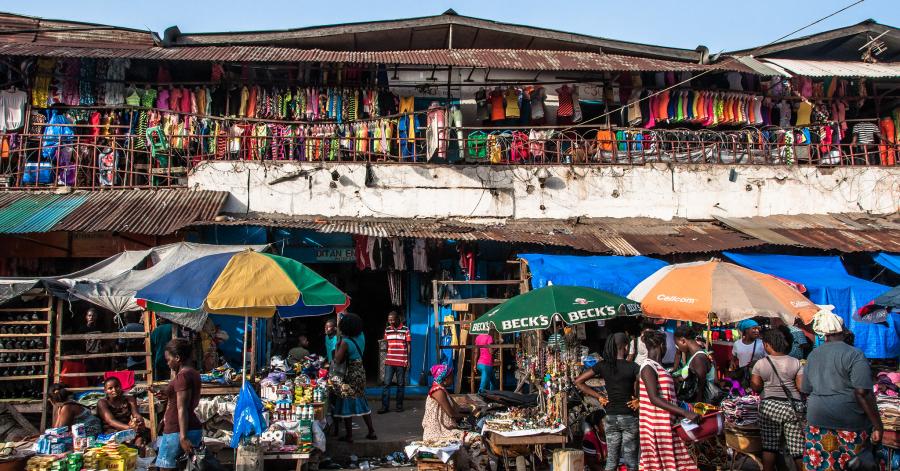
Analytical Macroeconomics Insight: The Informal Sector and Unemployment in Liberia. The informal sector serves as the hidden backbone of the Liberian economy, functioning as a sprawling, decentralized ecosystem that sustains a significant majority of the nation's workforce. In the context of post-conflict reconstruction and ongoing economic stabilization, understanding this sector is not merely an academic exercise; it is a fundamental requirement for any serious policy dialogue regarding poverty reduction, human capital development, and structural transformation. While the formal sector—comprised of the public service, established corporate entities, and the extractive industries—often dominates headlines, the reality for millions of Liberians, from the bustling markets of Red Light to the artisanal mining camps in the interior, is defined by the informal economy.
Despite the formidable challenges associated with measuring, tracking, and regulating this amorphous sector, it remains the primary engine for household survival and a vital buffer against total economic collapse. According to the International Labour Organization (ILO), the informal sector in Liberia constituted approximately 68% of total employment as of 2020 (ILO, 2021). This figure is symptomatic of a broader structural trend across sub-Saharan Africa, where the legacy of underdeveloped industrial bases, coupled with the persistent gaps in formal job creation, forces the labor force into non-standard employment. The persistence of this reality is rooted in Liberia’s historical trajectory, where decades of civil instability disrupted the formal market and entrenched a culture of entrepreneurship born of necessity rather than opportunity.
Unlike some emerging economies where the informal sector serves as a transitional stage, in Liberia, it is often a permanent state of existence for the working population. The informal sector’s sheer magnitude is difficult to capture in traditional national accounts, yet the World Bank has estimated that it contributes roughly 40% of Liberia’s GDP. This statistic represents a massive volume of micro-transactions, local trade, and services that technically remain 'off the books' but are functionally indispensable to the national economy. When examining the relationship between the informal sector and unemployment, the headline unemployment rate of 3.
4% as cited by the World Bank in 2020 can be misleading. In a nation where social safety nets are largely non-existent, the concept of 'unemployment' is a luxury that few can afford; people work because they must eat. A more accurate reflection of the labor market’s health is found in the underemployment rate, which reached 24.9% in 2020.
This indicates a pervasive crisis of job quality. Thousands of Liberians are engaged in activities that provide barely enough income to survive, characterized by stagnant productivity, lack of professional development, and complete exposure to market volatility. The historical context of Liberia—marked by the 14-year civil war and the subsequent period of democratic transition—has left a legacy of human capital flight and a fragmented private sector. Today, the informal sector is a diverse tapestry: it includes street vendors, artisanal miners, small-scale farmers, and self-employed service providers.
These individuals lack the legal protections enjoyed by formal employees, such as health insurance, retirement pensions, or collective bargaining power. Furthermore, the lack of regulation creates a 'dual economy' trap. While the informal sector is agile and resilient, it is also perpetually trapped in low-productivity cycles because these businesses lack access to formal credit, modern technology, and advanced technical training. The systemic barriers to formalization—such as burdensome taxation, high costs of registering a business, and inadequate infrastructure—keep these enterprises small.
The implications for macroeconomic stability are profound. When a large segment of the population operates outside the purview of the state, the government’s ability to mobilize domestic revenue through taxation is severely curtailed. This, in turn, hampers the state’s capacity to invest in the public services—roads, energy, and healthcare—that are required to transition these informal workers into the formal fold. It is a catch-22: the sector needs investment to grow, but the state lacks the tax base to fund that investment because the sector is informal.
Breaking this cycle requires a sophisticated approach. Policymakers must move beyond the binary of 'formalization' as a regulatory burden and instead consider 'informal sector support' as an economic development priority. This means providing access to microfinance, digital financial services, and vocational training, which would allow these small entities to eventually transition into the formal economy. Moreover, integrating these workers into the formal sector is a matter of political security.
In the context of Liberia’s democratic trajectory, the economic disenfranchisement of the youth—many of whom occupy the informal sector—is a potential flashpoint for social unrest. Strengthening the informal economy through institutional support, rather than simple taxation or regulation, can provide a more sustainable path to inclusive growth. The role of the government and international partners must be one of facilitation. By simplifying the business registration process and reducing the cost of compliance, the state can incentivize formalization.
Simultaneously, targeted investments in education are essential; a workforce equipped with 21st-century skills will naturally gravitate toward higher-value formal employment. The challenge of low productivity in the informal sector is not an inherent flaw of the workers, but a symptom of the environment in which they operate. With better access to energy, credit, and reliable transportation networks, the latent potential of Liberia’s informal sector could be harnessed to drive significant economic transformation. In summary, the informal sector is not a problem to be solved, but an economic engine to be refined.
The path to a resilient, post-conflict economy necessitates a clear-eyed analysis of the informal labor market and a policy framework that prioritizes the empowerment of its participants. By fostering an environment where small businesses can grow, innovate, and gradually formalize, Liberia can bridge the gap between mere survival and shared, long-term prosperity. The statistics from the World Bank (2018) highlighting that the sector accounted for over 63% of employment remind us that this is not a fringe issue, but the central reality of the Liberian labor market. Improving this sector is the most direct path to poverty alleviation and sustainable national development.
As we look to the future, it is clear that Liberia’s economic recovery will be written in the ledger of its informal workers, and the policies we adopt today will determine whether their labor leads to stagnation or to the birth of a vibrant, formal middle class. References: International Labour Organization (ILO). (2021). Informal economy in Liberia.
World Bank. (2021). Liberia - Unemployment, total (% of total labor force). World Bank.
(2018). Liberia Economic Update: Boosting Growth and Jobs in the Informal Economy. Get Involved: Do you have additional facts to add to this insight or have an opinion that you would like to express? Email Us at analysis@insightsliberia.
