
For over a century, Liberia has navigated a delicate foreign policy landscape defined by its historic and umbilical connection to the United States. As a nation founded by freed American slaves and possessing a constitutional framework mirroring that of its transatlantic partner, Liberia’s diplomatic identity has long been synonymous with the Western orbit. However, in an era of rapid geopolitical shifting, the emergence of a multipolar world order—championed by rising powers such as China, Russia, and the BRICS coalition—presents a fundamental strategic question: Should Liberia persist in its traditional alignment, or should it embrace the fluid, competitive dynamics of a multipolar global architecture? The answer is not a simple dichotomy but a complex exercise in sovereignty, economic pragmatism, and long-term developmental vision.
Liberia is a nation of over 5 million people, standing at a precarious crossroads. While significant strides have been made in post-conflict recovery and the consolidation of democratic norms, the country remains constrained by structural poverty, infrastructural deficits, and an over-reliance on traditional aid flows. To transcend these limitations, Liberian policymakers must objectively evaluate the multipolar paradigm. A multipolar order is defined by the decentralization of global authority.
In this model, influence is distributed among several poles, preventing any single hegemon from unilaterally dictating the global agenda. For a small nation like Liberia, this transition offers, at the very least, an expanded field of maneuverability. In a unipolar environment, Liberia’s policy options are often constricted by the strategic requirements of its primary benefactors. When national interests diverge from the priorities of dominant powers, the room for autonomous negotiation is often stifled by the threat of aid withdrawal or political isolation.
Conversely, a multipolar system allows Liberia to pursue 'strategic hedging.' By fostering competitive partnerships, Liberia can avoid becoming an exclusive client state to any single power, thereby enhancing its sovereign agency. From an economic standpoint, the multipolar world represents a diversification of the developmental toolkit. China has emerged as a transformative economic actor across the African continent, with bilateral trade reaching record heights.
For Liberia, the allure of Chinese capital—often packaged without the stringent political conditionalities associated with Western multilateral institutions—is significant. The Belt and Road Initiative (BRI) provides a tangible mechanism for infrastructure development, from road networks to port facilities, which are essential for integrating the Liberian economy into regional and global value chains. Furthermore, the diversification of trade partners offers a safeguard against the volatility of Western markets. By aligning with a broader array of stakeholders, Liberia can secure better terms of trade, technology transfers, and investment flows.
This is not merely about choosing one partner over another, but about creating a market of influence where Liberia can extract the best value for its national development goals. Reducing historical dependence on former colonial or neo-colonial centers of power is a growing sentiment across the Global South, and Liberia is no exception. While Liberia was never formally colonized, the shadow of external tutelage has persisted for generations. Embracing a multipolar order allows Liberia to redefine these relationships on terms of equality rather than subservience.
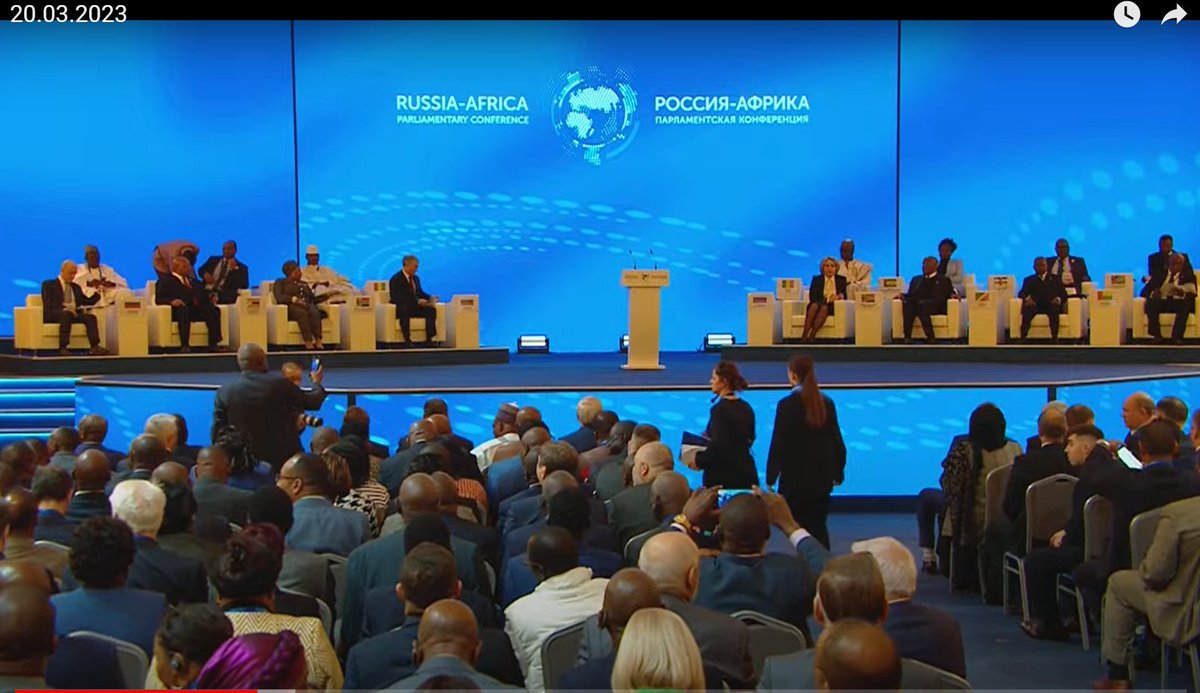
As noted by analysts like Salman Rafi Sheikh, many African nations are currently leveraging the multipolar shift to reject the legacy of neo-colonial dominance. Russia’s pivot toward Africa, particularly in energy security and defense cooperation, serves as a counterweight to traditional hegemonies. For Liberia, this represents a shift from being a passive recipient of aid to becoming an active participant in a diverse geopolitical marketplace. Nevertheless, the transition toward a multipolar world is fraught with significant risks that cannot be overlooked by the Liberian executive branch or the legislature.
The foremost danger is the risk of being caught in the crossfire of great-power rivalries. As the US-China competition intensifies, the pressure to choose sides will only mount. If Liberia attempts to court both sides, it risks alienating its traditional allies—particularly the United States, which has provided over $3 billion in assistance since 1997. This aid, encompassing health, education, and security sector reform, is foundational to Liberia’s current stability.
A clumsy transition that creates friction with Washington could lead to the sudden suspension of essential social programs, leading to internal instability. Furthermore, Liberia’s institutional capacity to balance these competing interests is limited. Diplomatic agility requires a robust foreign service, deep economic expertise, and a cohesive national strategy—areas where Liberia currently faces significant gaps. The risk is not merely political but structural: without a clear, unified vision, Liberia could become a mere theater for foreign proxy competition rather than a beneficiary of global competition.
The economic argument for retaining the status quo is equally compelling. The United States remains a vital market and a key source of direct investment. Total two-way trade in 2020 reached $1.4 billion, a figure that remains competitive against any single alternative partner.
Beyond the numbers, the U.S. provides a normative framework that many Liberians view as essential to their democratic aspirations. China’s investment in infrastructure—surpassing $1 billion since 2008—is indeed impressive, but it comes with long-term debt sustainability concerns.
Policymakers must weigh the immediate gratification of quick-fix infrastructure projects against the potential for future debt distress, a common pitfall for developing nations in the current global climate. A sober analysis suggests that Liberia should not 'choose' a side in the binary sense, but rather 'engage' the multipolar system with a sophisticated, interest-based approach. The strategy should be to institutionalize the pursuit of national interest above ideological alignment. This involves three critical pillars: first, building a professional diplomatic corps capable of navigating the nuances of modern power politics; second, creating transparent, domestic legal frameworks that ensure foreign investment serves the Liberian public interest rather than the interests of foreign state-owned enterprises; and third, strengthening regional integration through the Economic Community of West African States (ECOWAS) and the African Union (AU).
A unified African voice is the strongest shield against the excesses of a multipolar struggle. By coordinating with regional peers, Liberia can amplify its bargaining power and avoid being treated as a fringe player in the games of the great powers. Ultimately, the multipolar world is not a panacea for Liberia’s historical and economic struggles. It is, however, an inevitable evolution of the global order.
The benefits of increased economic opportunity, geopolitical leverage, and the ability to dictate one’s own diplomatic destiny are clear. Yet, these benefits are contingent upon a disciplined, cautious, and highly strategic foreign policy. Liberia is a sovereign entity with the right and the responsibility to shape its own future. Embracing the multipolar world order does not necessarily mean turning away from old friends; it means recognizing that the world is changing, and that a small nation’s best survival strategy is to be a friend to many while remaining a vassal to none.
The challenge for the Liberian leadership is to ensure that while they reach out to new partners, they do not jeopardize the foundations of their current security and democratic stability. This delicate balancing act will be the defining foreign policy challenge of the next decade. As Liberia looks ahead, its focus must remain fixed on national development. Whether the investment comes from the West or the East is secondary to the primary question: Does this partnership empower the Liberian citizen?
If the multipolar order can be used to drive genuine, sustainable development, it is a path worth pursuing. But it must be walked with eyes wide open to the dangers of power competition and the imperative of maintaining national integrity.



