
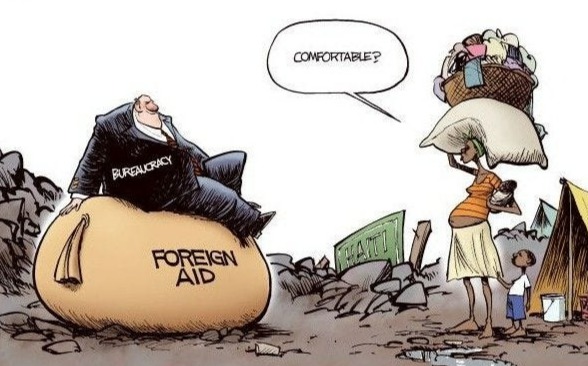
Liberia’s fiscal landscape remains dominated by a systemic paradox: despite decades of international goodwill and substantial foreign aid inflows, the nation struggles to translate external support into sustained economic self-reliance. The reliance on foreign aid to bridge budgetary deficits, while historically necessary, has inadvertently tethered the Liberian economy to the shifting priorities of international donors and global economic volatility. As the nation faces a narrowing fiscal space and persistent developmental bottlenecks, the imperative to pivot toward aggressive Domestic Resource Mobilization (DRM) has transitioned from a policy preference to an existential necessity for economic sovereignty. The persistent dependence on foreign aid poses profound structural risks to Liberia’s economic stability.
While international grants were vital in the immediate post-conflict recovery phase, the long-term impact on domestic institutional development has been mixed. In 2021, foreign aid accounted for approximately 41 percent of the national budget, a figure that highlights the country’s vulnerability to external shocks—ranging from sudden shifts in donor fiscal policies to global inflationary pressures. This reliance has created a ‘dependence trap’ where national development goals are frequently dictated by the terms of external financial partners rather than localized, long-term strategic needs. Consequently, poverty levels remain stubbornly high, and the provision of basic social services—such as healthcare, education, and infrastructure—remains chronically underfunded.
To break this cycle, the Liberian government has introduced the four-year Domestic Resource Mobilization Strategy. This framework acknowledges that the current tax-to-GDP ratio, hovering around 14.3 percent (excluding grants), is insufficient to support the infrastructural demands of a growing population. Furthermore, with public debt levels hovering near moderate-to-high distress, the room for maneuver in international capital markets is limited.
The strategy identifies several key inhibitors to revenue growth: structural inefficiencies in tax collection, the proliferation of tax holidays that bleed over US$ 100 million in potential annual revenue, and a systemic failure to capture the informal economy. Addressing these losses requires a bold departure from past concession agreements and executive-order-driven tax exemptions, which have long served as conduits for revenue erosion. A cornerstone of the current reform agenda is the modernization of the Liberia Revenue Authority (LRA) through technological integration. By transitioning toward electronic and mobile tax systems, the LRA aims to reduce the high compliance burdens that discourage small and medium-sized enterprises (SMEs) from entering the formal sector.
However, technology alone is insufficient; the LRA must be empowered with advanced analytical capabilities to tackle complex issues like international transfer pricing, where multinational enterprises often shift profits to lower-tax jurisdictions, effectively depriving the Liberian state of its rightful tax base. The proposed transition from the Goods and Services Tax (GST) to a Value-Added Tax (VAT) at a 10 percent rate is another critical pivot. While the implementation of VAT is administratively demanding, it offers a more robust mechanism for capturing consumption across the supply chain, provided that the informal sector is systematically integrated. Beyond traditional tax reforms, there is a strategic shift toward the extractive and agricultural sectors.
The extractive industry, which once served as the backbone of national revenue, has seen declining yields. The government’s response involves establishing the Precious Mineral Marketing Corporation (PMMC) to regulate the artisanal mining sector, add value through domestic polishing and processing, and ensure that royalties are effectively collected from both buyers and sellers. This move is essential to curb the leakage of mineral wealth through illicit cross-border trade. Simultaneously, the focus on 'agri-preneurship' seeks to transform the agriculture sector from subsistence farming into a market-led engine of growth.
By incentivizing youth to engage in high-value horticulture and forestry, the government hopes to create a more resilient revenue stream that is less susceptible to the boom-and-bust cycles of global commodity markets. Yet, the path to reform is fraught with institutional and socioeconomic challenges. The informal economy represents a significant portion of Liberia’s GDP, yet it remains largely outside the reach of the tax net. The complexity of existing tax codes often serves as a deterrent rather than a facilitator for compliance.
Without simplified processes and an improved 'tax-for-service' social contract, small businesses will continue to view formalization as a cost to be avoided rather than a gateway to credit, protection, and growth. Furthermore, the administrative capacity of the LRA remains a work in progress. While the authority has made strides since its inception, the persistent lack of specialized staff for large-tax enforcement and natural resource audits remains a hurdle. The ability to track and tax the digital economy, alongside the physical informal sector, is the next frontier for fiscal policy in Liberia.
Moreover, the discourse on fiscal independence is inextricably linked to monetary policy. The ongoing debate over the dual-currency regime underscores the risks of capital flight, which has averaged nearly US$ 1 billion annually. Proposals to move toward a more exclusive use of the Liberian Dollar, or to deepen domestic financial instruments like Treasury Certificates and Diaspora Bonds, are crucial steps toward retaining liquidity within the local economy. These financial instruments could, in theory, provide the government with non-inflationary sources of deficit financing while offering the Liberian public and the Diaspora investment opportunities that yield stable returns.
The goal is to shift from a state that survives on the benevolence of external actors to one that functions on the productivity of its citizens and businesses. The current reality is sobering: Liberia’s domestic revenue mobilization, at 17 percent of GDP, lags significantly behind the 20 percent threshold common among low-income peers. Closing this gap will require more than just technical adjustments to the tax code. It will require a fundamental shift in political culture—one that prioritizes transparency in tax expenditure, accountability in the use of public funds, and a sustained campaign to expand the tax base through economic formalization.
The government must demonstrate that the tax revenue collected is being converted into tangible development outcomes. If taxpayers see that their contributions are building schools, roads, and power grids, compliance rates will naturally rise. Conversely, if revenue is perceived to be lost to corruption or administrative waste, the informal sector will remain recalcitrant. As Liberia navigates this fiscal transition, the role of international partners must also evolve.
Donors should move away from direct budgetary support and toward technical assistance that bolsters the LRA’s enforcement capabilities, supports the development of a domestic stock exchange, and fosters venture capital environments for local start-ups. In conclusion, the reliance on foreign aid is a symptom of a deeper structural underdevelopment. While aid can provide a temporary safety net, it cannot serve as a foundation for a modern, prosperous state. Liberia stands at a crossroad where the convergence of digital transformation, extractive sector reform, and agricultural commercialization offers a viable pathway toward fiscal autonomy.
By rigorously implementing the Domestic Resource Mobilization Strategy, reducing the fiscal leakages associated with opaque concessions, and fostering an environment where formal business is incentivized, Liberia can gradually insulate itself from external shocks. The ultimate goal is to build an economy where the state’s primary source of power and legitimacy is derived from the productivity of its own people. This transformation will be difficult, but it is the only sustainable route to securing Liberia’s future in an increasingly volatile global landscape.
