
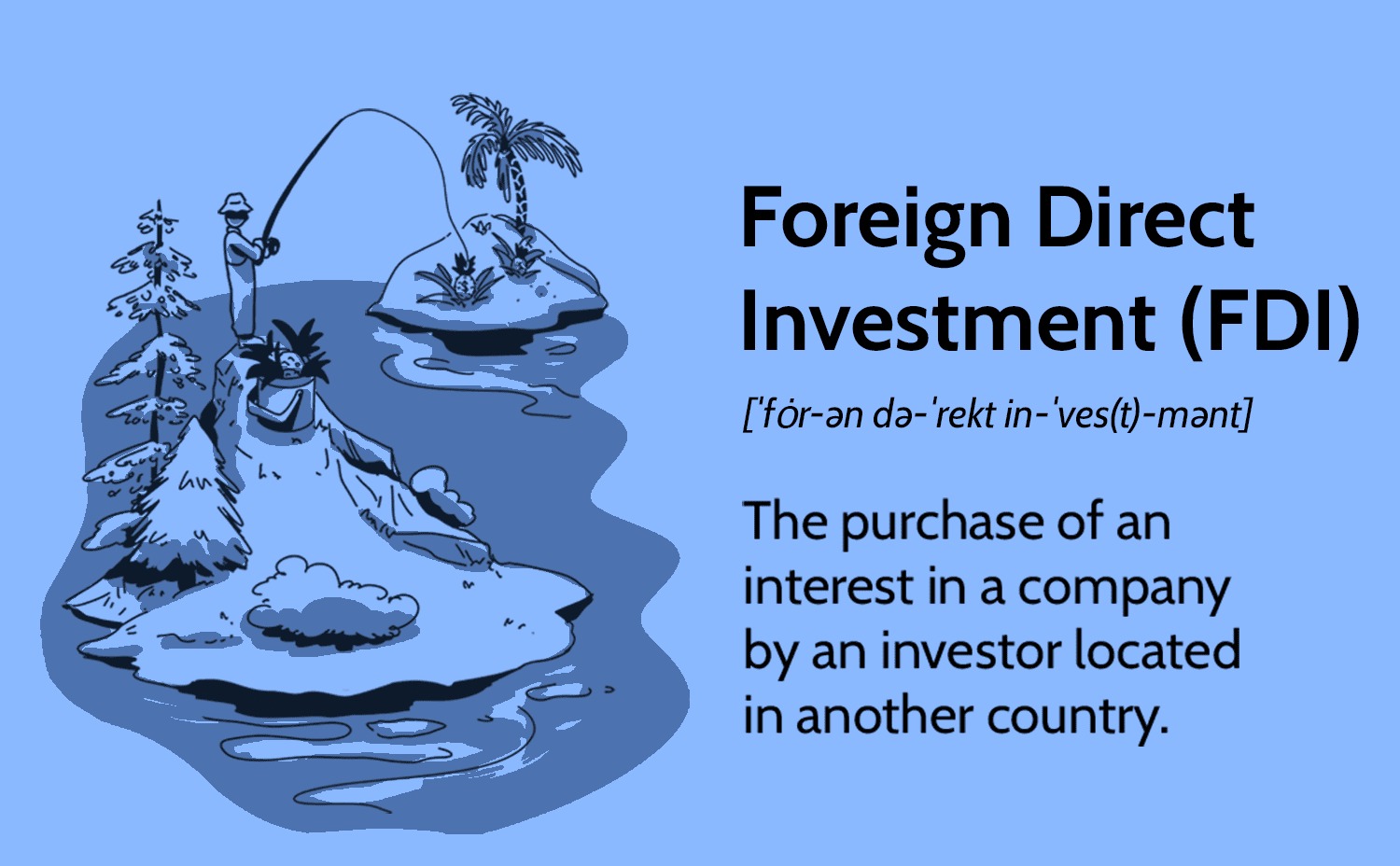
Foreign Direct Investment (FDI) serves as a critical, albeit volatile, engine for Liberia’s economic development. By bridging the gap between domestic savings and the capital required for infrastructure, human capital development, and sectoral diversification, FDI remains a cornerstone of the nation’s growth strategy. As defined by international standards, FDI represents equity flows, including equity capital, reinvestment of earnings, and inter-company debt, involving a resident in one economy exerting a significant degree of influence—typically 10 percent or more of voting power—over an enterprise in another. For a post-conflict nation like Liberia, which seeks to transition from an aid-dependent economy to one driven by sustainable private investment, understanding the ebb and flow of these capital injections is not merely an academic exercise; it is an economic necessity. The historical context of Liberia, dating back to its establishment as a republic, has often been tied to concession-based economic models. Throughout the 20th century, companies like Firestone and various iron ore mining conglomerates formed the backbone of the economy. However, this legacy also highlights the challenge of ensuring that foreign capital leads to broad-based development rather than the extraction of wealth without local enrichment. In the contemporary era, the challenge remains: how can Liberia move beyond a dependency on raw material extraction to attract high-value, sustainable FDI that bolsters industrialization?
An empirical analysis of Liberia’s FDI inflows from 2016 to 2021 reveals a period of significant contraction, punctuated by brief moments of stagnation. In 2016, Liberia attracted $0.31 billion in FDI, equivalent to approximately 9.17% of its GDP. This reflected a period of renewed interest following post-Ebola stabilization efforts. However, this trajectory proved difficult to maintain. By 2021, inflows had plummeted to a mere $0.05 billion, or 1.30% of GDP. The volatility is further illustrated by the period between 2020 and 2021, where inflows dropped by 47.47%, falling from $0.09 billion to $0.05 billion. While the COVID-19 pandemic is rightfully cited as a primary disruptor—causing global investment climate uncertainty, supply chain bottlenecks, and deferred capital expenditure—the decline also points to structural impediments. The pandemic acted as a stress test that exposed existing vulnerabilities within the Liberian investment landscape, such as limited local manufacturing capacity and a narrow reliance on a few commodity-based sectors.
The sectoral distribution of FDI continues to be heavily skewed toward Liberia's rich natural endowments. The mining, agriculture, fishing, and forestry sectors remain the traditional magnets for international capital. Mining, specifically iron ore extraction, has been a key pillar, as have rubber plantations and, more recently, efforts to modernize the maritime and forestry sectors. Beyond these primary industries, the government has attempted to incentivize investment in energy, telecommunications, and financial services. These efforts, though well-intentioned, often struggle against the realities of a small domestic market and high operational costs. The diversification of FDI is a stated policy goal of successive administrations, yet the reality remains that investors are still largely tethered to the resource-extraction paradigm, which leaves the nation susceptible to global commodity price shocks.
The geopolitical origins of this investment are diverse, reflecting Liberia’s historical and diplomatic ties. Investors from the United States, China, and various European Union nations remain the primary sources of capital. Each brings a different approach: Western investors frequently focus on regulatory compliance and social impact reporting, while Chinese investment has historically been tied to large-scale infrastructure projects, such as road construction and public buildings, which are vital for long-term economic integration. The presence of these actors represents both an opportunity for technical and management skill transfer and a challenge for local policy makers to negotiate contracts that offer the greatest possible benefit to the Liberian citizenry.
The impact of FDI on the Liberian economy is theoretically multifaceted. Beyond the immediate financing of the current account deficit, successful FDI projects are expected to generate employment, foster technology transfer, and modernize management practices within local firms. However, translating these theoretical benefits into tangible improvements in the daily lives of Liberians remains a struggle. One major hurdle is the infrastructure deficit. Power generation, reliable transport networks, and efficient digital connectivity are prerequisites for attracting high-quality FDI. When these are absent, the costs of doing business skyrocket, effectively acting as an implicit tax on potential investors and steering them toward more developed economies in the sub-region, such as Ghana or Cote d'Ivoire.
Corruption and institutional transparency remain persistent thorns in the side of prospective investors. While the Investment Act of 2010 provided a framework for liberalization, the implementation of these reforms has been inconsistent. The subjective nature of regulatory enforcement can create an unpredictable environment that favors rent-seeking behavior over productive investment. For Liberia to improve its investment climate, there must be a rigorous commitment to the rule of law and the streamlining of bureaucratic processes. An uncompetitive business environment, marked by excessive red tape and challenges in enforcing contracts, remains a primary deterrent. As the African Continental Free Trade Area (AfCFTA) gains momentum, Liberia finds itself in a race to harmonize its standards with regional partners to remain an attractive destination for capital.
Looking toward the future, Liberia must pivot from simply inviting foreign capital to strategically managing it. This requires better-aligned investment promotion agencies, enhanced data gathering to monitor the impact of specific FDI projects, and a proactive policy of linking foreign firms with local supply chains. The goal should be to foster a symbiotic relationship where foreign capital acts as a catalyst for local small and medium-sized enterprises (SMEs). For instance, rather than importing all inputs, major mining or agricultural projects should be incentivized to source materials and services locally, thereby boosting the domestic economy and creating jobs that transcend simple manual labor.
Ultimately, the data from 2016 to 2021 provides a sobering reminder of the fragility of Liberia’s current economic model. The dependence on external shocks and commodity prices dictates much of the investment volatility. To foster sustainable development, Liberia must leverage its current investments to build a base that can eventually sustain itself. Policymakers at the Central Bank of Liberia and the Ministry of Commerce and Industry must continue to refine the mechanisms of economic monitoring. The path forward requires a multi-pronged approach: investing in the workforce to increase productivity, digitizing government services to reduce corruption and friction, and creating a stable, predictable legal environment. Only then can Liberia hope to move beyond the current fluctuations and transform FDI into a reliable engine of long-term, equitable prosperity for all its citizens. As the regional economic landscape becomes increasingly competitive, Liberia’s ability to attract and retain quality capital will be a defining factor in its success on the global stage.
