
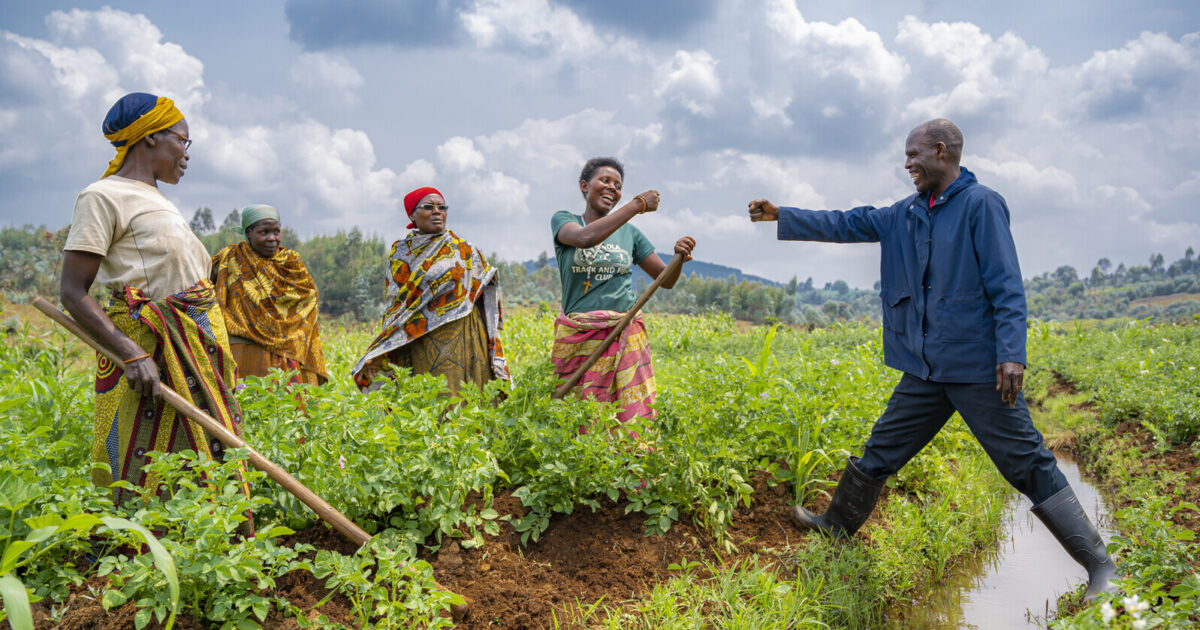
Agriculture remains the bedrock of the Liberian economy, acting as both a historical anchor and the most promising pathway toward future prosperity. Currently, the sector accounts for more than 30% of the national Gross Domestic Product (GDP) and serves as the primary livelihood for over 45% of the country’s population. Yet, these figures, while impressive in isolation, mask a deeper, more complex reality: Liberia is a nation teeming with untapped agricultural potential, constrained by decades of systemic underdevelopment, infrastructural deficits, and a reliance on subsistence farming that has failed to keep pace with modern global demands. To unlock this potential, the nation must shift its focus from mere agriculture to sophisticated agribusiness, integrating value-added processing and modern market linkages into the core of the economy.
The historical context of Liberia’s economy is defined by a reliance on extractive industries—primarily rubber and iron ore—dating back to the early 20th century, specifically the Firestone concession of 1926. While these sectors provided revenue for the state, they often functioned as enclaves, disconnected from the broader national economy. Today, the challenge is to move away from this enclave model toward a more inclusive, agribusiness-driven approach that empowers smallholder farmers and fosters local wealth creation. The potential for this transition is significant.
Liberia is blessed with over 4 million acres of highly fertile, arable land. Coupled with a tropical climate that allows for year-round cultivation and abundant rainfall, the country possesses the fundamental conditions necessary to become a breadbasket for the West African sub-region. Currently, the nation produces significant quantities of cassava, rice, cocoa, and rubber, yet it remains a net importer of its primary staple, rice. This paradox of a nation with immense land wealth importing its own food is a central issue that agribusiness development is uniquely positioned to solve.
Beyond land, Liberia stands to benefit from its strategic location within the Economic Community of West African States (ECOWAS). As a member of this regional bloc, Liberia has preferential access to a market of over 300 million people, providing a ready destination for processed agricultural products, provided that local production meets the standards of quality and volume required for export. The transition to agribusiness involves more than just planting; it requires a structural overhaul of the supply chain. This begins with investment in core infrastructure.
For years, the lack of all-weather farm-to-market roads has been the primary barrier for rural farmers, many of whom lose up to 40% of their produce due to spoilage before it can reach urban markets or processing hubs. Investing in the revitalization of the national rail network and the expansion of the Freeport of Monrovia and other secondary ports is not merely an engineering concern but a macroeconomic necessity. Furthermore, the government’s role must evolve from a passive regulator to an active facilitator. This includes fostering a financial ecosystem where farmers and small-to-medium agribusinesses can access low-interest loans and grants, mitigating the inherent risks associated with seasonal farming.
The credit gap in the agricultural sector remains one of the greatest impediments to growth; without access to capital, farmers cannot purchase high-yield seeds, fertilizers, or machinery, and they certainly cannot invest in processing facilities that would allow them to sell refined products instead of raw materials. To this end, initiatives like the Smallholder Agriculture Transformation and Agribusiness Revitalization (STAR) project are vital steps in the right direction. These programs aim to bridge the divide between subsistence-level activity and commercial viability by offering technical training, institutional support, and facilitating linkages with larger buyers. However, such initiatives must be scaled significantly to have a nationwide impact.
The involvement of international institutions, such as the World Bank and the United Nations Food and Agriculture Organization (FAO), has been instrumental in providing technical assistance and capital for infrastructure. Yet, the long-term success of these efforts rests on the shoulders of the Liberian government’s ability to create a consistent, investor-friendly policy environment. This means ensuring land tenure security—a long-standing, sensitive issue in Liberia—and reducing the bureaucratic hurdles that currently stifle small and large-scale agribusiness entrepreneurs alike. When we analyze the economic and social implications of a thriving agribusiness sector, the benefits become clear: poverty reduction, job creation, and food security.
In a nation where youth unemployment remains high, the agribusiness sector offers a pathway to sustainable work. Unlike the capital-intensive mining sector, which employs fewer people, agribusiness creates a multiplier effect throughout rural and peri-urban communities. Every dollar invested in food processing, packaging, or storage creates jobs not only for farmers but for technicians, logisticians, marketers, and retailers. This creates a more diversified economy, one less susceptible to the boom-and-bust cycles of global commodity prices that historically plague Liberia.
From a regional perspective, Liberia’s capacity to export processed agricultural goods—such as finished cocoa products or branded cassava flour—could change the nation's trade balance significantly. Currently, the lack of domestic processing capacity means that Liberia exports its raw resources, only to re-import them in finished forms at a much higher cost. Breaking this cycle is the essence of agribusiness development. By prioritizing the “Made in Liberia” brand, the country can tap into the growing middle-class demand across West Africa.
The path forward is not without challenges. We must address the limited access to agricultural inputs such as high-quality fertilizers and improved, climate-resilient seeds. Additionally, the lack of rigorous agricultural research, which once characterized Liberian institutions like the Central Agricultural Research Institute (CARI), needs to be revived. A robust agribusiness sector is fundamentally knowledge-driven.
It requires constant innovation to manage soil health, optimize yields, and adapt to the shifting patterns of climate change that threaten traditional crop cycles. As we look at the statistics, the picture is compelling. With over 75% of the population engaged in some form of agricultural activity, this is the most direct lever the government has to uplift the standard of living for the average Liberian. The coastal regions, with their potential for oil palm and rubber, and the upland areas, perfect for rice, cassava, and cocoa, provide a balanced geographical landscape for diverse development.
If the government and its partners can synchronize their efforts to modernize infrastructure, facilitate credit, and incentivize local processing, the agribusiness sector can transform Liberia from a struggling economy into a regional powerhouse of agricultural commerce. This is not merely a matter of economic theory; it is a moral and practical imperative for the nation’s survival and development. The transformation will not happen overnight, but the blueprint exists. Through the sustained support of policies that favor domestic value-addition, the empowerment of smallholders through cooperatives, and a firm commitment to regional trade integration, Liberia can finally move beyond the limitations of its past and build a future that is resilient, inclusive, and economically vibrant.
We invite our readers, stakeholders, and agricultural experts to contribute to this national dialogue. If you have perspectives, data, or experiences that can help refine our understanding of these challenges, please reach out. Together, through informed debate and actionable insights, we can contribute to the revitalization of the sector that sustains us all.


