
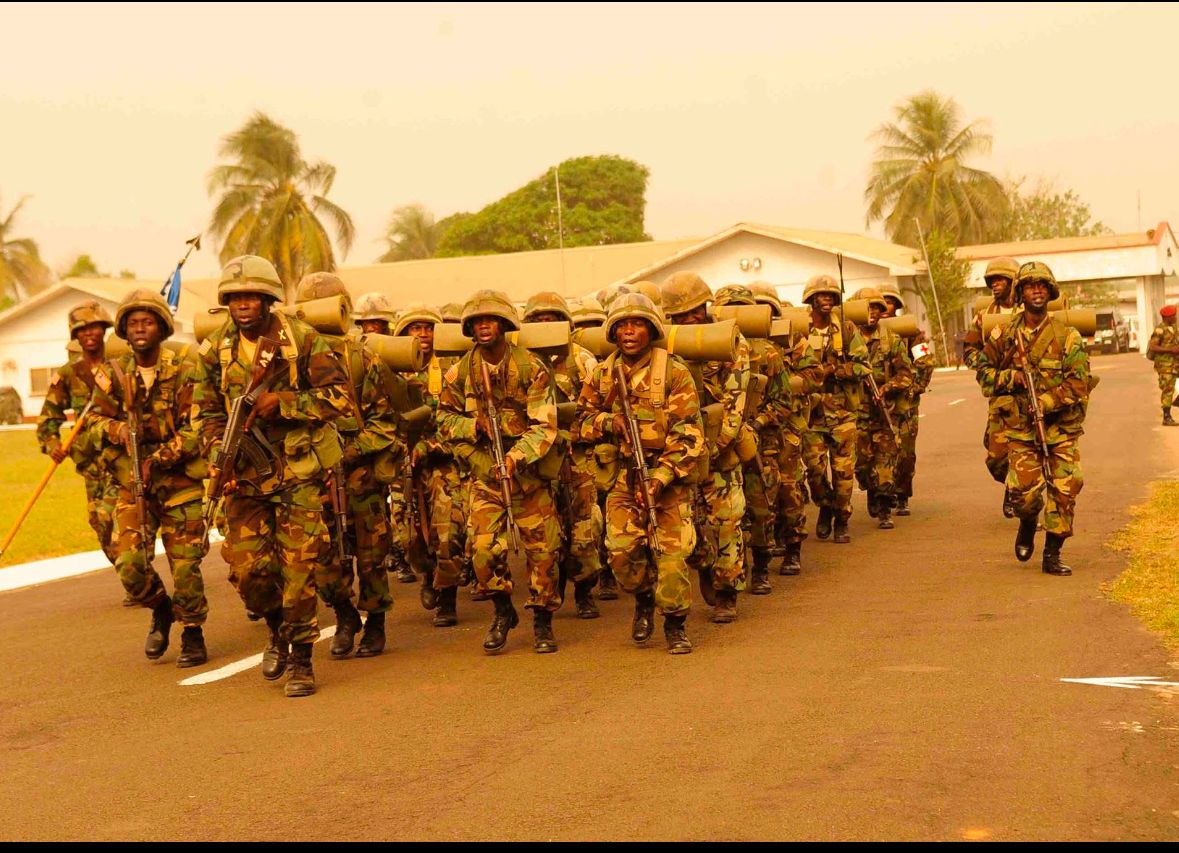
The Armed Forces of Liberia (AFL) is rolling out Operation True Guardian, a bold, multi-dimensional initiative aimed at bolstering national security and restoring public trust in the state’s ability to protect its sovereignty. Set to kick off in Western Liberia at the end of March 2025, this operation targets the country's notoriously porous borders and crime-ridden coastal waters, where transnational crimes, human trafficking, and maritime piracy have become increasingly endemic. Liberia is currently grappling with a complex array of security challenges, exacerbated by the historical legacy of civil conflict and the subsequent lack of effective border control, which has emboldened criminal syndicates and led to heightened fear and tension in border communities. The launch of Operation True Guardian serves as a critical litmus test for the professionalized post-war military, tasked with transitioning from a force primarily focused on peacekeeping and humanitarian support to one capable of proactive domestic law enforcement and border security.
The Western region, bordering Sierra Leone and Guinea, has long served as a transit hub for illicit commodities, ranging from small arms to narcotics. Historically, the geographic terrain of the Mano River Union region has made traditional policing difficult, with dense forests and river crossings providing cover for smuggling operations that fuel regional instability. The coastal waters, meanwhile, are plagued by maritime crimes such as illegal, unreported, and unregulated (IUU) fishing and piracy. These crimes do not merely represent a breach of law; they threaten local food security, deplete vital national marine resources, and discourage legitimate maritime commerce, which is the lifeblood of Liberia's blue economy.
Operation True Guardian must therefore be assessed in the context of these multifaceted challenges and the tangible capacity of the AFL to address them effectively in a resource-constrained environment. The AFL’s objectives—strengthening border security, enhancing maritime surveillance, and deterring illegal activities through proactive community engagement—are objectively commendable. However, the success of this operation hinges on more than just military presence; it requires a comprehensive strategic framework that integrates intelligence gathering, seamless collaboration with regional security partners such as ECOWAS, and a necessary, long-term investment in border infrastructure. The Liberian security apparatus has historically struggled with a 'silo' mentality, where the police, military, and immigration services operate with minimal data sharing.
This operational friction is a relic of post-war reconstruction efforts where mandates were often blurred. For Operation True Guardian to succeed, the AFL must foster inter-agency coordination that bypasses historic bureaucratic red tape. Furthermore, the economic implications of this operation are profound. For a nation that relies on regional trade, the stabilization of the border is essential for attracting foreign direct investment.
Investors are understandably wary of regions where smuggling syndicates operate with impunity, and by tightening security, the AFL is ostensibly creating a more predictable environment for commerce. However, there is a risk that intensified military activity could disrupt legitimate cross-border trade, which many local populations rely on for their daily livelihoods. If the AFL fails to distinguish between criminal smugglers and local small-scale traders, the operation risks alienating the very communities it seeks to protect. This tension highlights the delicate balance between hard-power security and the socio-economic reality of Liberia’s borderlands.
The regional context cannot be ignored. West Africa is currently facing a 'security contagion,' with rising insurgency and criminal networks spreading from the Sahel toward the coast. While Liberia has remained relatively stable compared to its neighbors, the permeability of its borders makes it a strategic vulnerability for the entire ECOWAS bloc. Operation True Guardian represents a proactive shift from the traditional reactive security posture.
Yet, it remains to be seen whether Liberia can muster the necessary political will and sustained funding to maintain such an effort over the long term. Historically, security initiatives in Liberia have been donor-dependent, often faltering once international support wanes. A critical aspect of this operation will be how the AFL navigates the delicate relationship with local chiefs and community leaders. In rural Liberia, traditional authority often holds more sway than the central government.
Unless the AFL can demonstrate that this operation serves the community’s interests—by curbing the influx of illicit drugs, for instance—they may struggle to gain the intelligence cooperation necessary to identify smugglers. The drug trade, in particular, has become an existential threat to Liberian youth, with local consumption rising alongside the country’s role as a transit point for cocaine destined for European markets. By focusing on this, the AFL is engaging in a battle for the country’s future social stability. Internally, the AFL faces the challenge of maintaining its professional reputation.
Since its reorganization after the civil war, the military has worked hard to shed the image of being a partisan or predatory force. If Operation True Guardian is perceived as being used to suppress dissent or target specific political rivals, the public trust that the military has meticulously built could evaporate. Transparency in the operation’s conduct will be paramount. The military leadership must ensure that the rules of engagement are clearly communicated and that the operation remains strictly professional and focused on its stated goals of combating transnational crime.
Furthermore, the reliance on naval patrols to combat piracy and IUU fishing requires equipment that is often expensive to maintain and fuel. Liberia’s maritime domain awareness is still in its infancy, and the AFL must leverage partnerships with the United States, European Union, and regional neighbors to gain real-time satellite intelligence. Without this, the 'Guardian' element of the operation remains limited to physical patrols, which are inherently inefficient in a vast maritime territory. Ultimately, the success of this ambitious security initiative will be measured not by the number of patrols conducted, but by the tangible reduction in illicit flows and the measurable improvement in the economic vitality of border districts.
The AFL must navigate complex internal dynamics, build trust with local communities, and secure meaningful support from regional and international partners. The long-term impact will depend on the government’s ability to address the underlying causes of insecurity—namely, poverty, youth unemployment, and the lack of state presence in remote areas—rather than merely treating the symptoms of organized crime. As Liberia embarks on this transition, it is essential for the media, civil society, and international observers to monitor the progress of Operation True Guardian closely. It is a defining moment for the AFL; if successful, it could serve as a model for regional cooperation and military professionalization.
If it fails due to corruption, poor planning, or overreach, it may provide a stark warning about the limitations of relying on military solutions to solve essentially developmental and socio-economic crises. The coming months will be a testament to whether Liberia can truly secure its frontiers and, by extension, its democratic future.
