
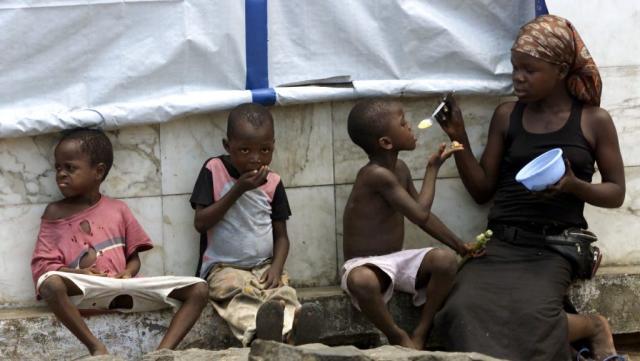
Liberia, a nation defined by its resilience and rich history, stands today at a precarious economic juncture. Despite being endowed with immense natural wealth—ranging from vast rubber plantations and iron ore deposits to untapped forestry and mineral resources—the country remains entrenched as one of the poorest nations on the global stage. As of 2021, the poverty rate stood at a staggering 53.1%, a statistic that serves as a grim indicator of the structural inequalities and historical traumas that continue to shape the Liberian experience.
For decades, the nation has been marred by internal conflict and periods of profound political instability, most notably the two devastating civil wars between 1989 and 2003. These conflicts did more than destroy infrastructure; they eroded the very social fabric of the country, displaced millions, and stunted the development of human capital for generations. Today, while the guns have long been silent, the echoes of this history are felt in the struggle to achieve sustainable economic growth that benefits the masses rather than a select few. The road to recovery has been fraught with challenges, and while there has been a growing recognition of the urgent need to address systemic poverty, the progress remains painstakingly slow.
Various local and international nonprofits have dedicated themselves to bridging these gaps, and while successes have been recorded, a comprehensive evaluation reveals a landscape characterized by both hope and systemic fragmentation. To understand the complexity of poverty in Liberia, one must first recognize that it is not merely an absence of income, but a multi-dimensional crisis involving education, health, infrastructure, and political governance. The Liberian economy, largely dependent on extractive industries, often fails to translate its export revenue into tangible development for the average citizen. This 'resource curse' phenomenon, where the wealth of the nation does not trickle down, remains a central barrier to development.
Furthermore, historical legacies of centralized power and patronage systems continue to hinder rural development, leaving the interior of the country significantly more vulnerable than the urban centers of Monrovia. In response to these persistent challenges, nonprofits in Liberia have adopted a diverse array of strategies. The most immediate, though often the most short-term, approach is direct assistance. This includes the provision of food security programs, emergency housing, and urgent medical interventions.
These initiatives are life-saving during times of acute distress, such as disease outbreaks or agricultural failures, but they frequently fall short of addressing the root causes of poverty. Economic development programs have emerged as a more structural alternative, focusing on microfinance, vocational training, and entrepreneurship support. These programs aim to empower Liberians by providing them with the tools to generate their own income, thereby moving them away from aid dependency. Education, another cornerstone of development strategy, is increasingly viewed as the most sustainable pathway out of poverty.
NGOs working in the educational sector are focusing not just on primary school enrollment, but on quality improvements, teacher training, and adult literacy programs—a critical area given that the literacy rate in Liberia hovers around 56.7%. Health interventions are equally vital, as the nation continues to grapple with high maternal and child mortality rates and a healthcare system that is severely under-resourced, resulting in an average life expectancy of only 51.8 years.
Moreover, environmental sustainability initiatives have gained traction as climate change threatens the livelihoods of rural farmers and coastal communities. By managing forestry and protecting land rights, these programs aim to ensure that development does not come at the cost of the nation's long-term environmental viability. However, the efficacy of these diverse approaches has been undeniably mixed. While direct assistance provides a necessary buffer, it often creates a dependency trap if not followed by sustainable economic opportunities.
Conversely, while economic development and education initiatives hold the potential for long-term structural change, they require significant time and capital, neither of which is readily available in the current economic climate. The challenges limiting the effectiveness of these interventions are structural and multifaceted. First, the lack of sustainable funding plagues the nonprofit sector. Many organizations operate on a project-by-project basis, relying on inconsistent international grants that make long-term strategic planning nearly impossible.
Second, the issue of institutional capacity is pervasive. Many local NGOs, while deeply committed, lack the administrative, financial, and technical infrastructure required to manage large-scale interventions efficiently. Third, there is a profound lack of coordination among the myriad of actors working in the sector. Without a unified national strategy, efforts are frequently duplicated, resources are mismanaged, and potential synergies are lost.
Perhaps most critically, there is the issue of political will. Poverty reduction is not merely a technical or developmental hurdle; it is a political one. If the government does not prioritize equitable growth, land reform, and anti-corruption measures, the impact of even the most well-funded NGO programs will be severely diluted. The government's role in creating an enabling environment for private sector growth and social safety nets remains the indispensable missing piece of the puzzle.
Looking at the data, the reality of the situation is sobering. The poverty rate, which stood at 62.4% in 2010, saw a decline to 54.8% by 2019, according to World Bank figures.
While this downward trend is encouraging, the progress has been far too slow to make a significant dent in the daily struggles of the majority of the population. An unemployment rate of 15%, coupled with a reliance on the informal sector, means that millions are living in economic precariousness, vulnerable to even minor shocks. Regional context is also key; Liberia exists in a volatile West African neighborhood where economic integration is necessary for stability. If Liberia cannot address its own internal poverty, it faces the risk of continued social unrest and brain drain, as its youth—the most precious resource—seek better opportunities abroad.
Moving forward, the conversation must shift from 'aid' to 'partnership.' It is essential for nonprofits to transition from being simple service providers to becoming catalysts for institutional change. This requires a new paradigm of collaboration between the Liberian government, international donors, the private sector, and civil society. Accountability and transparency must be prioritized to ensure that every dollar spent is traceable and impactful.
Without rigorous monitoring and evaluation, it is impossible to scale what works and discard what does not. The path toward a prosperous Liberia is not found in a single policy or a single NGO initiative, but in a holistic commitment to governance, education, and economic diversification. While the statistics present a bleak picture, they also reveal the immense potential for growth if the country can harness its resources effectively and build an inclusive society. The future of Liberia depends on whether it can move beyond the legacies of the past and build a framework that empowers its citizens to participate meaningfully in the economy.
Until such a vision is realized, the persistent cycle of poverty will continue to be the greatest challenge facing the nation, requiring not just sympathy, but a rigorous, sustained, and strategic approach to national development.
