
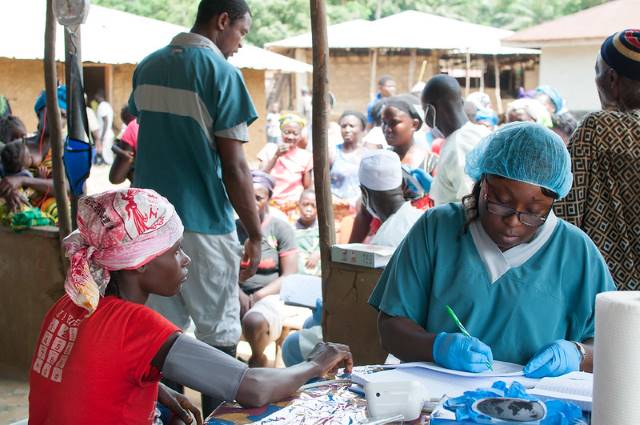
The Republic of Liberia stands at a precarious juncture in its post-conflict reconstruction journey. While the nation has made commendable strides in governance and stability since the conclusion of the civil wars in 2003, one foundational pillar of human development remains stubbornly fragile: the national healthcare system. For millions of Liberians, access to quality, reliable, and affordable medical care is not merely a logistical challenge—it is a daily battle for survival. Despite various international interventions and policy frameworks aimed at revitalizing the sector, Liberia's healthcare system is currently struggling to meet the basic needs of its growing population, revealing a chasm between the constitutional promise of health and the grim reality on the ground.
The scale of this deficit is profound. According to the World Health Organization, Liberia reported a density of only 0.84 physicians and 0.61 nurses and midwives per 1,000 population as of 2020.
This metric is a harrowing indictment of current capacity, sitting drastically lower than the globally recognized minimum threshold of 2.3 healthcare workers per 1,000 population, a figure considered essential to achieving Universal Health Coverage. When we look behind these numbers, we find a story of systemic exclusion. Only 42 percent of the Liberian population possesses access to essential health services within an hour of travel time, leaving the remainder to rely on traditional healers, proximity to informal clinics, or, in the worst cases, no care at all.
The geographic distribution of health services in Liberia is inherently inequitable, functioning as a silent barrier that disproportionately impacts the rural poor. The majority of tertiary healthcare facilities, diagnostic centers, and specialized care units are concentrated in Montserrado County and the greater Monrovia area. This urban-centric model leaves the rural population—which accounts for approximately 70 percent of the nation—effectively disenfranchised from the national health network. For a resident of a remote village in Grand Kru or River Gee, reaching a hospital requires not just money, but a daunting odyssey across unpaved, seasonal roads that often become impassable during the rainy season.
The infrastructure gap is equally alarming. Liberia currently maintains a ratio of only 0.03 hospital beds and 0.01 physicians per 1,000 population.
To put this in a sobering global context, the average for low-income countries stands at 0.9 hospital beds and 0.8 physicians per 1,000 people. Liberia is performing at a fraction of the capacity expected even of its peers in the sub-Saharan region.
This disparity is deeply rooted in historical neglect and the devastating impact of the 2014-2016 Ebola virus outbreak, which decimated the ranks of an already fragile healthcare workforce and shattered public trust in clinical settings. Furthermore, these systemic failures operate in a landscape where approximately 40 percent of the population lives below the national poverty line. When poverty is compounded by the high out-of-pocket expenses required for medications, diagnostic tests, and transport, the result is a cycle of preventable disease and premature mortality. The challenges facing healthcare access in Liberia are layered and mutually reinforcing.
First is the chronic shortage of physical facilities. With roughly one hospital per 100,000 citizens, the ratio is insufficient for an emerging nation. Many facilities that do exist suffer from a lack of consistent electricity, clean water, and supply chains for essential medicines. Second is the "brain drain" of human capital.
Liberian-trained doctors and nurses often migrate to better-compensated roles in private practice, NGOs, or international markets, leaving the public sector understaffed and demoralized. Third is the crisis of logistics. The lack of reliable transportation infrastructure is a structural determinant of health; when an ambulance cannot reach a patient in time due to road conditions, the proximity of a facility becomes irrelevant. Fourth, the lack of a comprehensive, affordable national health insurance scheme means that for the average Liberian, an emergency health crisis is an economic catastrophe that can drive an entire family into deeper poverty.
To change this trajectory, the government must move beyond incremental fixes and embrace a more aggressive, holistic strategy. Expanding healthcare infrastructure must be prioritized, but it cannot be done in a vacuum. It requires decentralized investment that targets the rural hinterlands, ensuring that basic health posts are fully equipped and staffed. Training more healthcare workers is essential, but retention is the bigger hurdle; the government must provide competitive incentives, improved working conditions, and professional development opportunities to encourage clinicians to serve in underserved counties.
Improving transportation infrastructure—a priority for the national development agenda—must be inextricably linked to health policy, creating 'health corridors' that connect isolated communities to regional hubs. Finally, the introduction of robust healthcare financing mechanisms is non-negotiable. Without a system that shifts the burden of payment from the individual to a collective or state-subsidized pool, the most vulnerable citizens will remain trapped in a state of precarity. The political and economic implications are clear: a healthy workforce is the backbone of national prosperity.
Liberia cannot achieve the objectives of the 'Pro-Poor Agenda for Prosperity and Development' or realize its long-term economic potential if its human capital is stunted by preventable diseases like malaria, tuberculosis, or complications related to maternal and child health. These challenges demand not only government action but sustained oversight from civil society, private sector partnerships, and the continued support of the international donor community. The data provided here serves as a clarion call. It highlights the stark reality of where Liberia stands and, by extension, illuminates the path that must be forged to ensure that every citizen, regardless of their zip code or income level, has the right to live a healthy life.
We at Insights Liberia believe that transparent analysis is the first step toward accountability and reform. If we are to transform the healthcare landscape, we must continue to interrogate these figures, demand accountability from policymakers, and advocate for the systemic overhaul that is so desperately needed. Do you have additional facts to add to this insight, or have an opinion that you would like to express regarding the state of health in your community? We invite you to join the conversation.
Please email us at analysis@insightsliberia.com to share your experiences or contribute to our ongoing coverage of this critical national issue.
