
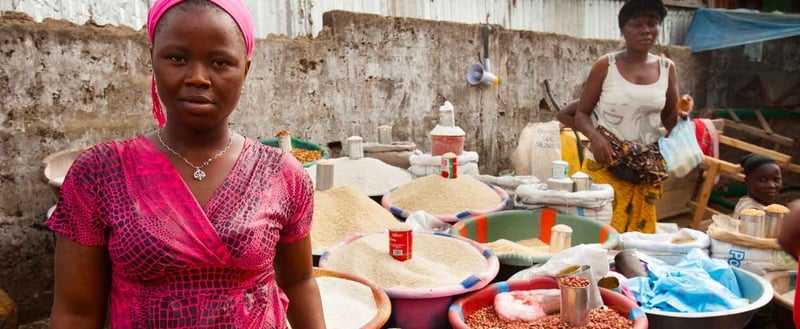
Access to Finance: Many Liberians Lack Formal Financial Services
Access to finance remains a monumental hurdle for countless Liberians, both individuals and burgeoning businesses, who find themselves largely excluded from the formal financial services sector. This pervasive lack of access is not merely an inconvenience; it is a significant impediment to the nation's aspirations for robust economic growth, poverty reduction, and overall development. Recent data paints a stark picture: according to the World Bank, a mere 13% of Liberian adults possess a bank account, and a staggering figure of less than 2% have any access to formal credit facilities. This scarcity of financial tools chokes entrepreneurial potential and limits the capacity of ordinary citizens to build wealth and secure their futures.
The statistics underscore the depth of the crisis. Beyond the abysmal bank account penetration and near-nonexistent access to formal credit, the Liberian business landscape is dominated by microenterprises – approximately 80% of all businesses. These small-scale ventures, the backbone of many local economies, are often starved of the formal financing necessary to scale, innovate, and create meaningful employment. Compounding these challenges, only a paltry 10% of Liberians have access to insurance, leaving them exceptionally vulnerable to unforeseen events, from health emergencies to natural disasters, with no financial safety net.
Several intertwined factors contribute to this pervasive financial exclusion. A primary culprit is the underdeveloped state of Liberia's financial infrastructure. The country grapples with a limited number of physical bank branches, particularly in rural and remote areas. This scarcity means that for many Liberians, especially those outside the capital, Monrovia, accessing a bank is an impractical, time-consuming, and often costly endeavor. This physical gap is further exacerbated by a widespread deficit in financial literacy. A significant portion of the population lacks a fundamental understanding of financial products, services, and the principles of sound financial management. This knowledge gap not only hinders their ability to engage with formal financial institutions but also makes them susceptible to predatory lending practices and informal financial arrangements that often come with exploitative terms.
Furthermore, the economics of operating in Liberia present significant challenges. The cost of providing financial services, particularly in geographically dispersed rural areas, is inherently high. Factors such as poor road networks, unreliable electricity, and security concerns increase operational expenses for financial institutions. This economic reality often leads banks to concentrate their services in more profitable urban centers, further marginalizing rural populations and small businesses operating outside these hubs. The legacy of protracted civil conflict also plays a role; decades of instability eroded trust in formal institutions and disrupted the development of a robust financial sector.
Contextually, Liberia's post-conflict reconstruction efforts have often focused on immediate humanitarian needs and basic infrastructure, with the financial sector receiving less attention until more recently. The Central Bank of Liberia (CBL) has been instrumental in advocating for reforms, but its efforts are often constrained by limited resources and the sheer scale of the challenge. Key figures within the financial sector, such as the Governor of the CBL and the heads of commercial banks, often express commitment to financial inclusion, but tangible progress is often slow, hampered by the structural impediments.
The consequences of this financial exclusion are profound and far-reaching. For individuals, it means a perpetual struggle against poverty, with limited opportunities to save, invest, or smooth consumption during lean times. For entrepreneurs, the lack of access to credit, working capital, and investment finance stifles business growth, innovation, and job creation. This is particularly damaging in a country with a young and growing population, where employment opportunities are desperately needed. The dominance of microenterprises, while indicative of entrepreneurial spirit, also highlights a missed opportunity for scaling up businesses that could contribute significantly to national GDP and tax revenues.
Moreover, the lack of financial inclusion increases societal vulnerability. Without access to insurance or formal savings, individuals and families are pushed deeper into poverty by unexpected shocks. The informal financial sector, while filling some gaps, often operates outside regulatory oversight, leading to exorbitant interest rates, lack of consumer protection, and potential for financial distress. This also contributes to a less stable financial system overall, as risk is not adequately managed or diversified within formal channels.
Addressing this multifaceted challenge requires a comprehensive and concerted effort from various stakeholders, including the government, the Central Bank of Liberia, commercial banks, microfinance institutions, international development partners, and civil society organizations. While the current trajectory is concerning, there are promising avenues for improvement.
One of the most significant potential game-changers is the expansion of mobile banking and other digital financial services. Liberia has a relatively high mobile phone penetration rate, making mobile money platforms a viable and cost-effective way to reach underserved populations. These digital solutions can bypass the need for extensive physical branch networks, significantly reducing the cost of service delivery and making financial services accessible even in the most remote corners of the country. Platforms that allow for savings, payments, remittances, and even micro-loans via mobile devices can revolutionize financial inclusion.
Furthermore, exploring and leveraging new technologies, such as blockchain, could offer pathways to enhanced financial transparency and reduced transaction costs. While still nascent in its application for widespread financial inclusion in developing economies, blockchain's potential to create secure, transparent, and efficient digital ledgers could, in the long term, streamline processes and build greater trust in the financial system.
Another critical pillar of any successful strategy is the aggressive promotion of financial education and literacy. Comprehensive programs, integrated into school curricula, community outreach initiatives, and public awareness campaigns, are essential. Equipping Liberians with the knowledge to understand financial products, manage budgets, utilize savings instruments, and access credit responsibly will empower them to engage more effectively with formal financial services. This increased understanding can drive demand for these services and foster a culture of prudent financial management.
Efforts to expand the reach of existing financial institutions, particularly into rural areas, must also be intensified. This could involve incentivizing banks and microfinance institutions to establish or expand operations in underserved regions through tax breaks, subsidies, or risk-sharing mechanisms. Innovations in alternative credit scoring, utilizing mobile data or other non-traditional metrics, can help lenders assess the creditworthiness of individuals and small businesses who lack formal credit histories.
Internationally, Liberia's economic trajectory is also intertwined with regional dynamics. Neighboring countries face similar challenges, and regional collaboration on financial sector development, digital currency initiatives, and regulatory harmonization could yield significant benefits. Instability or financial exclusion in one nation can have ripple effects across borders. Conversely, fostering a more inclusive and stable financial system in Liberia contributes to broader regional economic resilience.
Ultimately, improving access to finance in Liberia is not merely a technical economic issue; it is a fundamental requirement for social progress. By democratizing access to financial tools, the government and its partners can unlock the latent potential of its people, foster a vibrant private sector, create much-needed jobs, significantly reduce poverty and inequality, and build a more resilient and prosperous Liberia for generations to come. The path forward demands sustained political will, strategic investment, innovative solutions, and a deep commitment to ensuring that no Liberian is left behind in the pursuit of economic opportunity.
Get Involved
Do you have additional facts to add to this insight or have an opinion that you would like to express?
Email Us
analysis@insightsliberia.com
